Skip to content

1. Introduction
Padel, a sport that originated in the late 1960s in Acapulco, Mexico, was invented in 1969 by a Mexican named Enrique Corcuera, who created this emerging sport—a hybrid combining elements of tennis and squash—in his backyard with friends. Padel is played using sturdy rackets on courts enclosed by walls; the ball can rebound off the walls, adding strategic complexity and visual appeal to the game. Shortly after its inception in Mexico, the sport was introduced to Spain in 1974 by Spanish nobility and quickly garnered attention across Europe. In the following decades, padel flourished in Latin American countries such as Argentina, and in 1991, the International Padel Federation (FIP) was established, marking the sport’s official debut on the international stage. Entering the 21st century, padel expanded rapidly worldwide with courts and leagues emerging across Europe, the Middle East, and Asia. Today, padel is one of the fastest-growing sports globally, attracting enthusiasts and professional players of all ages.
With the rapid development of padel, the demand for professional equipment has also surged. An excellent padel racket is crucial for a player’s performance—it not only affects the power and control of each shot but also impacts comfort and safety during play. Numerous brands are racing to invest in research and development to produce rackets with outstanding performance and reliable quality. Among these, NEXpadel stands out as a brand dedicated to high-end padel rackets. Born from a deep passion for the sport and a pursuit of exceptional craftsmanship, the founding team of NEXpadel—comprising materials engineers, designers, and seasoned padel players—has been committed from the start to developing and manufacturing high-performance, top-quality rackets.
NEXpadel’s market positioning is clear: to serve discerning high-end users and professional players by providing them with top-tier equipment they can trust. To this end, NEXpadel spares no effort in the manufacturing process—whether it is the rigorous deliberation during the design phase or the relentless pursuit of perfection throughout production, every step is dedicated to achieving excellence. NEXpadel believes that only by fusing the most advanced technology with traditional artisan craftsmanship can one create the perfect racket that embodies both “quality” and “soul.” Every process—from material selection to production—is imbued with the wisdom and passion of the NEXpadel team.
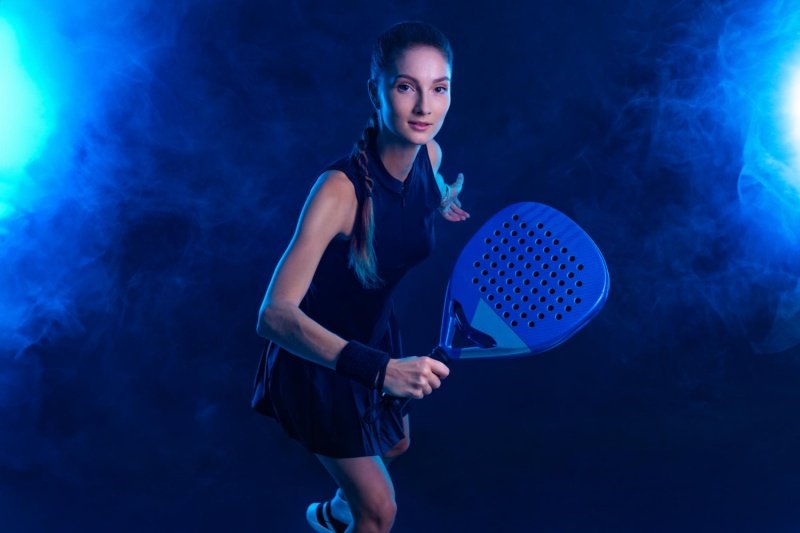
In the following sections, we will detail every step of the manufacturing process of NEXpadel high-end padel rackets, allowing you to witness the journey of an outstanding racket from conception to completion.
2. Design and Research & Development
To create a top-tier padel racket, excellent design is fundamental. The R&D team at NEXpadel invests tremendous effort during the design phase, taking into account core factors such as the shape, balance point, and weight distribution of the racket to ensure optimal performance.
Racket Shape
Padel rackets typically come in three general face shapes: round, teardrop, and diamond. Each shape affects the racket’s hitting characteristics.
- Round Rackets: These usually have a larger sweet spot (the area providing the best hit), even weight distribution, precise control, and high forgiveness, making them suitable for beginners and players who seek stability.
- Teardrop Rackets: These lie between round and diamond shapes, with the sweet spot positioned slightly higher. They offer a balance between control and power and are generally favored by intermediate players.
- Diamond Rackets: With the sweet spot moved towards the top of the racket head, these rackets usually have a head-heavy balance, which can provide greater swing momentum during powerful shots. However, diamond rackets require more precise technique from the player due to the smaller sweet spot.
NEXpadel selects the appropriate face shape based on the target user group—be it defensive or offensive players—and makes subtle curvature adjustments to optimize aerodynamics, ensuring the racket swings smoothly and stably.
Balance Point
The balance point, or the center of gravity, is another critical parameter that influences the racket’s feel and performance during swings.
- A racket with a balance point closer to the head (head-heavy) generates greater momentum when striking, enhancing offensive power, but may feel slightly cumbersome during quick net plays.
- Conversely, a racket balanced closer to the handle (head-light) offers agility and ease of handling, making it ideal for quick interceptions and defensive plays, though it might require more effort to generate power for backcourt shots.
Experienced designers at NEXpadel fine-tune the balance point with millimeter precision by adjusting the racket’s thickness and material distribution to ensure it is neither too head-heavy nor too head-light.
Weight Distribution
Even if two rackets share the same total weight, differences in weight distribution can lead to variations in swing inertia and stability. The NEXpadel team carefully analyzes the weight distribution across the frame, face, and handle. For example, adding material around the frame can enhance torsional resistance, ensuring the racket remains stable even when hits are off-center; reinforcing the neck and bridge (where the frame connects to the handle) can reduce vibrations during powerful shots. Through meticulous adjustments of weight in every section, the designers at NEXpadel guarantee a racket that offers both solid hitting stability and excellent maneuverability.
After setting the design direction, NEXpadel fully leverages modern R&D tools such as Computer-Aided Design (CAD) and Finite Element Analysis (FEA) to optimize the racket structure. They first create a 3D model of the racket on the computer to simulate the frame’s shape, internal structure, and material layers. Using CAD software, designers can visually assess the proportions, curves, and hole layouts, even marking the fiber orientations of each carbon fiber layer. This digital design process allows for rapid iteration—parameters such as weight and balance can be adjusted on the model, with immediate feedback, without the need to manufacture physical samples.
However, a truly high-performance product requires rigorous validation of every detail. This is where FEA plays a key role. NEXpadel’s engineers import the designed model into FEA simulation software to model how the racket behaves under various loads. For instance, they simulate a scenario where a high-speed ball strikes the racket, observing the stress distribution and deformation to identify the regions that might experience the greatest load. Such simulations enable them to reinforce any weak spots in advance. FEA is also used to analyze the racket’s vibrational characteristics after impact—determining the amplitude and duration of vibrations and checking for any harmful frequencies that might cause arm fatigue. Through repeated finite element analysis, the NEXpadel team continually optimizes the internal support structure, the stacking sequence of materials, and thickness distribution to achieve the ideal balance between rigidity and flexibility. For example, if simulation reveals excessive stress at the top of the frame, engineers might add a layer of Kevlar fiber for enhanced toughness; if the overall stiffness is too high causing harsh vibrations, they may adjust the carbon fiber layup angle or substitute in a slightly more flexible material layer to absorb shocks.
Once the computer simulation results meet the expected standards, NEXpadel proceeds to prototype production and testing to verify the design’s correctness. The R&D team usually fabricates a small batch of trial rackets. These prototypes are meticulously handmade according to the design, though they might not immediately receive the final surface finish so that testing can be expedited. In a laboratory environment, engineers test various parameters of the prototype rackets—verifying that the actual weight aligns with the design, checking for any deviations in the balance point, and confirming that the frame’s stiffness and elasticity meet expectations. They may use specialized equipment to simulate impacts—such as robotic arms repeatedly striking the racket face to assess durability and shock absorption, or high-speed cameras to capture the moment of impact to compare with FEA results. After rigorous laboratory tests, these prototypes are handed over to experienced padel players for on-court trials. In a real-game environment, players can directly feel the racket’s handling characteristics—whether the swing is effortless, if there is sufficient power during smashes, the speed and control of the ball after impact, and whether the racket causes arm fatigue after prolonged use. NEXpadel places great value on feedback from professional players and coaches—even a subtle difference in feel or a slight vibration on off-center hits is taken as critical input for further refinement. By combining practical playing experiences with experimental data, the team makes final adjustments to the design.
After multiple cycles of design, simulation, and prototype testing, once all performance indicators and subjective feel meet the strict standards, NEXpadel finalizes the design for mass production. This rigorous design and R&D process ensures that every NEXpadel high-end racket is not only outstanding on paper but also truly battle-tested on the court. This relentless pursuit of perfection and challenge of performance limits reflects NEXpadel’s passion for product innovation and professional spirit.
3. Materials Selection
An excellent padel racket is inseparable from the support of high-quality materials. NEXpadel is fully aware that the characteristics of the materials directly impact both performance and feel; hence, no compromise is made in the selection process. High-end rackets typically utilize advanced composite materials—including carbon fiber, Kevlar, and glass fiber—as the primary reinforcement for the frame and face, while employing specialized foam cores internally. Each of these materials possesses unique attributes and advantages, and when combined optimally, they help achieve the ideal balance in weight, strength, and elasticity.
Carbon Fiber
Carbon fiber is the star material in today’s high-end rackets. Woven from carbon atoms, it offers extremely high strength and stiffness while being remarkably light. For a padel racket, carbon fiber allows the frame to be exceptionally robust and durable, with minimal deformation or breakage even under intense impacts. This means the racket can withstand high-intensity hits, thereby extending its service life. Additionally, the high rigidity of carbon fiber ensures that deformation during impact is minimal, allowing more energy to be transferred directly to the ball—providing the explosive power that offensive players require. Moreover, because carbon fiber is lightweight, NEXpadel can add additional layers or increase thickness without significantly raising the overall weight, further enhancing the racket’s structure. For example, to increase the hardness in the sweet spot area, NEXpadel may apply multiple layers of carbon fiber fabric on both sides of the face while keeping the overall weight within acceptable limits for players.
Carbon fiber also comes in different weave counts (e.g., 3K, 12K, 18K, where a higher number indicates more filaments per bundle), which affects the flexibility of the racket. For instance, 3K carbon fiber has a looser weave and offers greater flexibility with a more elastic feel, whereas 18K carbon fiber, with its denser weave, exhibits higher rigidity and delivers more power. NEXpadel selects the appropriate carbon fiber specifications based on the racket’s intended function—for example, using 12K carbon fiber in rackets emphasizing control to balance hardness with feel, while in power-focused rackets, a corresponding higher-spec carbon fiber may be chosen to enhance rigidity.
Kevlar
Kevlar is an aramid fiber known for its outstanding impact resistance and tensile strength. Widely used in bulletproof vests and other high-toughness applications, in padel racket manufacturing Kevlar is typically used to reinforce areas most vulnerable to impact damage—such as the outer frame (especially the head and frame edges) and the neck region connecting to the handle. Compared to carbon fiber, Kevlar is slightly less rigid but much more resilient, effectively absorbing the stresses generated by impacts without breaking. NEXpadel capitalizes on this property by incorporating Kevlar fiber layers in critical regions, making the racket more “battle-hardened”—when the racket inadvertently collides with a wall or floor, or endures continuous high-intensity smashes, these Kevlar fibers act like armor, protecting the internal structure from minor cracks and their propagation. Furthermore, Kevlar helps dampen vibrations during impact, reducing unnecessary shock transmitted to the player’s hand and offering better protection against tennis elbow. By cleverly combining carbon fiber with Kevlar, NEXpadel ensures that the racket is both lightweight and stiff overall while locally enhancing impact resistance, providing a dual-layer of structural security for high-end rackets.
Glass Fiber
Glass fiber is another commonly used composite reinforcement. Compared to carbon fiber and Kevlar, it has a slightly higher density and lower rigidity, but it offers good workability and is relatively cost-effective. One notable characteristic of glass fiber is its superior elasticity—it tends to bend more under force and quickly recovers its shape. This quality gives a padel racket with a glass fiber surface layer a unique “springy” feel when striking the ball: at the moment of contact, the face slightly deforms to absorb part of the energy, then rapidly rebounds to impart the ball with excellent speed. This is particularly beneficial for racket designs aimed at providing a softer feel and high tolerance for off-center hits. Consequently, some rackets (especially those targeted at intermediate players) incorporate a glass fiber layer over the carbon fiber structure to enhance a crisp yet forgiving impact feel. In high-end models, NEXpadel also considers the inclusion of glass fiber to increase the racket’s controllability; for instance, in models aiming to deliver a softer touch, glass fiber may be blended with carbon fiber. Although glass fiber’s inherent softness also helps reduce vibrations, its strength and durability do not match that of carbon fiber, and a racket constructed solely with glass fiber might be more prone to fatigue damage under intense use. Therefore, in NEXpadel’s products, glass fiber is typically used as an auxiliary material—its benefits are harnessed in concert with carbon fiber and Kevlar to compensate for any shortcomings.
Foam Core Materials
Beyond the frame and face materials, the internal core of a padel racket is equally crucial. The vast majority of padel rackets utilize an EVA foam (a copolymer of ethylene and vinyl acetate) for the core, although some models use PE (polyethylene) foam or other specialty foams. The core determines the racket’s cushioning and deformation characteristics during impact, essentially serving as the “soul” of the racket. EVA foam, with its medium density and excellent elastic recovery, is the most widely used core material in padel rackets. A core with an appropriate hardness will slightly compress upon impact, absorbing shock, and then quickly rebound, providing a lively and controllable feel. NEXpadel selects different formulations and densities of EVA materials based on the racket’s intended function: for power-oriented rackets, a slightly higher-density EVA core may be used to enhance a forceful rebound (with minimal deformation for efficient energy transfer), whereas for rackets focused on control and protection, a softer EVA core is chosen to allow greater deformation, yielding finer control and more effective vibration absorption to reduce strain on the arm. In addition to EVA, materials such as polyethylene foam are also utilized—they tend to be softer and offer better shock absorption, making them ideal for designs aimed at maximizing comfort or preventing tennis elbow. Notably, some top-tier rackets now employ multi-layer core designs, such as combining a harder outer foam layer for power with a softer inner layer for vibration absorption. NEXpadel keeps a close eye on such innovations, experimenting with different foam combinations in pursuit of the ideal “balance of firmness and suppleness.”
By carefully selecting and combining these materials, NEXpadel achieves multiple performance optimizations in its rackets. In terms of weight reduction, the extensive use of carbon fiber ensures that while maintaining high strength, the racket remains as light as possible—beneficial for prolonged play. For impact resistance, the incorporation of Kevlar fibers provides an additional protective barrier, significantly reducing the risk of damage from accidental impacts, ensuring reliability even during high-intensity professional matches. In terms of handling, the combination of materials imparts a unique feel to the racket—carbon fiber offers crisp precision, glass fiber adds a touch of elasticity, and the foam core provides excellent shock absorption and ball feel. Together, these attributes result in a racket that is both powerful and easy to maneuver. The engineers at NEXpadel, much like conductors orchestrating a symphony, fine-tune the “formula” of materials to optimize racket performance. They continuously experiment with various fiber layup sequences, resin ratios, and core densities to find the optimal combination. For instance, to manufacture an all-around racket that delivers both offensive power and defensive control, they might use a hybrid surface layer of carbon and glass fiber, coupled with a medium-density EVA core and a Kevlar-reinforced frame, ensuring that the racket provides explosive power during smashes while maintaining stable control and reduced vibrations on defense. It is this mastery in material utilization that enables NEXpadel’s high-end padel rackets to strike a remarkable balance among weight, strength, and feel, making them reliable companions on the court.
4. Mold Making and Preliminary Processes
Once the design and materials have been finalized, precise molds and preliminary processes become the key to turning design blueprints into reality. NEXpadel firmly believes in the adage, “A skilled craftsperson cannot work without quality materials and precise molds,” and therefore invests substantial technology and effort in mold making. Every racket begins its journey in a high-precision mold.
High-Precision Mold Fabrication
NEXpadel first employs 3D printing technology to create prototype molds for the rackets. Before committing to casting the final metal mold, engineers use industrial-grade 3D printers to produce scaled-down models or critical parts based on the CAD design. These plastic prototypes allow the team to visually inspect whether the racket’s shape and details meet expectations—for example, checking if the curves of the frame are smooth, if the handle design is ergonomically sound, and if the positions and sizes of the holes are appropriate. Any issues found are immediately corrected in the CAD model and reprinted for verification. This iterative approach saves both time and cost, avoiding potential waste that could arise from directly machining metal molds.
Once the design is confirmed, the process moves into the CNC precision machining stage to create the final metal mold. NEXpadel selects high-strength aluminum alloy or high-quality steel as the mold material, ensuring it can withstand the high temperatures and pressures in later production while maintaining dimensional stability and longevity. Under the control of a CNC (Computer Numerical Control) machine programmed by the engineers, the metal blank is gradually milled according to the 3D model’s parameters. The cutting process is precise to the micrometer level—every curve of the racket’s outline and every raised detail for the holes is perfectly reproduced in the metal mold. Molds are typically divided into two parts (upper and lower), corresponding to the two faces of the racket. CNC machining guarantees that the two halves close together seamlessly, forming the required thickness and shape of the racket frame. To achieve a smooth surface on the finished racket, NEXpadel further polishes the mold cavities and applies release agents or other surface treatments, ensuring the composite materials can be easily demolded after curing. A high-quality mold may take several days or even weeks of meticulous work, but NEXpadel considers this investment essential—only a precise mold can guarantee consistent quality and high standards for every racket.
Prepreg Cutting and Layup Preparation
Once the mold is ready, the production team begins preparing for the composite layup process. NEXpadel uses prepreg (pre-impregnated) carbon fiber and other fiber fabrics, which are pre-infused with resin in precise proportions and stored at low temperatures to maintain consistent resin content and performance in every layer. First, according to the racket’s dimensions and layup design, technicians cut large rolls of prepreg fabric into the required shapes using templates. NEXpadel is equipped with dedicated cutting tables and high-precision cutting tools; some factories even use automated cutting machines where computer-controlled blades cut the carbon fiber fabric according to the CAD flat patterns. This ensures that each piece of material is cut to exact shape and size while minimizing waste. The fiber orientation (the angle of the fibers relative to the racket’s longitudinal axis) is also considered during cutting—different orientations provide strength in different directions. For example, fibers oriented at 0° offer longitudinal rigidity, while those placed at a 45° angle enhance torsional resistance. NEXpadel’s engineers clearly specify the fiber orientation for each layer in the layup design to provide comprehensive mechanical support for the racket. Technicians meticulously verify the fiber orientation and numbering for each piece during cutting to avoid any mistakes during the layup.
Hand Layup Details
Next comes the process of manually laying the cut multi-layer materials into the mold—a critical and highly artisanal step before the racket takes shape. This layup is usually done by experienced technicians. First, they apply a release agent or a smooth film onto the clean mold surface to prevent the resin from adhering to the mold during curing. Then, they place the first layer of prepreg according to the design sequence. This outermost layer typically determines the surface texture and fundamental strength of the racket, so a full sheet of high-quality carbon fiber fabric is used to cover the face. This layer not only imparts the beautiful woven texture of carbon fiber but also serves as the structural backbone for subsequent layers. Next, the technician successively overlays additional layers—possibly a second layer of carbon fiber, a third layer of mixed Kevlar fiber fabric, a fourth layer of glass fiber, etc. After placing each layer, a rubber roller is used to press it gently, expelling any entrapped air and ensuring a tight bond with the mold’s contour.
At the same time, the internal core and the frame of the racket must be positioned. Based on the racket’s structure, NEXpadel accurately places a precut EVA foam core—shaped to the outline of the racket—into the center of the mold. Typically, the foam core is slightly smaller than the racket outline to allow space for the composite layers that will encapsulate it. In some high-end processes, the racket’s frame (the ring-like structure surrounding the face) is made using preformed “tubular” composite strips (referring to the previously mentioned tubular carbon fiber or Kevlar structures). These tubular structures are produced in a separate process by winding the prepreg into shape and curing it with heat, resulting in a hollow ring similar to a tennis racket frame but without holes. The technician places this sturdy tubular frame around the foam core, aligning it with the mold’s edge. The technician then continues to lay the remaining composite layers, sandwiching the foam core and the tubular frame. For instance, several layers of carbon fiber or glass fiber are laid both above and below the foam core to fully encapsulate it; at the racket neck, specially cut fiber sheets are cross-laid to reinforce the connection between the neck and the handle. Throughout the entire layup, each added layer must be precisely aligned to avoid any eccentricity or uneven thickness in the final product. In some critical reinforcement areas (such as the central sweet spot or the 4 o’clock/8 o’clock positions of the frame), additional small patches of reinforcement fabric are added to boost strength in high-stress zones. NEXpadel’s technicians work with intense focus and skill during this series of operations—imagine them dressed in cleanroom attire, deftly laying fibers inside the mold much like tailors crafting a bespoke suit. Once all the material layers specified by the design are laid, the mold contains a “green” or uncured racket that has already taken on the rough shape and structure of the final product.
Vacuum Bagging Process
To further consolidate the stacked layers and ensure no air bubbles remain inside before the mold is closed and subjected to heat for curing, NEXpadel employs the vacuum bagging process. The technician covers the mold surface with a special breathable fabric and a barrier film, then wraps the entire mold in a high-temperature-resistant vacuum bag film. A vacuum pump is then activated to extract the air from inside the mold, causing the film to tightly conform to the mold and composite surface, generating uniform pressure. Under vacuum conditions, any residual air between the layers is drawn out, effectively preventing voids (bubbles) from forming in the cured product. Should any bubbles remain, they would become weak spots after curing, potentially causing delamination or reduced strength—thus this step is critical for racket quality. Simultaneously, the vacuum bagging process preliminarily compresses all layers, holding them in the correct position and facilitating the subsequent closure of the mold. In short, the “pre-compression” under vacuum ensures that the internal structure of the racket is as dense and uniform as possible, with an ideal fiber-to-resin ratio. This aerospace-inspired technique guarantees that NEXpadel rackets have flawless internal material layers, laying the foundation for outstanding performance.
After completing the above preliminary processes, the mold—now loaded with carbon fiber, Kevlar, glass fiber, and foam core materials—is ready to move into the core manufacturing phase involving heat curing.

5. Core Manufacturing Process
After the meticulous layup and vacuum pre-compression, the “green” or uncured racket has taken shape inside the mold. The process now advances to the truly critical stage—the curing and forming of the composite layup, followed by the subsequent surface treatment and painting processes. This phase will endow the racket with its final mechanical properties and aesthetic texture, fusing all previous efforts into a finished product.
High-Temperature and High-Pressure Curing and Molding
First, technicians close the mold containing the vacuumed layup and use bolts or a hydraulic press to lock the mold tightly, ensuring that the composite layers and foam core maintain the desired shape. To ensure even pressure during molding, NEXpadel’s mold design includes considerations for applying pressure: some production lines employ automated closing machines with precise pressure control systems, while more advanced processes might use an autoclave—a large, sealed pressure chamber that applies both high temperature and pressure simultaneously. This equipment can exert additional multi-directional pressure during heating, ensuring that the composite layers are densely compacted. Regardless of the method, the purpose of the applied pressure is to prevent warping or deformation during curing, and to extrude excess resin so that the fiber-to-resin volume ratio is optimized.
Once the mold is securely clamped, it is placed into a temperature-controlled oven for thermal curing. NEXpadel sets precise curing temperature profiles for different material systems—typically, the mold is slowly heated to a specific temperature (around 120℃, depending on the resin formulation) and maintained at that temperature for several hours, allowing the epoxy resin in the prepreg to gradually transform from a liquid to a hard solid. This process is akin to “baking”: if the temperature is too low, the resin may not fully cure and the racket’s strength will be insufficient; if too high or too rapid, the resin may flow excessively or even decompose, or the foam core may expand excessively, potentially damaging the internal structure. Therefore, the heating must be gradual and precisely controlled within the resin’s curing window. NEXpadel’s production lines are equipped with advanced temperature sensors and automated control systems that execute the pre-set time-temperature gradient with exactness, monitoring temperature changes every ten minutes. Simultaneously, pressure is maintained throughout the curing process so that the fiber layers remain in close contact with the mold, leaving no voids. Once the required curing time is reached, the oven temperature is gradually reduced, allowing the mold and the internal racket to cool slowly to room temperature. This slow cooling helps prevent internal stresses and warping caused by rapid temperature changes. When the mold has cooled to a safe temperature, technicians carefully release the clamping devices, open the mold, and remove the cured racket blank.
The freshly cured racket is now a solid whole, though its periphery often has some flash or excess resin. These are thin protrusions formed from extra resin or fibers squeezed into the mold seams during curing and need to be trimmed off in subsequent processes. Using small cutting tools or trimming machines, the technician carefully removes the excess resin around the edges of the racket. The junctions between the frame and the face, as well as the neck area, are also inspected for any extra material that may need refining. Once the rough trimming is completed, the surface of the racket is sanded using fine sandpaper or a sanding machine to smooth out any minor imperfections along the seams, edges, and the entire surface. This not only removes any remaining burrs but also creates a slightly rough surface that allows the paint to adhere better in later processes. After trimming and sanding, the blank gradually reveals the final contours of the finished product: the handle, face, and frame are firmly united, with a set structure and robust integrity.
Before moving on to the painting process, NEXpadel’s quality inspectors conduct an initial check on each racket blank—verifying weight, dimensions, and overall appearance. Although the consistent manufacturing process generally ensures that all parameters are accurate, this inspection is essential to prevent any minor defects from being carried into subsequent stages.
Surface Treatment and Primer Application
To ensure that the high-end racket is as visually appealing on the outside as it is robust inside, NEXpadel places great emphasis on the surface finishing process. First, the sanded and cleaned surface of the racket is sprayed with a primer (base coat). The primer is usually a light-colored or transparent matte coating that, on one hand, forms a uniform base on the carbon fiber or glass fiber surface, filling in microscopic pores and texture, and on the other hand, increases the adhesion of the topcoat. NEXpadel uses high-performance, environmentally friendly primers, applied in a dust-free, temperature-controlled spray booth to avoid particulate contamination. The technician evenly sprays multiple coats so that the entire surface is thoroughly covered. After the primer is applied, it is allowed to dry—either by baking or by standing—to cure the layer. During this period, any minor indentations (such as small pits formed by deeper fiber weaves) are filled with putty, sanded smooth, and re-primed to ensure a perfectly smooth final surface.
Coloring and Pattern Application
Once the primer is complete, the racket moves to the coloring stage—a critical process that imparts personality and aesthetics to the racket. The design team at NEXpadel devises unique color schemes and pattern designs for each model, reflecting the brand image and aligning with the specific positioning of the racket (for instance, power-oriented models might use bold color blocks and sharp lines, while control-oriented models might employ softer tones and fluid patterns). The spraying technician, following the design draft, carefully masks off areas of the racket that should not be painted, then applies multiple coats of different colored paints. Modern high-end racket patterns are often produced via screen printing or hydrographic transfer (commonly known as “graphic film”) to achieve fine logos and graphics. NEXpadel transfers pre-printed, exquisite decal patterns (Calcomanía) by hand onto designated positions on the racket surface, such as the brand logo, model name, or special textured patterns. This process requires patience and skill to ensure that the decals adhere smoothly on the curved face without any bubbles or wrinkles. After the decals are in place, a thin layer of translucent colored clear coat is sprayed over them to fuse them with the base color. Through this multi-step, multi-layer coloring process, the racket’s exterior gradually exhibits the intended gradients, contrasts, and textural effects dictated by the design. At this stage, as the racket is gradually adorned with its luxurious “clothing,” every NEXpadel employee involved feels a sense of accomplishment—knowing that beauty is not merely for visual pleasure but is a testament to the high-end quality.
Clear Coat and Surface Durability Treatment
After all the colors and patterns have been applied, the final coating process is to spray a clear protective layer. The clear coat is typically a transparent polyurethane finish that imparts gloss and abrasion resistance to the racket surface. NEXpadel chooses between a high-gloss or matte clear coat based on the racket design: a glossy finish accentuates the carbon fiber texture and colors, while a matte finish appears understated and anti-glare. Regardless of the finish, the clear coat must be sufficiently tough to resist scratches, impacts, and fading from ultraviolet exposure during everyday use. Technicians usually apply multiple thin layers of clear coat while rotating the racket, ensuring that the final film is of the required thickness without obscuring the underlying intricate pattern. Once sprayed, the racket is sent to a temperature-controlled oven to cure the clear coat, allowing it to harden and bond fully. When this process is complete, the racket’s surface becomes as smooth and reflective as a mirror, free of any blemishes upon touch. At this point, the structure and finishing of the racket are entirely complete.
Drilling and Final Finishing
After the surface coatings have cured, the final step is to drill the hitting holes in the racket. The perforations on a padel racket are a distinctive feature—they help reduce the racket’s weight, lower air resistance, and fine-tune the hitting feel. NEXpadel uses CNC drilling equipment or specialized fixtures to precisely drill dozens of circular holes in the racket face according to the pre-designed layout. The diameter, position, and number of each hole are determined during R&D; during drilling, care is taken to ensure that the edges are smooth and free of burrs, so as not to cause cracks during subsequent use. To protect the painted surface, technicians carefully inspect the edges of each hole after drilling, and if any minor peeling of the paint is observed, they use fine sandpaper to smooth it out and apply protective coating. After drilling and final cleaning, the main body of a NEXpadel high-end padel racket is complete. It radiates the fresh glow of its new finish, quietly awaiting the final assembly and rigorous quality inspection before it carries the honor of NEXpadel onto the court.

6. Assembly and Quality Control
After the manufacturing and surface finishing of the racket body are complete, the final assembly steps give the racket its complete form and feel. Strict quality control ensures that every racket leaving the factory meets the high-end standards.
Handle Installation and Detail Assembly
Typically, the racket’s body and handle are formed as a single unit during molding, but several additional components must be installed for practical use. First are the handle end cap (bottom cap) and the wrist strap. Technicians firmly embed a plastic or rubber wood bottom cap—printed with the NEXpadel logo—into the lower end of the handle. This not only seals the bottom of the handle but also provides an anchoring point for the wrist strap. Next, a sturdy woven wrist cord is threaded through a small hole in the bottom cap and knotted to ensure that, when swinging, the strap reliably secures around the player’s wrist to prevent the racket from slipping. These seemingly simple details reflect NEXpadel’s emphasis on user experience: the bottom cap is designed to be smooth and non-abrasive, and the strap material is soft yet durable, ensuring it will not wear or break even with prolonged use.
Following that, the handle is wrapped. The handle is directly related to the player’s feel and control, so NEXpadel selects premium handle materials. Typically, a polyurethane synthetic leather grip tape is used, with an inner layer of cushioning foam to enhance comfort and shock absorption. During assembly, the technician begins wrapping the grip tape from the bottom of the handle, spiraling upward with each overlap tight and wrinkle-free. A constant tension is maintained during wrapping to ensure a smooth, elastic surface. Each layer’s overlap and direction are precisely controlled by experience, creating an ergonomic curvature that fits the palm perfectly. Once the top of the handle is reached, excess tape is trimmed and secured with a final wrap of adhesive tape. The completed handle exhibits a regular spiral pattern that not only prevents slipping and absorbs sweat but also provides a uniform, firm feel. For high-end rackets, NEXpadel even offers various options in terms of thickness and material to suit individual player preferences—some may favor a slightly thicker, softer grip for enhanced cushioning, while others prefer a thinner, firmer grip for direct feedback. Regardless of the configuration, all grip materials are stringently selected to ensure they are odorless, wear-resistant, and provide a consistently comfortable hold every time.
Comprehensive Quality Inspection
After the entire assembly is complete, NEXpadel conducts thorough and meticulous quality inspections on each racket. This process is crucial—especially for high-end products where even the slightest deviation is unacceptable. The first check is a specification inspection. Quality control engineers use high-precision measuring tools to verify the physical parameters of the racket: whether the racket’s length meets the standard (typically not exceeding 455 mm for padel rackets), whether the thickness is within tolerance (generally around 38 mm for high-end models), and whether the maximum width and overall contour of the face are exact. Next, the racket is weighed to ensure it falls within the designed range (usually accurate to within ±2-3 grams). After weight confirmation, the balance point is measured—placing the racket horizontally on a balance device to determine the distance from the support point to the bottom of the handle. This balance point should correspond to the design value within allowed tolerances; otherwise, it might indicate an uneven distribution of internal materials. NEXpadel maintains extremely strict tolerances for weight and balance because top players are highly sensitive to even minor differences.
Once the dimensions and static parameters are confirmed, structural and strength tests follow. Inspectors closely examine the racket’s surface finish to ensure the paint is flawless—the colors are correct, patterns are aligned precisely, and there are no bubbles, cracks, or scratches. The racket is then tapped lightly with a rubber mallet, and the sound is listened to for any internal voids or delamination (experienced inspectors can discern abnormalities by sound). In addition, impact tests are performed: NEXpadel randomly selects some rackets for impact testing—dropping the racket from a certain height at an angle onto a hard surface, or striking specific areas of the frame with a pendulum device. After such tests, the rackets are checked for any structural damage or cracks. If any abnormalities are found, the entire batch is carefully evaluated or even held back from shipping until the issue is resolved. The perforated areas of the racket are also inspected under pressure—by applying force to ensure that the edges of the carbon fiber around the holes have not developed any minute cracks.
Special Inspection for High-End Products
For the high-end series, NEXpadel implements additional quality checks. Each racket is assigned a unique batch and serial number, and the quality records are kept accordingly to ensure traceability. Beyond laboratory testing, NEXpadel understands that the ultimate test comes from real-world performance. Therefore, after a new batch is produced, the company often invites professional players or coaches to test the rackets on the court. These experts use randomly selected production rackets during training sessions to verify that the performance is consistent with prototype tests. They pay attention to details such as whether there are any subtle differences in feel between different batches of the same model, or whether the racket remains stable after continuous high-intensity play. The stringent feedback from professional players is the final review of the product’s quality—only when they approve the rackets as flawless does NEXpadel confidently release them to the market. Consequently, many consumers who purchase NEXpadel high-end rackets feel reassured—knowing that the racket in their hands has undergone both precise machine inspection and rigorous field testing by top players.
After passing all the checks, only rackets meeting all the criteria are labeled as qualified and sent to the warehouse for distribution. NEXpadel’s quality control process is nearly exacting, but it is the cornerstone of the brand’s high-end image. Every racket that passes inspection represents NEXpadel’s commitment to its users: on any court, it will deliver outstanding performance and reliability, helping players achieve their best.
7. Environmental Protection and Sustainability
While pursuing outstanding performance, NEXpadel is also committed to minimizing the environmental impact of its production processes, integrating green principles into racket manufacturing. High-end manufacturing does not mean sacrificing the environment; on the contrary, NEXpadel believes that sustainable development can work hand-in-hand with lean production to deliver long-term value for the brand.
Reducing the Carbon Footprint
NEXpadel adopts multiple strategies to reduce carbon emissions and energy consumption during manufacturing. The factory has introduced advanced energy management systems to optimize the operation parameters of high-energy equipment such as composite curing ovens and air compressors. For instance, by scheduling the curing oven’s usage according to production batches, multiple rackets can be cured simultaneously, maximizing energy use during each heating cycle and avoiding repeated oven cycles. The production floor also utilizes energy-saving equipment such as high-efficiency motors, LED lighting, and smart climate control systems to lower daily energy consumption. Additionally, NEXpadel is exploring the use of clean energy to support production—for example, installing solar panels on the factory roof to provide power for some equipment, thereby reducing reliance on conventional grid energy.
Alongside reducing direct emissions, the factory also focuses on optimizing resource utilization and waste management to lower its indirect environmental impact. NEXpadel enforces strict control over raw material utilization: through digital cutting and meticulous process planning, the waste of expensive materials like carbon fiber prepreg is minimized. Any inevitable scraps and off-cuts are collected and recycled by specialized agencies—some carbon fiber fragments are repurposed into short fibers for reinforcement in other industrial products; foam off-cuts from the EVA core can be used as filling material. For chemicals used during production, such as cleaning agents and resin residues, NEXpadel follows environmental standards to ensure they are not directly discharged into nature. Internally, the factory also implements various green initiatives—encouraging employees to conserve water and electricity, practicing waste segregation and recycling, and reducing the use of disposable plastics. These modest yet solid efforts collectively help lower the company’s overall carbon footprint.
Sustainable Materials and Eco-Friendly Processes
Material innovation is another key area where NEXpadel drives environmental protection. Traditional composite manufacturing relies on petroleum-based resins and energy-intensive fiber production processes. In response, NEXpadel actively collaborates with material suppliers to explore more sustainable alternatives. For example, in the resin sector, the introduction of bio-based resins is an experimental step. Bio-based resins, partly derived from plant materials (such as soy or corn), can reduce carbon emissions compared to purely petrochemical resins. Some small batches of rackets have already been produced using epoxy resin with bio-based components, achieving a certain degree of “greening” without compromising performance. In the realm of fiber reinforcement, although carbon fiber and Kevlar are currently hard to replace entirely, NEXpadel is also exploring the use of recycled fibers. Through advanced recycling techniques, waste or surplus carbon fiber materials can be processed into short fibers or non-woven fiber mats, which are then applied in secondary structural layers of the racket or in other products. This recycling not only reduces waste but also diminishes the demand for virgin fibers.
Furthermore, NEXpadel is researching new eco-friendly fibers. Certain natural fibers (such as flax or sisal) or mineral fibers (like basalt fiber) possess good mechanical properties and are environmentally friendly; they might potentially substitute glass fiber in composite applications. Although the application of these materials in padel rackets is currently limited, NEXpadel is willing to experiment with various new technologies in hopes of finding the best balance between performance and environmental impact.
In terms of processing, NEXpadel is striving to adopt greener procedures. For instance, they aim to use paints and adhesives with low volatile organic compounds (VOC) to reduce the emission of harmful gases; optimizing drying and curing conditions shortens processing times, thereby lowering energy consumption. When cleaning molds and tools, environmentally friendly solvents or physical cleaning methods are employed to replace traditional harsh chemicals. Even in packaging and transportation, NEXpadel adheres to green principles: racket boxes are made from recyclable paper, while internal cushioning uses biodegradable straw fiber fillers or reusable foam pads to minimize plastic waste.
NEXpadel firmly believes that creating high-performance products need not come at the expense of the environment. Through continuous technological innovation and improved management practices, the brand is gradually reducing the environmental footprint behind each racket. This is not only a responsibility to the planet but also an investment in the future of the sport—when players take to the court with a NEXpadel racket, they can be proud to know that behind its excellence lies a commitment to environmental stewardship.
8. Industry Expert Opinions and Future Trends
As the popularity of padel continues to rise, racket technology is also evolving. Industry experts generally agree that the next decade will be a golden period of breakthrough development in padel racket technology. From material innovations to smart technologies, various trends are emerging, offering enormous opportunities for pioneering brands like NEXpadel.
Expert Perspectives: Technological Evolution
Many experts in the sports equipment field point out that “lighter and stronger” remains an unyielding pursuit in racket R&D. A renowned international padel coach once commented, “We always hope for a racket that is light enough for agile swings while being durable and robust enough to withstand powerful shots without breaking.” To achieve this, materials scientists are actively searching for new materials—for example, incorporating nanomaterials like graphene into the racket structure to further improve the strength-to-weight ratio. Some brands have already experimented with adding graphene nanosheets into the carbon fiber matrix, and experimental data suggest that this can increase rigidity while shaving off a few grams of weight. Another frequently mentioned keyword is shock absorption. Medical experts and coaches are concerned with how to reduce the impact vibrations transmitted by the racket to prevent injuries such as tennis elbow. They envision future rackets with integrated shock-absorbing technologies—for instance, embedding miniature dampers within the frame or utilizing smart materials (special polymers that change form to absorb energy upon impact) in the handle to physically protect the athlete.
At the same time, with the development of artificial intelligence and the Internet of Things, the concept of the “smart racket” is beginning to take shape. Some tennis equipment manufacturers have already introduced rackets with built-in sensors that record swing speed, hitting point distribution, and more. Experts in the padel field believe that similar technologies will soon become mainstream in padel rackets. Imagine a future padel racket equipped with a lightweight sensor chip that does not affect the balance yet transmits data from every hit to the player’s smartphone app. Through data analysis, players and coaches can accurately understand metrics such as sweet spot hit rate and smash power, thereby tailoring their training to improve. This would usher padel into a “data-driven” era. Of course, achieving this will require overcoming technical challenges such as sensor durability and battery life, but experts are confident that with technological advancements, these obstacles will eventually be overcome.
Future Trends: Design and Process
On the design front, experts predict that the shape and structure of rackets will also evolve. For example, some engineers envision a future with adjustable weighting systems, allowing players to fine-tune the racket’s balance by adding or removing weights at the handle’s end to suit different opponents and court conditions. Similarly, the concept of modular rackets is gaining interest—where the frame and face could be separated and swapped, enabling a single racket to shift between power and control modes by changing panels of different stiffness. Although these concepts are still in the theoretical stage, they provide exciting inspiration for the future of padel rackets.
In terms of manufacturing, automation and digitalization are expected to play increasingly important roles. Industry experts forecast that robotic arms will participate more in the layup and processing of rackets to enhance consistency and production efficiency. Machine vision systems will be used for real-time detection of fiber placement accuracy and color matching during coating, further reducing defect rates. Moreover, 3D printing technology may soon be employed to produce complex molds or even directly print certain racket components (such as custom handle shapes), accelerating R&D cycles and enabling personalized customization services.
NEXpadel’s Outlook and Strategic Layout
In the face of these trends, NEXpadel is actively planning for the future. First, in materials R&D, the company is collaborating with academic laboratories and leading suppliers to explore cutting-edge technologies such as graphene-enhanced composites and nano-ceramic coatings. One ongoing research project aims to improve the resin matrix by incorporating nanoparticles to enhance toughness and energy absorption, thereby creating a “responsive” frame that remains rigid during impact but quickly dampens vibrations afterward. Secondly, NEXpadel is closely monitoring the development of smart rackets. Although consumer demand for smart features is still in its infancy, the brand’s R&D team has already begun preliminary studies on sensor integration within rackets and the accompanying data analysis software architecture. Once these technologies mature and gain market acceptance, NEXpadel aspires to be among the first to launch smart padel rackets.
In terms of product design, NEXpadel is also unafraid to innovate boldly. Future product concepts include designs that break traditional shapes—for example, slightly deformable frames that adjust shape under varying forces to enlarge the sweet spot, or 3D-textured racket faces that can significantly enhance spin (similar to the texture on a golf ball’s surface). Although these ideas may be far from mass production, NEXpadel believes that continuous experimentation and imagination are essential for leading industry trends.
As a pioneer and leader in the high-end padel racket field, NEXpadel understands the importance of continuous innovation. The brand will keep increasing its investment in R&D, continuously gathering insights from industry experts and top players to refine its products. From adopting green materials to integrating smart and user-friendly designs, NEXpadel has strategic plans for every step ahead. It is foreseeable that in the near future, we may witness the launch of a new generation of rackets by NEXpadel that are lighter, smarter, and more environmentally friendly, ushering padel equipment into a higher realm. This is not only an inevitable direction for industry development but also NEXpadel’s mission to contribute innovative strength to the global padel community.
9. Conclusion
From the initial design concept to the final product release, the manufacturing process of NEXpadel high-end padel rackets is a long journey interwoven with technology and craftsmanship. Throughout this journey, we have seen how NEXpadel transforms inspiration into tangible products—utilizing cutting-edge CAD modeling and simulation to meticulously craft every detail of the racket; carefully selecting premium materials like carbon fiber, Kevlar, and glass fiber to bestow the racket with a light yet robust physique; employing precise molds and artisanal hand layup techniques to forge the solid framework; achieving a unified structure through high-temperature and high-pressure curing; applying exquisite surface finishes that balance aesthetics and performance; and finally, rigorously inspecting quality and assembling the components to ensure every racket meets nearly uncompromising perfection.
All of these steps combine to create the core competitive advantages of NEXpadel rackets: exceptional performance, reliable quality, and unique artisan craftsmanship. The exceptional performance is driven by scientific design and premium materials, endowing the racket with outstanding power and feel on the court; the reliable quality comes from stringent manufacturing processes and quality control, ensuring that players can trust their racket even in the most intense matches; and the unique craftsmanship is evident in every detail—from the direction of the fiber weave to the tension of the handle wrapping—each reflecting the maker’s dedication. This relentless pursuit of perfection is precisely what sets NEXpadel apart in a fiercely competitive market.
Looking to the future, NEXpadel has a clear vision for the development of padel and its own role within it. The brand will continue to stand by its high-end positioning, consistently investing in innovation and R&D to incorporate the latest technological breakthroughs into racket manufacturing. Whether it is a breakthrough in new materials or the integration of smart functions, NEXpadel will actively explore and strive to be at the forefront of industry innovation. At the same time, the brand will uphold its commitment to sustainability, pursuing peak performance while safeguarding environmental integrity in a responsible manner.
When we reflect on the journey of a NEXpadel racket, it is clear that a spirit of craftsmanship runs through every step—a spirit marked by an uncompromising dedication to quality and a deep respect and passion for every user. Thus, every NEXpadel racket is not merely a piece of sporting equipment but a work of art imbued with soul, capturing the passion and effort of its creators. On the ever-expanding stage of padel, NEXpadel will accompany players in achieving victory after victory and, through its tireless endeavors, propel the sport of padel toward an even more glorious future.
In summary, the entire manufacturing process of NEXpadel high-end padel rackets epitomizes the perfect blend of technological innovation and traditional craftsmanship. From the humble beginnings of padel in a Mexican backyard to today’s globally acclaimed competitive sport, the evolution of equipment has always played a pivotal role. NEXpadel’s rigorously crafted, high-quality rackets not only provide players with the tools for competition but also inject continuous momentum into the development of padel. Looking forward, NEXpadel will remain true to its original aspirations, standing at the cutting edge of racket manufacturing technology and writing its own legendary chapter with the same meticulous craftsmanship and bold innovation.