Skip to content

In today’s fast snapshot: High-performance padel rackets from NEX Padel offer exceptional durability, precision, and versatile customization options to meet even the most demanding procurement requirements. This guide explains how to evaluate technical specifications, design types, materials, and customizations, ensuring you select the ideal padel racket for your business.
Procurement managers and sports equipment specialists face a complex decision-making process when sourcing high-performance padel rackets. With technical aspects such as carbon fiber construction1 (ranging from 3k to 12k and 18k), design variations (Diamond, Round, Teardrop), and extensive customization capabilities, making an informed choice can become a challenging task. Understanding the unique features of each design and material option is crucial to supporting bulk sourcing decisions while aligning product performance with business goals.
At NEX Padel, our expertise in advanced production techniques2 and customization enables us to deliver rackets that are both durable and precisely engineered. Our products cater to brands including Hirostar, Reebok, and Starvie, underscoring our commitment to quality and efficiency in manufacturing. This article delves into the common challenges faced during procurement, provides a detailed breakdown of design and material options, and offers clear, actionable advice to streamline your sourcing process.
The first step in making the right purchase is to understand the primary challenges that procurement professionals encounter. Many buyers are caught between the need for technical precision and the necessity to meet market-driven demands for durability and customization. Key pain points include:
• Evaluating data-rich specifications of materials such as 3k, 12k, and 18k carbon fiber, where the differences can significantly impact racket performance.
• Selecting from varying racket shapes—Diamond, Round, Teardrop—that cater to different player profiles and performance outcomes.
• Navigating the additional layer of customization options available, such as tailor-made hand grips, custom printing, and shape adjustments.
These factors often create uncertainties, making it essential to have a structured approach to compare options and assess how each product meets your procurement criteria.
Understanding the underlying factors behind these choices is the next critical step. At the core of every padel racket selection lies its intended performance characteristics, which are dictated by three main technical attributes: material quality, racket shape, and balance between control and power. Let us examine each factor:
-
Material Excellence:
The quality of carbon fiber significantly influences the racket’s durability and performance.- 3k Carbon Fiber: Offers a good mix of strength and flexibility, suitable for intermediate-level performance.
- 12k Carbon Fiber: Enhances stiffness, delivering improved power and precision, ideal for players requiring advanced performance.
- 18k Carbon Fiber: Provides the highest stiffness and weight efficiency, catering to elite and high-performance demands.
-
Racket Shape and Balance:
- Diamond Rackets: Typically designed for aggressive play, these rackets often emphasize power over control.
- Round Rackets: Known for their excellent control and forgiveness, they are ideal for beginners or players focusing on consistent performance.
- Teardrop Rackets3: Designed as a compromise between power and control, they offer versatility to suit a mix of player styles.
-
Customization Capabilities:
NEX Padel offers full range customization in shape, color, and printing, as well as specialized hand grip design4. This means that you can tailor the rackets not only to meet performance needs but also to align with brand identity and market aesthetics.
These components are key when aligning product performance with the needs of your customer base. Moving forward, let’s break down solutions and comparisons that can help streamline your decision-making process.
Below is a comparison table that outlines the technical specifications and performance characteristics of the three primary racket shapes:
| Racket Shape | Performance Focus | Material Compatibility | Customization Options | Typical User Profile |
|---|---|---|---|---|
| Diamond | Emphasizes power | 12k and 18k carbon for stiffness | Full shape, print, grip | Aggressive players, advanced performance |
| Round | Maximizes control | 3k and 12k carbon for flexibility | Custom colors and logos | Beginners and players seeking forgiveness |
| Teardrop | Balanced power/control | Versatile: works with all grades | Tailored design options | All-round players needing versatility |
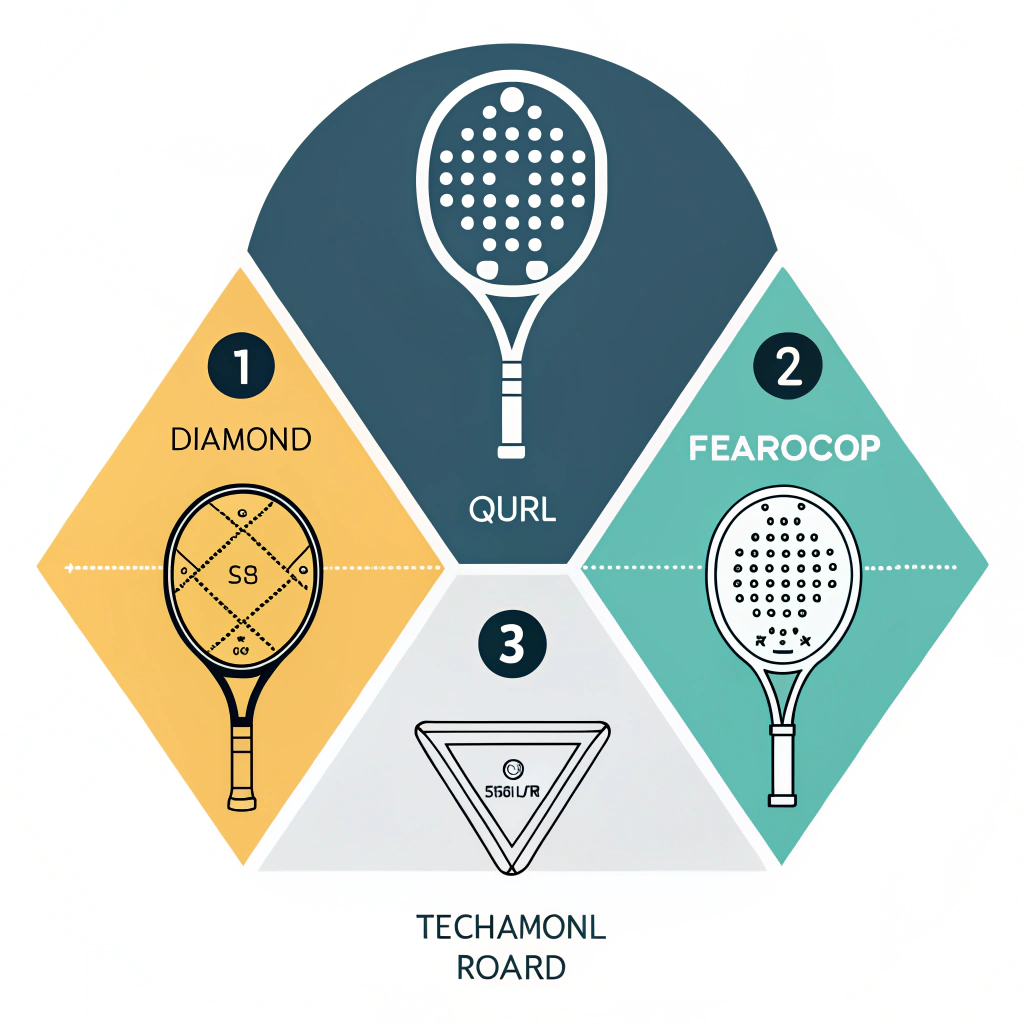
This table provides a clear visual guide to help your team quickly compare key features. When evaluating potential suppliers, such details go a long way to ensure that your selections meet both the technical and aesthetic needs of your clientele.
One of the most significant advantages of partnering with NEX Padel is our capability to offer extensive customization for every aspect of our paddle rackets. From the hand grip design4—where logos can be imprinted to reinforce brand identity—to the overall racket shape, we ensure every feature can be tailored to your specific requirements. Our advanced manufacturing process guarantees consistent quality and rapid prototyping capabilities, allowing for quick hand-sample evaluations and reliable bulk production.
Customization goes beyond mere aesthetics. It covers:
- Weight Adjustment: Changes in weight distribution can optimize a racket for either power or control.
- Balance Modification: Tailored to suit the player's style, be it an aggressive shot or precise control.
- Material Variation: Choosing between different carbon fiber types based on performance needs.
These options empower procurement managers to align product performance with market expectations precisely and ensure that every purchase represents a strong strategic investment.
The manufacturing practices and quality control mechanisms5 at NEX Padel serve as a strong testament to our reliability. We have perfected our production processes in Jiaxing, Zhejiang, integrating advanced production techniques that have been refined over years of experience. Key quality control strategies include:
• Rigorous testing on each batch to sustain performance consistency.
• Tight production tolerances ensuring that each racket meets exact technical specifications.
• Quick prototyping, which allows you to assess samples before a bulk purchase.
Such practices not only guarantee quality but also minimize issues post-purchase, which is critical for maintaining customer trust and safeguarding your company’s reputation as a procurement specialist.
It is important to consider that even with top-notch production techniques, selecting the right racket type must balance several parameters. For instance, while a Diamond racket may provide superior power, it might lack in overall ball control, making it unsuitable for players who require both attributes. Similarly, a Round racket is forgiving on off-center hits but may not support the aggressive playing style required by advanced athletes. Therefore, tailoring your purchase according to the predominant needs of your customer base is key.
Apart from the technical and manufacturing aspects, pricing and delivery terms are significant factors for B2B procurement. NEX Padel ensures:
- Competitive Pricing: Our long-term relationships with industry giants mean cost efficiencies are passed directly to you.
- Timely Delivery: With a dedicated production schedule and efficient supply chain management, we offer rapid turnaround times.
- Customization without Premium: Economies of scale in our production often allow for customized features without drastically elevating unit cost.
Creating a checklist for your internal procurement process might look like this:
• Define the primary performance requirements (control, power, or balanced).
• Evaluate the code of production including material grade and design type.
• Consider the extent of customization needed (custom printing, hand grip design).
• Request a sample batch to verify quality and performance metrics.
• Confirm pricing structures and delivery schedules relative to your supply chain needs.
Using such a checklist can simplify your decision-making process and enhance collaboration with manufacturing partners.
Beyond the technical specifications and competitive advantages, industry trends indicate a growing demand for high-performance, customizable sporting goods. Retail chains and clubs are increasingly focusing on products that can be tailored to specific market niches. By ensuring that your padel racket offerings meet these rising standards, you not only stay competitive but also drive customer satisfaction by offering advanced, high-quality sports equipment.
At NEX Padel, we are continually adapting our products with emerging trends and customer feedback. This proactive approach has allowed us to maintain our reputation as a vendor of choice among renowned brands. Our ongoing commitment to product innovation ensures that our products evolve in line with the demands of modern gameplay.
In summary, selecting the right padel racket for your business involves a detailed evaluation of material types, design shapes, and customization options. By focusing on key technical aspects—such as the carbon fiber grade and overall customization capabilities—you can better align your procurement strategy with the performance needs of your end-users. Our extensive experience at NEX Padel not only supports these technical requirements but also offers practical reliability in quality control, competitive pricing, and timely delivery.
The clear takeaway is to adopt a structured approach—compare specifications via detailed tables, evaluate cost and customization implications, and request samples before committing to bulk orders. This method will empower you to make well-informed decisions, ensuring that the products you procure provide excellent performance and a strong return on investment.
For further assistance and samples or to discuss detailed customization options, please consider contacting NEX Padel. Our dedicated team is ready to help align your procurement goals with our advanced padel racket solutions, ensuring that every purchase is a step toward market success.
People Also Ask
Q: How to choose the right padel racket for you?
A: The ideal padel racket aligns with the player's style and requirements. A control racket suits strategists while a power racket benefits aggressive players. Many find that a balanced racket, offering a mix of both, meets diverse needs—especially when technical specifications such as head size, weight, and string pattern are carefully considered.
Q: How do I find the right racquet for me?
A: To select the perfect racquet, focus on key elements: head size, weight, and the string pattern. A larger head size generally provides more power, a lighter weight enhances shot speed, and an open stringbed offers a power boost. Evaluating these aspects against your style of play is crucial in making an informed decision.
Q: What is the most forgiving padel racket?
A: Round padel rackets are typically the most forgiving due to their larger, centrally-located sweet spot. This design minimizes the impact of off-center hits, making them ideal for beginners or players who prioritize control and consistency over aggressive power.
-
carbon fiber construction: Click to learn how different carbon fiber constructions and grades (3k, 12k, and 18k) impact durability, performance, and overall design integrity in high-performance sports equipment. ↩ ↩
-
advanced production techniques: Click to explore the modern manufacturing processes and state-of-the-art techniques that ensure product consistency and quality while enabling rapid prototyping in sports equipment production. ↩ ↩
-
Teardrop Rackets: Click to discover the unique design characteristics of teardrop-shaped rackets, including how their geometry provides a balance between power and control for versatile gameplay. ↩ ↩
-
hand grip design: Click to understand the importance of ergonomic hand grip designs, how custom grips enhance player comfort and performance, and the role of branding in customized sports equipment. ↩ ↩ ↩2
-
quality control mechanisms: Click to read more about the robust quality control processes and testing protocols that ensure every product meets stringent performance standards and manufacturing tolerances. ↩ ↩