Skip to content

In summary, if your priority is a cost-effective, easy-to-handle option for broad-market appeal, fibreglass1 may be the right choice, while carbon fibre2 delivers enhanced performance, precision, and durability ideal for high-end models and professional-level play.
Decision makers in the sports equipment manufacturing industry increasingly face a conundrum: choosing between fibreglass and carbon fibre for producing performance padel rackets. In this article, we provide a technical and data-backed comparison to help you decide which material better meets your needs in terms of performance, durability, and cost efficiency.
Our discussion covers:
• An overview of fibreglass and carbon fibre properties
• A detailed comparison of key performance and economic metrics
• Production insights and customization capabilities
• Practical recommendations for B2B procurement decisions
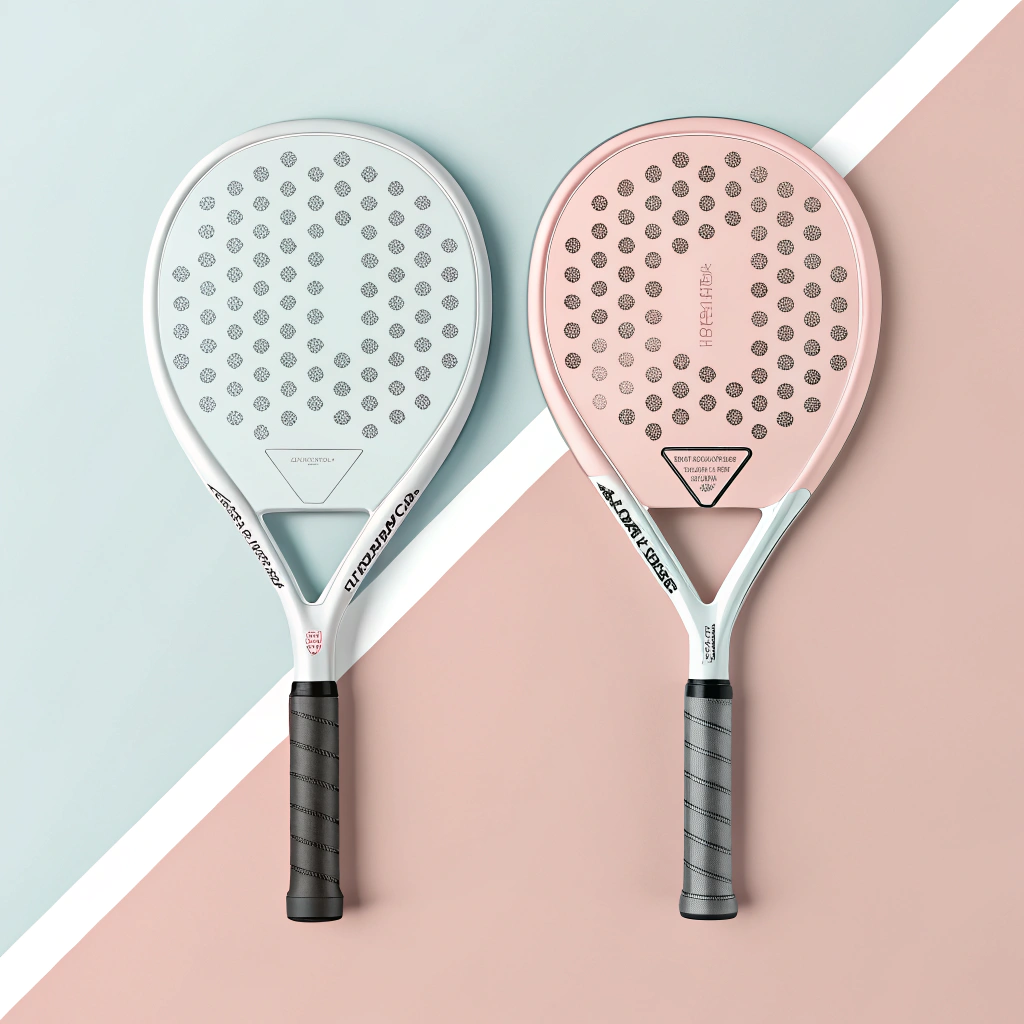
Fibreglass is a composite material known for its ease of handling, affordability, and softer feel. It has been a popular choice for entry-level and mid-range padel rackets. Manufacturers often select fibreglass when target customers include beginners or those looking for an economical solution without extreme performance requirements.
On the other hand, carbon fibre is synonymous with high-performance sports equipment. It is a premium material that offers exceptional stiffness, lightweight properties, and durability. Although carbon fibre rackets tend to have a higher production cost, they provide a harder feel and superior energy transfer—qualities that advanced and professional players demand.
| Property | Fibreglass | Carbon Fibre |
|---|---|---|
| Weight | Heavier relative to carbon fibre | Lighter, offers enhanced maneuverability |
| Stiffness | More flexible and forgiving | Rigid with high stiffness |
| Durability | Good durability with moderate wear | Superior wear resistance and longevity |
| Energy Transfer | Softer feel with controlled energy return | Greater energy return for precision power |
| Production Complexity | Easier to produce and mold | Advanced production techniques3 required |
| Cost Efficiency | Lower manufacturing costs | Higher manufacturing costs |
Key engineering insights:
• Fibreglass provides a soft feel that absorbs vibrations during impact, making it ideal for less aggressive play.
• Carbon fibre is engineered to minimize flex, offering excellent control and power by transferring more energy back to the ball.
At NEX Padel, our manufacturing strategy defaults to advanced production techniques ensuring both precision engineering and high durability. Our diverse material portfolio includes even the finest grade 3k, 12k, and 18k carbon fibre variants, thereby catering to a spectrum of requirements from recreational to professional levels. The possibility to custom-print and shape rackets further supports brand differentiation for our B2B partners.
3. Customization4 and Production Techniques
Customization aspects include:
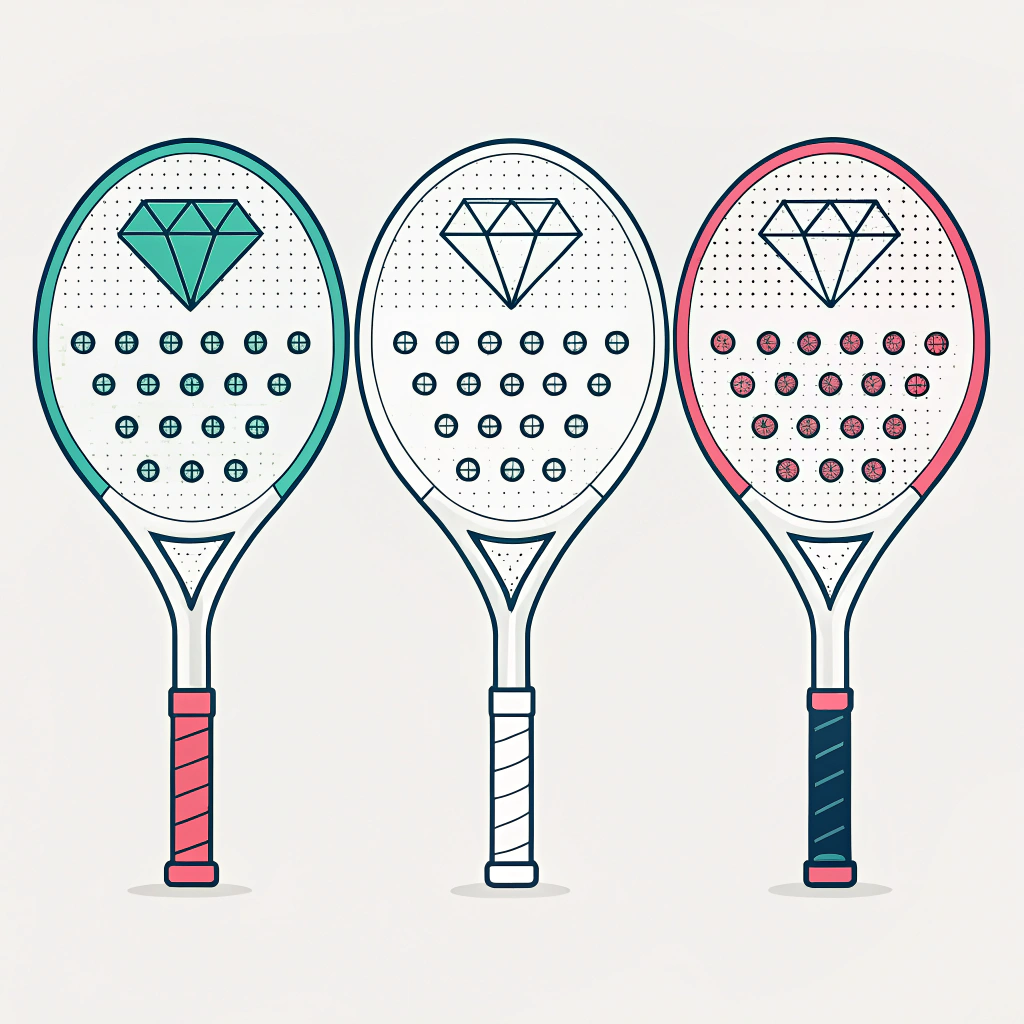
• Choice between Diamond, Round, and Teardrop racket shapes
• Tailor-made print designs and colour schemes
• Custom-designed hand grips and handle covers with logo options
These enhancements not only elevate the performance aesthetics of the racket but also provide significant market differentiation, particularly in competitive retail segments.
When evaluating materials for padel rackets, decision-makers need to balance between premium performance and total cost of ownership. Here’s a deeper look into both:
Advantages:
• Lower production cost – ideal for entry-level products
• Sufficient durability for casual play
• Simple manufacturing and faster turnaround time
• Softer feel translates to increased control for beginners
Limitations:
• Heavier weight can compromise agility during high-speed play
• Lower stiffness may reduce precision in high-demand scenarios
• Less suitable for advanced players needing rapid energy transfer
Advantages:
• High stiffness and rigidity, enabling powerful shots
• Lightweight design that enhances player mobility and endurance
• Extended durability with superior resistance to wear
• Offers significant performance benefits for advanced players
Limitations:
• Increased production cost reflecting advanced materials and techniques
• Requires precise engineering techniques for optimal performance
• A steeper learning curve in design and quality control
Consider the balance between cost and performance within your production strategy. For B2B buyers targeting the professional and high-end sporting segments, carbon fibre rackets offer a distinct competitive edge. However, if your strategy prioritizes market penetration with cost-effective, durable, and versatile products, fibreglass might be preferable.
At NEX Padel, we pride ourselves on a balanced production approach. Our rigour in quality control, whether using fibreglass or carbon fibre, ensures every racket meets exacting standards. Using advanced production techniques not only guarantees consistency but also allows us to offer quick sampling and timely delivery—a crucial factor for B2B procurement managers facing tight product launch deadlines.
The expertise in handling high-technology materials means every carbon fibre racket undergoes a precise curing process, quality monitoring at multiple stages, and rigorous testing for impact performance. Meanwhile, our fibreglass productions are streamlined for efficiency, resulting in an optimal combination of performance, durability, and speedy market entry.
To further illustrate, the following table summarizes how our state-of-the-art production techniques optimize both materials:
| Production Aspect | Fibreglass Rackets | Carbon Fibre Rackets |
|---|---|---|
| Sampling & Prototyping | Fast sampling and approval cycles | Detailed engineering checks, slightly longer cycle |
| Quality Control | High consistency with batch testing | Multiple-stage quality monitoring |
| Lead Times5 | Shorter due to simpler processes | Slightly longer due to advanced production |
| Customization Capabilities | Standard and customizable options | Fully customizable shapes, prints, and finishes |
For procurement managers, it is crucial to rely on data when approving new product lines. The performance metrics for material stiffness, durability, and cost efficiency are not just theoretical—they are supported by industry-standard testing protocols. Consider the following critical points:
-
Energy Return Efficiency:
Studies show that a rigid carbon fibre structure consistently outperforms fibreglass in transferring energy to the ball. This can translate into higher shot velocities and more accurate ball control during competitive play. -
Material Fatigue and Life Cycle:
Repeated impact stresses in padel rackets can lead to material fatigue. Carbon fibre's molecular structure allows it to maintain its form and performance longer than fibreglass under similar stress conditions. -
Cost-Benefit Analysis:
While the initial investment in carbon fibre materials might be higher, the longer lifespan and higher performance often result in better long-term value. Conversely, fibreglass serves as an excellent choice when budget constraints are a critical consideration and the target market includes entry-level players.
Decision-making in padel racket production must align with your overall business strategy. Based on our analysis:
• If your focus is on capturing a larger market share with cost-effective and efficiently produced rackets, fibreglass is an attractive material. It strikes a balance between performance and affordability, offering a softer feel that can be marketed as user-friendly and reliable for beginners and casual players.
• For brands targeting a premium market segment that values high-performance equipment, investing in carbon fibre is advisable. The rigidity, superior energy transfer, and lightweight design contribute significantly to overall game performance—attributes that resonate well with professional athletes and high-stakes competitive play.
• For companies with a diversified product line, consider a dual-strategy production model. This could mean launching both fibreglass models for mass-market appeal while offering a specialized range of carbon fibre rackets for high-end performance. Such an approach not only caters to a broader customer base but also builds brand equity across different market segments.
Before finalizing a material decision, address the following questions within your supply chain and production units:
• Are you equipped with the necessary tools and quality control systems to work with carbon fibre?
• Does your current product development pipeline allow for vertical integration of advanced material technologies?
• How do your customers’ performance expectations align with the material’s technical characteristics?
Addressing these concerns in your early strategic planning phases can significantly smooth the transition between material choices, ensuring long-term operational efficiencies and market success.

In summary, both fibreglass and carbon fibre have their distinct advantages and cater to different segments within the padel racket market. B2B buyers must weigh the trade-offs between cost, performance, and production complexity based on their specific business goals.
Actionable Next Steps:
- Review your current production capacities and determine whether an upgrade is needed for high-performance carbon fibre production.
- Analyze your target market’s needs—consumer performance preferences will directly influence the material choice.
- Consider a dual-strategy to support both cost-effective broad-market products and premium high-performance offerings.
- Engage with experienced partners like NEX Padel, who offer comprehensive customization options along with rapid prototyping and delivery, ensuring your business remains agile in a competitive landscape.
By integrating these insights and aligning them with your organizational strategy, you are well-equipped to make an informed, data-driven choice that enhances your product offerings and meets the evolving demands of the padel racket market.
• Which is better carbon fiber or fibreglass padel racket?
Carbon fibre is generally preferred for high-performance models, offering superior rigidity, lightweight design, and enhanced energy transfer, making it ideal for advanced players. Fibreglass remains a cost-effective solution with a softer feel, suitable for beginners or more versatile use.
• What material is best for padel rackets?
The choice depends on the intended user profile. For a high-quality, durable, and performance-oriented racket, carbon fibre is the preferred option. However, fibreglass can be advantageous due to its lower cost and added flexibility, which may be better suited for entry-level models.
• Are carbon fiber or fiberglass paddles better for pickleball?
For pickleball, fiberglass typically provides increased flexibility on impact, offering a higher energy return. In contrast, carbon fibre delivers greater stiffness and precision. The optimal choice depends on the player’s style and performance requirements.
-
fibreglass: Click to read an in-depth analysis of fibreglass properties, covering its advantages in cost efficiency, ease of production, and performance characteristics for various market segments. ↩ ↩
-
carbon fibre: Click to explore the technical details of carbon fibre, including its superior mechanical properties, manufacturing challenges, and role in high-performance sporting equipment. ↩ ↩
-
Advanced production techniques: Click to learn about the sophisticated manufacturing methods required for materials like carbon fibre, and how these techniques impact product quality and lead times. ↩ ↩
-
Customization: Click to see how customization options can drive brand differentiation and cater to diverse consumer demands in the competitive sports equipment market. ↩ ↩
-
Lead Times: Click to understand how lead times influence production efficiency and market responsiveness in B2B procurement and manufacturing processes. ↩ ↩