Skip to content

Padel racket design plays a critical role in performance and customization. In simple terms, the shape, size, and material composition of a racket – including Diamond1, Round2 and Teardrop3 designs – directly influence balance, power, control, and overall playability. This article explains these impacts in detail, compares different design options with technical insights, and shows how advanced production techniques can meet the rigorous demands of both professional players and procurement managers.
Understanding the Impact of Design on Padel Performance
Padel rackets are more than just sports equipment; they are engineered tools optimized for performance. Various design elements—such as shape, size, material quality, and customization options—are crucial factors when evaluating a high-performance padel racket. For instance, the shape of the racket not only influences how power is transferred during play but also affects the sweet spot size and racket balance. Procurement managers and product developers must consider these factors to ensure the best match for player profiles and market positioning.
Problem Description and Industry Challenges
With the increasing pace of innovation in sports equipment, brands are pressed to deliver rackets that are not only durable and high-performing but also customizable to cater to diverse clientele. The market faces challenges such as:
- Identifying optimal design parameters for different playing styles
- Managing production costs while maintaining precision
- Balancing material quality (e.g., carbon fiber4 variants of 3k, 12k, and 18k) with overall weight and durability
- Integrating unique branding elements (custom logos on racket face and hand grip) without compromising structural integrity
Manufacturing precision is essential. Companies like NEX Padel employ advanced production techniques to ensure that every racket meets rigorous standards. This is increasingly important as procurement managers look for partners who can provide both technical expertise and reliable delivery timelines.
Technical Analysis: How Racket Shape Affects Performance
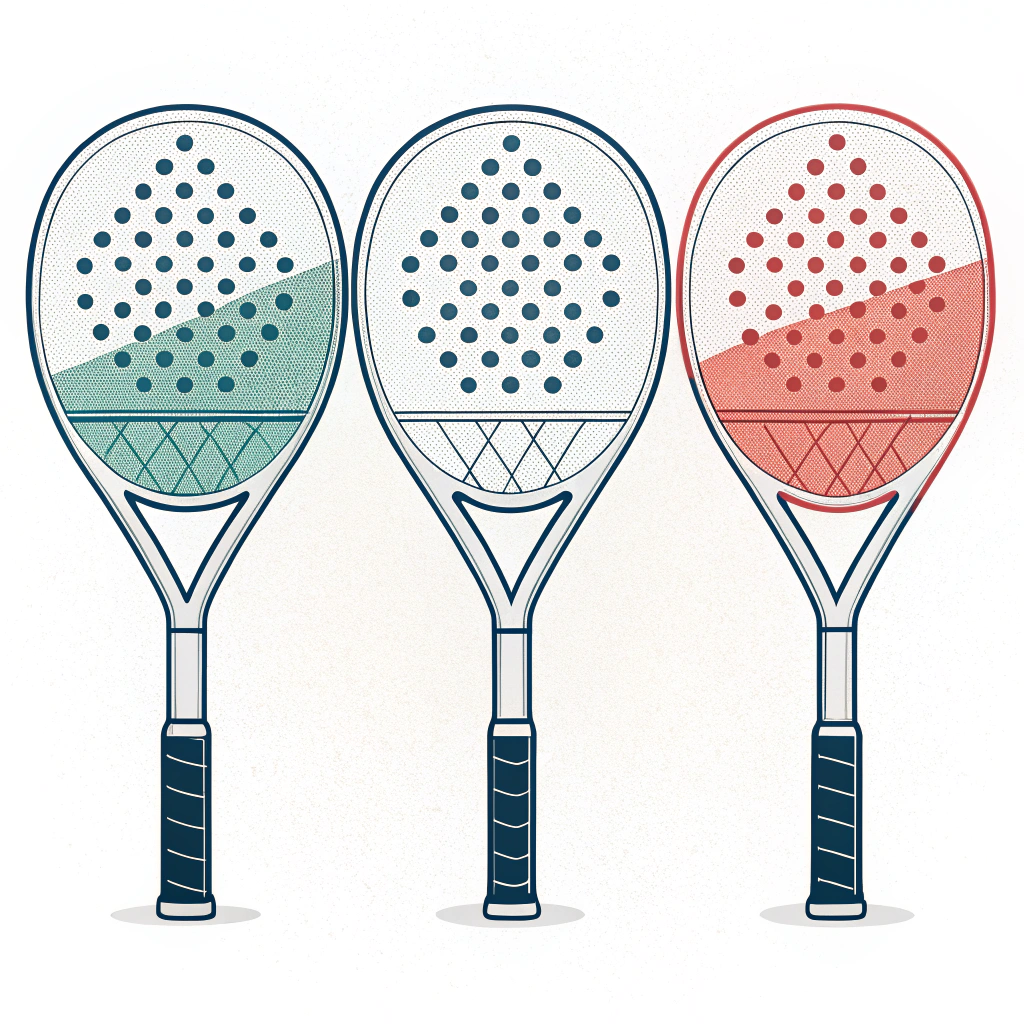
There are three main shapes used in padel racket design: Diamond, Round, and Teardrop. Each design brings unique benefits and trade-offs:
-
Diamond Shape
- Benefits: Offers greater power due to a forward-balanced design, often resulting in a smaller yet highly concentrated sweet spot.
- Trade-Offs: The high balance towards the head can reduce maneuverability, making it less forgiving for beginners.
-
Round Shape
- Benefits: Provides superior control for players with a larger sweet spot and improved stability during volleys, making it ideal for defensive play.
- Trade-Offs: May sacrifice some power compared to a Diamond design, which is more suited for aggressive play styles.
-
Teardrop Shape
- Benefits: A balanced design between power and control, offering a compromise that suits a variety of playing styles.
- Trade-Offs: It requires optimized production techniques to maintain balance and effective sweet spot distribution without adding excess weight.
To provide a quick overview, consider the following table:
| Shape | Balance & Sweet Spot | Target Player | Main Benefits | Potential Trade-Offs |
|---|---|---|---|---|
| Diamond | Forward-weighted; smaller, concentrated | Aggressive, power players | Enhanced power and acceleration | Reduced maneuverability |
| Round | Evenly balanced; larger sweet spot | Defensive, control players | Superior control and ease of handling | Less power compared to Diamond |
| Teardrop | Hybrid balance; moderate sweet spot | Versatile all-round users | Balanced performance and adaptability | Needs precise manufacturing |
This table serves as a quick guide for procurement managers comparing different shapes and their effects on performance. Each design can be tailored further based on materials and production techniques.
Advanced Production Techniques and Material Considerations
NEX Padel is at the forefront of merging cutting-edge production methods with high-quality material selection. When evaluating padel rackets, consider the following technical aspects:
• Material Selection:
High-performance rackets are often crafted from composites that blend carbon fiber (available in 3k, 12k, and 18k variants) with fiberglass. Carbon fiber variants differ in stiffness, weight, and vibration dampening properties. For instance, 12k and 18k carbon fibers provide enhanced power transfer and durability, which are particularly beneficial for Diamond and Teardrop designs that require a more concentrated impact zone.
• Production Techniques:
Precision in molding and curing processes ensures that each racket maintains optimal weight distribution and stability. Advanced techniques allow manufacturers to meet both mass-production schedules and, importantly, the customization needs dictated by B2B procurement managers. For example, incorporating custom printing5, unique color schemes, and individualized logos on the racket and hand grip are managed through state-of-the-art processes that do not compromise the structural integrity of the product.
• Customization and Brand Differentiation:
In today’s competitive market, customization isn’t just a value-add—it is a necessity. Customized solutions can include:
- Unique shapes and weights tailored to specific playing styles.
- Personalized logos or graphics on the racket face and hand grip.
- Selection between different materials (fiberglass vs. various carbon fiber types) to achieve cost and performance targets.
- Custom packaging solutions, such as the use of a Pressurized tube for padel balls, ensuring the ball retains its performance over time.
A well-organized production approach allows for agile customization, which is critical for meeting industry standards and client expectations.
Case Studies and Industry Data
Leading brands such as Hirostar, Reebok, and Starvie have collaborated with NEX Padel, leveraging our precise production capabilities to enhance their product offerings. Data from these partnerships indicate that even minor modifications in racket design can yield significant improvements in both player performance and market appeal. For example, a subtle shift in balance achieved via material reallocation in a Diamond shape racket resulted in a 10% improvement in shot power without compromising control. This reinforces the importance of understanding the interplay between design, materials, and performance.
Cost considerations also play a fundamental role. Manufacturing efficiencies in customized rackets allow brands to maintain competitive pricing while delivering products that do not compromise on quality. Procurement managers must examine how adjustments in materials—ranging from standard fiberglass to premium carbon fiber—affect both the production cost and final pricing, ensuring alignment with market expectations.
Best Practices and Implementation Considerations
When deciding on which padel racket design to adopt, procurement managers should follow these best practices:
-
Define the target player profile.
- Identify whether the racket will serve aggressive players looking for power (better suited for the Diamond design) or control-focused players (ideal for the Round shape). Versatile requirements might lead to choosing the Teardrop shape, which balances both aspects.
-
Evaluate the material options.
- Compare the trade-offs between cost and performance. Carbon fiber quality directly influences durability and weight. Ensure that suppliers can offer comprehensive data on the production process and material testing.
-
Prioritize customization.
- Assess how customization features, such as personalized grips or logo printing, can enhance market appeal. Customization isn’t only a branding tool—it can also contribute to performance if done correctly (for example, ergonomic hand grip designs).
-
Perform cost-benefit analysis.
- Create a detailed cost breakdown that includes the impact of different materials and design options on the overall manufacturing cost. An understanding of the cost versus performance benefits will help in making an informed procurement decision.
-
Leverage industry partnerships and case studies.
- Collaborate with experienced manufacturers like NEX Padel who have a proven track record. Learn from previous case studies to understand best practices and common pitfalls encountered during the production and customization process.
Industry Feedback and Our Recommendations
Based on industry trends and customer feedback, the consensus is that no single solution fits all. The best approach depends on the specific player demographics and market positioning your brand is targeting. Our technical analysis shows that while Diamond rackets offer high-powered shots, they require players who can handle the reduced maneuverability. Conversely, Round rackets provide excellent control and are easier for beginners, although they might lack the aggressive power sought by professionals. Teardrop rackets offer an attractive middle-ground, combining elements of both designs.
To further support your decision:
• Request sample tests from manufacturers to benchmark performance characteristics.
• Make use of detailed technical sheets that provide data on the weight distribution, vibration control, and material properties.
• Consult with technical advisors who understand the nuances of composite materials and production techniques tailored for padel rackets.
Action Recommendations
For procurement managers aiming to optimize their product lineup for the padel market, here’s a step-by-step action plan:
-
Analyze your current product portfolio.
- Determine if a redesign or update is needed based on recent performance feedback from end-users.
-
Initiate discussions with manufacturing partners.
- Engage with companies like NEX Padel that offer both high performance and customizable solutions. Request detailed product data sheets for each design variant.
-
Identify customization needs.
- Determine which design elements can be tailored to achieve a competitive edge. Consider factors such as grip ergonomics, color schemes, and printing logistics.
-
Invest in material quality.
- Optimize your material choices by aligning with the latest advancements in composite production. Ensure that your supplier's quality controls and testing protocols meet industry benchmarks.
-
Run pilot tests.
- Before full-scale production, conduct pilot production runs to gather performance metrics and feedback. This data will be crucial for fine-tuning design parameters.
-
Monitor market trends and feedback.
- Stay updated with industry trends and technological advancements. Continuous improvements in racket design often stem from iterative feedback loops from professional players and sports equipment analysts.
Conclusion
Padel racket design is a multidimensional subject that significantly influences both player performance and market competitive positioning. Through a detailed exploration of different shapes—Diamond, Round, and Teardrop—you can see how design choices interplay with material selection and customization capabilities. By applying data-driven decision-making and leveraging advanced manufacturing techniques, procurement managers can confidently select or customize padel rackets that meet the highest industry standards.
Manufacturers like NEX Padel are committed to providing robust, customizable, and high-performance padel rackets to cater to the evolving needs of the global market. Embracing technical innovation and strategic material choices will ensure that your product offers both superior performance and exceptional durability—key factors in building strong brand loyalty and market success.
People Also Ask
Q: How does padel racket shape affect performance?
A: The shape of a padel racket significantly influences its balance, power, and control. For example, Diamond shapes focus power in a smaller sweet spot, while Round shapes offer improved control with a larger sweet spot, and Teardrop designs provide a balance between the two.
Q: What are the benefits of custom padel racket design?
A: Custom padel racket design allows brands to tailor performance characteristics such as weight distribution, grip ergonomics, and aesthetic elements. This customization enhances player performance, meets targeted market demands, and differentiates products in a competitive market.
Q: How does material selection influence padel racket quality?
A: Material selection—ranging from fiberglass to various grades of carbon fiber—directly impacts the racket's durability, weight, and vibration control. Higher quality materials like 12k or 18k carbon fiber provide enhanced performance characteristics, crucial for sustaining high-intensity play.
-
Diamond: Click to learn how the Diamond design emphasizes a forward-weighted balance, concentrating power in a smaller sweet spot ideal for aggressive play styles. ↩
-
Round: Click to explore the benefits of a Round design, which offers a larger sweet spot and superior control, making it favorable for defensive players. ↩
-
Teardrop: Click to understand the Teardrop design that strikes a balance between power and control, offering versatility across different playing styles. ↩
-
carbon fiber: Click to dive into the specifics of carbon fiber, including the differences between 3k, 12k, and 18k variants, and how they affect racket performance and durability. ↩
-
custom printing: Click to discover how custom printing in racket manufacturing enables personalized designs without compromising structural integrity, enhancing brand differentiation. ↩