Skip to content

Short answer: Choose the logo printing method that balances durability, color fidelity (Pantone1 match), material compatibility and unit economics—for single- or spot-color branding on curved carbon or fiberglass faces, pad printing2 or UV printing is cost-effective; for full‑color covers or all-over designs, heat transfer / film transfer (sublimation/thermal transfer) plus a protective topcoat delivers the best visual result. MOQ3, tooling, and surface prep will drive your final supplier choice—ask for abrasion and adhesion test data before scaling.
Why this matters now
Senior product managers and procurement leads are evaluating private‑label padel rackets not just for price, but for brand visibility, longevity, and supply reliability. A logo that peels, fades, or fails color expectations damages ROI faster than a slightly higher unit cost. This guide helps you compare printing options, understand how materials (fiberglass vs 3k/12k/18k carbon4) affect printing, estimate MOQ and lead time, and craft a supplier checklist to shortlist OEMs like NEX Padel.
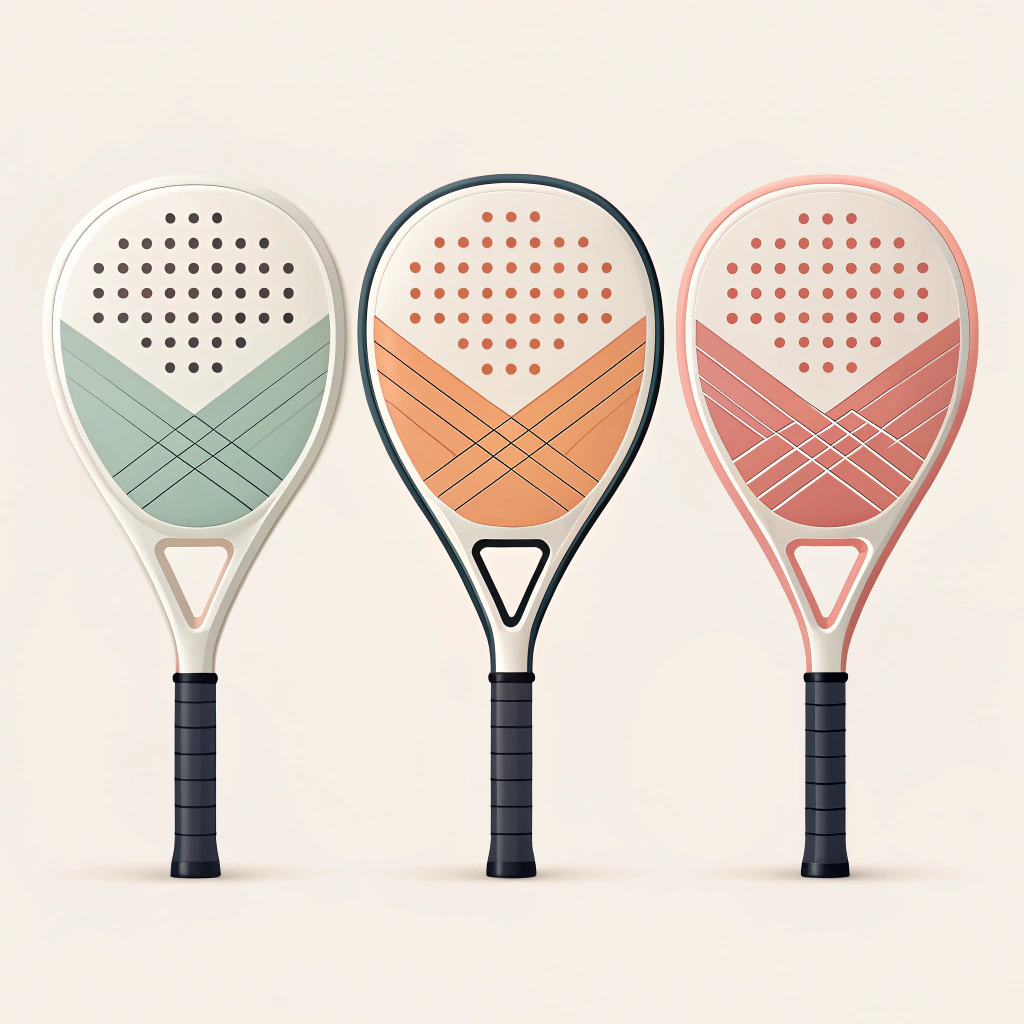
Key selection dilemma
You typically face two questions simultaneously:
- Do you need premium, full‑color branding or a durable spot‑color logo?
- Are you prioritizing low MOQ and fast time‑to‑market, or are you optimizing per‑unit cost at scale?
Answering these determines whether you pick pad printing, UV printing, heat transfer (sublimation/film), screen printing, or decals + lacquer.
Quick method overview (one‑line)
- Pad printing: Best for single/spot colors on curved surfaces; low-to-mid cost, good adhesion after prep.
- UV printing: Direct-to-surface full‑color possible; good durability with primer/topcoat; medium MOQ.
- Heat transfer / Film transfer (incl. sublimation): Best full‑color, photographic prints and Pantone-like matches after color proofing; needs film and protective coating.
- Screen printing / Offset / Decals: Used for specific looks; may require clear coating for abrasion resistance.
Detailed comparison (decision table)
| Method | Best for | Color fidelity | Durability / Abrasion | Typical MOQ | Relative cost per unit | Material notes |
|---|---|---|---|---|---|---|
| Pad printing | Spot logos, small text | Good for 1–4 colors | Good with primer & lacquer | 100–300 per design | Low | Works well on fiberglass and resin-coated carbon; surface prep required |
| UV printing | Spot & small full‑color graphics | Very good (digital) | Good to very good with UV varnish | 200–500 | Medium | Adhesion improved with primer on carbon fiber faces |
| Heat transfer / Film (sublimation / thermal transfer) | All-over or photographic designs | Excellent after proofing | Very good with overcoat | 300–1000 | Medium-high | Film adheres to cured resin; best for complex art |
| Screen printing | Bold spot graphics | Excellent for solids | Very good with topcoat | 300–1000 | Medium | Classic, robust; color matching via ink formulation |
| Decal + Epoxy/UV Lacquer | Premium finishes / metallics | Excellent | Excellent when sealed | 500+ | High | Preferred for high-end carbon rackets; costlier but luxurious finish |
Notes on ranges: these MOQs and costs depend on factory, number of colors, and whether you need custom molds or cutting dies. Always obtain a written quote.
Material compatibility: what procurement must know
- Fiberglass faces are easier to print on—inks adhere well after basic cleaning and primer. If your lineup uses primarily fiberglass, you have more method flexibility.
- Carbon fiber (3k/12k/18k weave) typically has a glossy epoxy resin finish after curing. That finish can make adhesion trickier. Best practices:
- Use a primer or surface activation (light plasma or flame treatment) before printing.
- Prefer methods proven on carbon: pad printing with adhesion promoter, UV printing with primer + UV varnish, or film transfer with reliable lamination and overcoat.
- If you require visible carbon weave under the logo, test translucency options—printing over clear coats can affect weave visibility and color.
Durability and abrasion resistance
Your brand needs logos that survive repeated impacts, racket rubbing, and ball abrasion. Ask suppliers for test data:
- Taber abrasion test5 results (cycles to failure)
- Cross‑cut adhesion test ratings
- UV fade testing (Xenon arc, 500–1000 hours)
- Salt spray tests only if your rackets are used heavily outdoors near coastal areas
At NEX Padel we run abrasion and adhesion tests on every new finish recipe and share data with clients to set realistic warranty terms.
Design & Pantone color matching
- For spot-color logos, use Pantone spot inks and request printed color swatches on your actual finish (not just a paper mockup). Expect slight variation if the racket has textured or gloss topcoats.
- For full-color art, supply high-resolution vector files and request a digital proof plus a physical sample mockup. Film transfer + topcoat yields the most predictable matches across batches.
Sampling, tooling fees, and timelines
- Prototype samples: expect 7–15 days for printed sample run if no new mold is required. Custom molds or new core shapes add 10–25 days and tooling fees.
- Typical sample costs: $100–$400 per sample (depends on print complexity, custom molds, and shipping).
- Tooling fees: For custom handle caps, full custom shapes, or new mold cavities, tooling can be $500–$2,500 depending on complexity. Amortize across production volume.
- Mass production lead times: 25–45 days after sample approval for typical orders; longer for seasonal peaks.
Pricing drivers to ask suppliers about
- Number of colors and printing steps (each color pass adds cost and potential registration work).
- Surface preparation steps (primers, flame treatment).
- Protective topcoat (UV lacquer, epoxy) and labor for curing.
- Special effects: metallic inks, foils, or tactile finishes increase cost.
- Packaging and labeling (individual poly bags, tubes, printed boxes).
- Freight terms and customs documentation.
Quality control checklist for procurement
- Pre‑production sample (PPS) with final inks, topcoat, and handle/logo placement.
- Pantone/swatches under specified lighting conditions (D65).
- Adhesion test report and abrasion test report.
- First Article Inspection (FAI) photos and dimensional checks.
- Production line QC: random pull‑tests, visual checks for registration, color, and defects.
- Pre‑shipment inspection: 1–2% sampling or per contractual AQL.
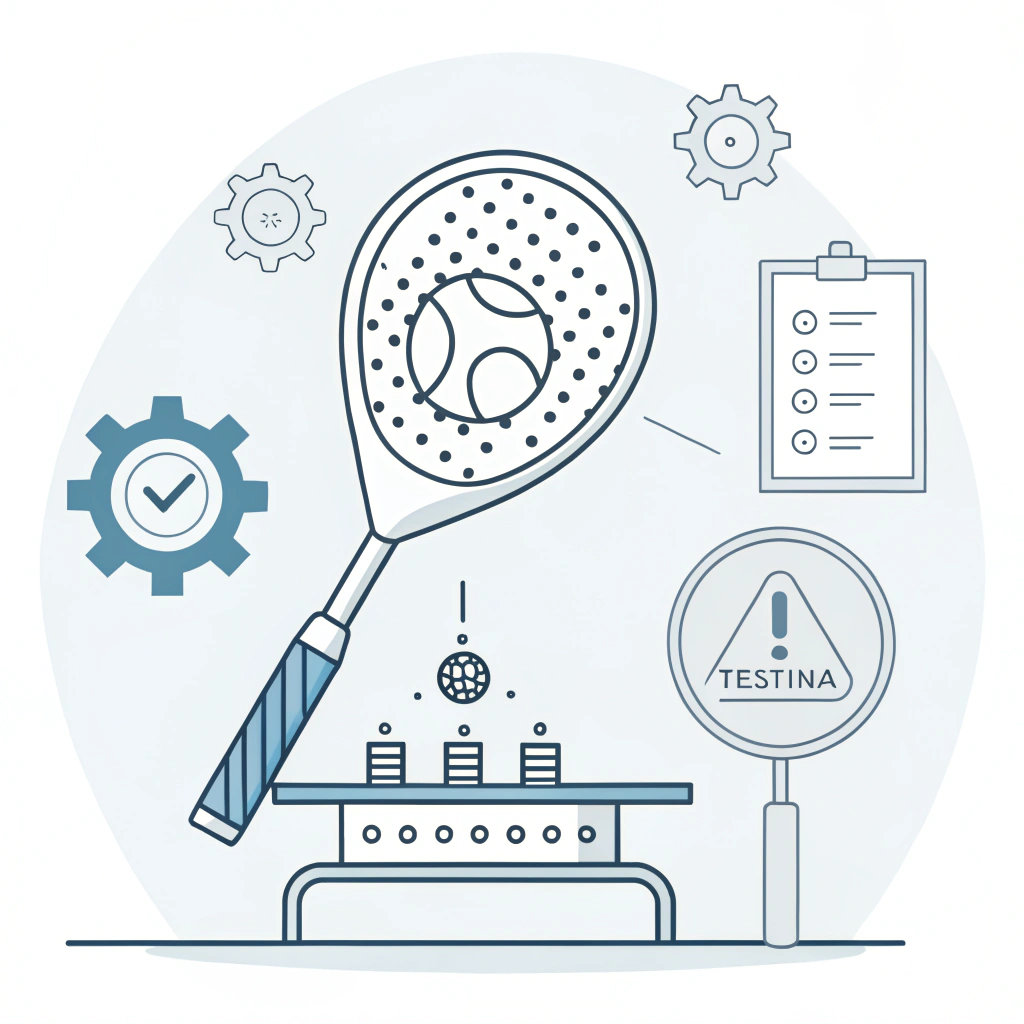
Practical decision scenarios
- If you need a low‑cost co‑branded racket for a tournament with a simple two‑color logo: choose pad printing — quick sampling, low unit cost, and acceptable durability with primer and topcoat.
- If you want a premium retail line with photographic art and exact brand colors: choose heat transfer/film or UV printing plus varnish, accept higher MOQ, and insist on physical color approvals.
- If your line uses high‑visibility carbon weave and you want the weave visible under the logo: discuss clearcoat printing and test adhesion carefully—expect higher sampling iteration.
Sample procurement timeline (typical)
- Week 0: RFP sent with artwork, target MOQ, materials (e.g., 3k carbon), packaging specs.
- Week 1: Supplier replies with quote, sample cost, tooling estimate.
- Week 2–3: Approve sample order; pay sample fee.
- Week 3–5: Receive sample(s); run adhesion/abrasion checks.
- Week 5–6: Approve production or request second iteration.
- Week 6–12: Mass production and QC, then shipping.
Case example (NEX Padel experience)
We worked with a brand that needed a retail line with a full‑color gradient and visible carbon weave. We recommended heat transfer film for the art, followed by a thin UV lacquer to keep weave visibility and add abrasion resistance. Sample iteration: 2 rounds, 12 days total. Result: Pantone‑like match within tolerance and 30% fewer returns due to peeling vs previous supplier.
Practical checklist to shortlist OEMs
- Ask for past OEM references (brands and SKUs).
- Request physical samples of similar finishes and materials.
- Confirm they can handle your required 3k/12k/18k carbon types.
- Request QC data: abrasion and adhesion tests.
- Confirm sample and mass MOQ, tooling costs, and lead times in writing.
- Confirm capacity and contingency plans for seasonal spikes.
- Negotiate payment terms tied to FAI and pre‑shipment inspection.
Final recommendation
For most mid‑to‑high end private‑label padel lines, start with a small validated run (300–500 units) using the printing method that matches your visual goals: pad printing for simple logo consistency and heat transfer/UV printing for premium full‑color work. Prioritize suppliers who provide test reports, quick sampling, and transparent tooling and lead‑time terms. At NEX Padel we support quick samples, multiple material options (fiberglass and various carbon weaves), and full customization down to grip logos and handle caps—reach out for a tailored quote and sample plan.
People Also Ask
What does your logo say about your brand?
A logo is a recognition shortcut and a promise. For sports equipment, the logo signals quality, positioning (premium vs mass), and affiliation (team or brand). On a padel racket, a crisp, durable logo communicates professionalism and reliability—attributes that influence purchase decisions, sponsorship appeal, and brand recall.
Do different padel rackets make a difference?
Yes. A racket’s shape (Diamond, Round, Teardrop or custom), materials and construction determine its sweet spot, balance of power vs control, and feel. Branding and printing do not change performance directly, but the perceived value from a high-quality finish and consistent visuals affects buyer preference and perceived performance.
What is the importance of branding in sports marketing?
Branding creates identity, loyalty, and differentiation in a crowded market. Effective branding on rackets—including consistent logo placement, Pantone matching, and durable finishes—drives retail visibility, supports team or ambassador programs, and increases resale and sponsorship value.
-
Pantone: Read to learn best practices for spot-color matching on non-paper substrates, why you must proof on the actual finish (not just paper), and how texture or gloss can shift perceived color. ↩
-
pad printing: Read to understand why pad printing is often the best low-cost method for single/spot-color logos on curved or textured racket faces, what surface prep and adhesion promoters are needed, and typical MOQ and durability expectations. ↩
-
MOQ: Read to learn how minimum order quantities affect unit economics, sample runs, tooling amortization, and negotiation levers for B2B procurement. ↩
-
3k/12k/18k carbon: Read to learn how different carbon weaves impact aesthetic visibility, resin finish, stiffness/weight tradeoffs, and specific printing and adhesion considerations for each weave type. ↩
-
Taber abrasion test: Read to understand what the Taber test measures (abrasion cycles to failure), how to interpret results for logo durability, and what thresholds are reasonable for racket surfaces. ↩