Skip to content

Short answer: For procurement teams evaluating OEM padel rackets, choose the material, core density and shape that match the target player profile (power vs. control), then qualify suppliers on rapid prototyping, consistent quality control, custom printing capability, MOQ1 & lead time, and verified factory references. A balanced mix—12k carbon face2, medium-density EVA core, and teardrop or round geometry—often delivers the best combo of playability, manufacturability and margin for broad retail assortments.
Why this comparison matters for procurement
- You must convert technical trade-offs (3k/12k/18k carbon, fiberglass, EVA/foam cores, racket shapes) into commercial outcomes: returns, warranty issues, and sell-through.
- The wrong OEM choice delays launches, increases returns and erodes margins. The right partner shortens time-to-shelf and unlocks SKU differentiation.
This guide helps you decide which construction choices matter most and how to assess OEM capabilities so you can make a procurement decision with measurable risk controls.
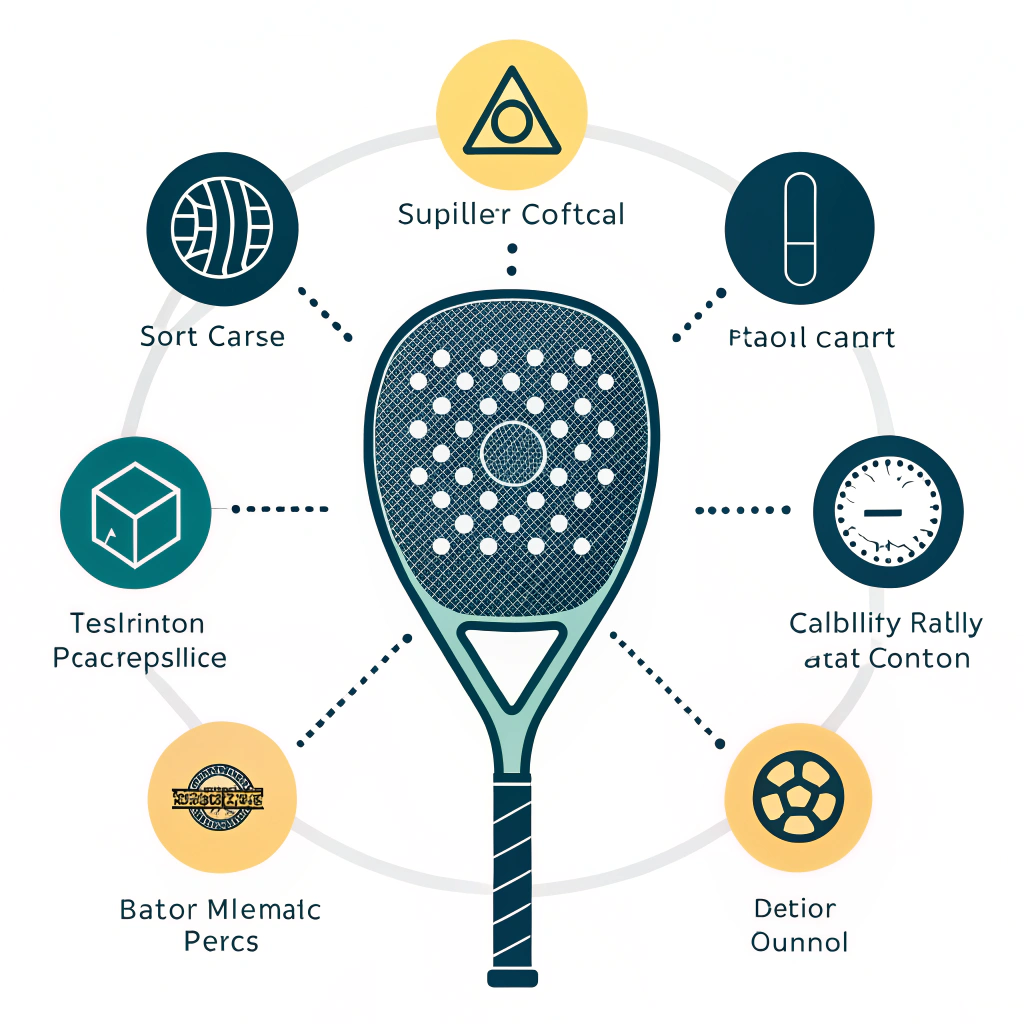
- Decision dilemma: What are you optimizing for?
Procurement decisions fall into three common targets:
- Maximize retail margin and volume: favor cost-efficient constructions (e.g., fiberglass face, mid-density core), predictable lead times and lower MOQ.
- Differentiate with premium performance: favor 12k–18k carbon faces, stiffer cores or hybrid layups, premium finishing and tighter QC.
- Provide a complete range that covers beginners to advanced players: mix shapes (Round for control, Diamond for power, Teardrop for balance) and tier materials across SKUs.
Before you contact suppliers, define:
- Target retail price bands
- Player level segmentation (beginner, intermediate, advanced)
- Required customization (logos, colors, hand grips, butt caps)
- Lead-time tolerance and launch date
- Core technical differences (quick reference)
- Faces / Skins
- Fiberglass: lower cost, more flex, better comfort for beginners, less crisp feel and lower durability vs. carbon.
- 3k carbon: entry-level carbon fiber; good stiffness but visible weave; cost-effective.
- 12k carbon: balance of stiffness, surface finish and cost—widely used for mid-to-high performance rackets.
- 18k carbon: tighter weave, premium stiffness, premium feel, higher cost and slightly more brittle under mishits.
- Cores
- EVA (ethylene-vinyl acetate)3: common; available in soft/medium/hard densities; affects power and control. Harder EVA = more power, less comfort.
- Foam (non-EVA, e.g., PE foam): lighter and can give more “pop” at similar densities; sometimes less durable.
- Shapes
- Round: sweet spot centered; control-focused; easier for beginners.
- Teardrop: mid sweet spot; balanced power/control; best for broad market appeal.
- Diamond: higher sweet spot; power-focused; preferred by advanced players.
- Multi-dimensional comparison table (materials × commercial impact)
| Feature | Fiberglass face | 3k Carbon | 12k Carbon | 18k Carbon |
|---|---|---|---|---|
| Player feel | Softer, forgiving | Stiff, entry carbon | Balanced, crisp | Very stiff, premium |
| Durability | Medium | Medium-High | High | High (but brittle risk) |
| Cost | Low | Medium-Low | Medium | High |
| Surface finish | Acceptable | Visible weave | Smooth & premium | Very premium |
| OEM processing complexity | Low | Medium | Medium-High | High |
| Ideal SKU | Budget / beginner | Lower-tier performance | Core performance | Premium pro models |
Add core-density dimension:
| Core density | Feel | Target player |
|---|---|---|
| Soft EVA | Comfort, control | Beginners / recreational |
| Medium EVA | Balanced power/control | Intermediate |
| Hard EVA | Power, low deformation | Advanced / power hitters |
- Manufacturer capability checklist (what procurement must verify)
Technical capabilities
- Materials portfolio: can the OEM supply 3k/12k/18k carbon and multiple fiberglass options on demand?
- In-house layup vs. outsourcing: in-house gives faster iterations.
- Heat/press equipment: uniform press temperature and pressure yield consistent density and balance.
Prototyping & sampling - Sample lead time (typical): 7–14 days for standard templates; 14–30 days for full custom designs with unique molds.
- Iterations allowed and sample cost policy.
Customization - Printing methods (pad printing, full sublimation, UV printing), minimum color matching tolerances, and ability to customize hand grips and butt caps with logos.
FOB/CIF pricing4 - MOQ tiers for fully custom vs. semi-custom SKUs.
- Unit price at different MOQs; break-even analysis to plan SKUs.
Quality assurance & traceability - QC checkpoints: incoming composite inspection, core density mapping, balance measurement, cosmetic inspection, playtest batch.
- Reject rate and rework policy.
- Certifications and client references (brands like Hirostar, Reebok, Starvie are valid signs of reliability).
- Sample strategy and testing protocol (practical)
Recommended sampling plan before mass order:
- Stage 1: Rapid prototype (1–2 units) to verify shape, balance and cosmetic printing.
- Stage 2: Pre-production sample (3–5 units) using production materials and full finishing—used for lab tests and playtests.
- Stage 3: Pilot run (50–200 units) to confirm process stability and packaging.
Key tests to request: - Weight ± tolerance check across batch (e.g., target 360g ±5g)
- Static balance point measurement
- Core hardness (shore A5 for EVA)
- Impact/durability hits (standardized number of mishit cycles)
- Cosmetic color/print and logo accuracy
- Packaging and label checks (EAN/UPC, user manual, warranty card)
Sample acceptance criteria should be written into the PO.
- Cost vs. performance: an ROI approach
Practical rule: incremental material cost should be justified by improved margin or sell-through.
- Example: switching from fiberglass to 12k carbon may raise unit cost by X% but allows a retail price increase of Y% and reduces return rates—calculate payback in units sold.
- For private label or small brands, split-run SKUs: offer 1–2 premium carbon models and 2–3 budget fiberglass models to cover both ends.
MOQ & lead time guidelines (typical ranges)
- Standard semi-custom: MOQ 500–1,000 units, lead time 30–45 days after sample approval.
- Full-custom molds/shapes: MOQ 1,000–2,000 units, lead time 45–75 days (mold fabrication included).
- Rapid prototyping service may offer low-volume runs (100–300) at higher per-unit cost—useful for market tests.
- Quality control you should insist on (contract line items)
- Incoming material certificates (resin type, carbon weave spec)
- Batch-level core density logs
- Weight & balance sampling plan (e.g., sample 5% with defined tolerances)
- Cosmetic acceptance criteria and photo sign-off workflow
- Third-party lab test options for mechanical/durability certification
- Non-conformance corrective action timelines
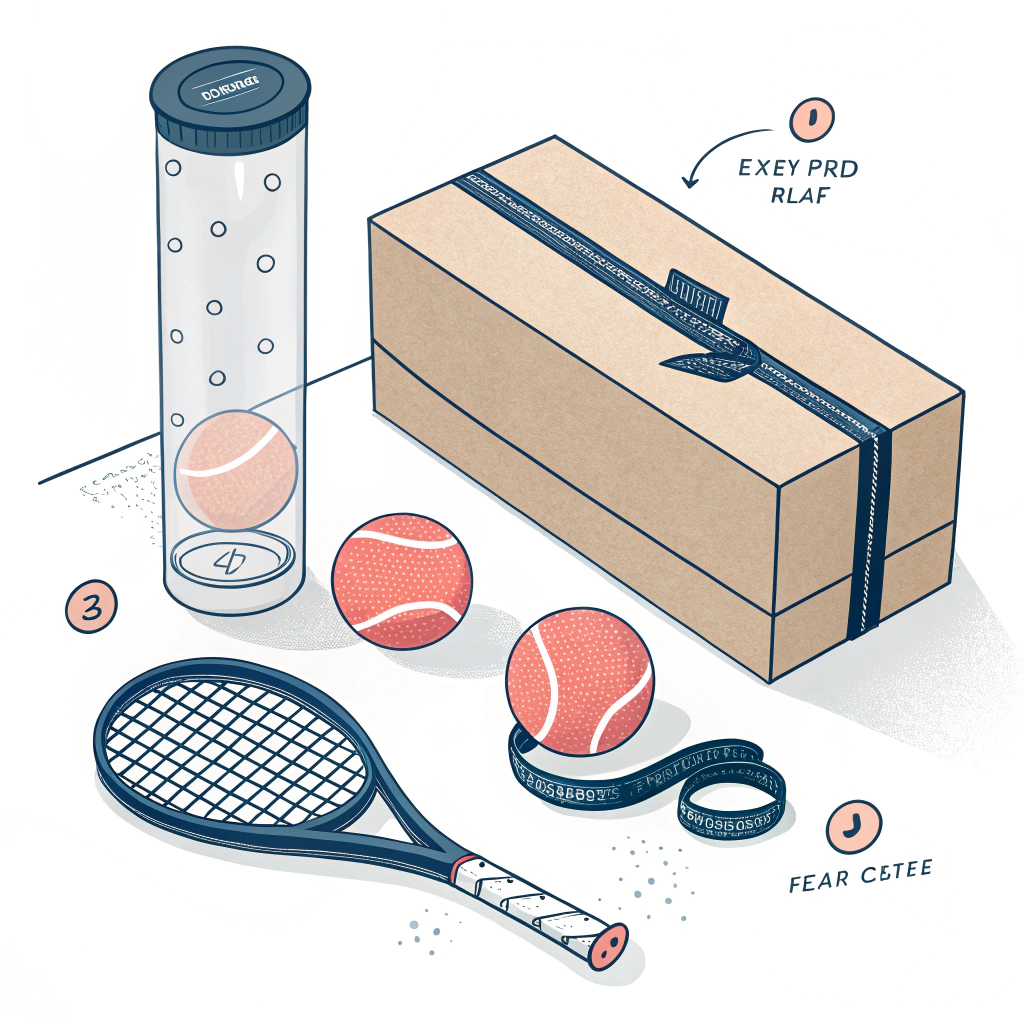
- Packaging and complementary products (value-add)
- Custom boxes, swing tags, and warranty cards increase perceived value on shelf.
- Padel balls sourcing: two common wool contents—45% wool and 57% wool—both typically shipped in pressurized tubes to preserve pressure. Confirm ball supplier QC and packaging (pressure retention, felt wear test).
- Offer bundle SKUs (racket + 3 balls + grip) to increase average order value.
- Red flags when vetting an OEM
- No documented sample timelines or unwillingness to sign sample SLA.
- Vague answers about material sourcing (cannot provide carbon weave spec).
- No photo traceability or inconsistent batch-level QC data.
- MOQ or production timelines that are far outside market norms with no compensating value.
- Poor communication or inability to provide references from known brands.
- Practical procurement checklist (ready to use)
- Define target player level and retail price band.
- List required materials and preferred carbon weave (3k/12k/18k) and core densities.
- Request sample policy, prototype lead times and sample costs.
- Get MOQ tiers and FOB/CIF pricing for 3 quantity breakpoints.
- Insist on QC checkpoints and acceptance criteria in contract.
- Validate factory references & ask for recent client PO examples.
- Plan pilot run and lab/play testing before full order.
Conclusion and recommendation
For most brands seeking a balance of performance, manufacturability and margin, a 12k carbon face + medium-density EVA core + teardrop or round shape is the pragmatic default. Reserve 18k carbon and harder cores for premium, low-volume SKUs where margin justifies higher unit cost and stricter QC. Work with an OEM that offers fast prototyping, clear QC data, and robust customization (printing, grips, butt caps) — these capabilities reduce launch risk and improve retail success.
People Also Ask
Q: What is the technology of padel racquets?
A: Modern padel rackets use composite construction—typically a molded foam or EVA core sandwiched between fiber faces (fiberglass or carbon fiber). Manufacturers vary weave density (3k, 12k, 18k) and resin systems to tune stiffness, durability and surface finish. Advanced processes include controlled heat/pressure presses, surface treatments for spin, and precision weight/balance tooling.
Q: What makes a padel racket better?
A: There is no single “best”; performance depends on weight, balance, shape and core hardness. Weight influences power and maneuverability (typical range 340–375 g). Heavier rackets often deliver more power; lighter rackets are faster at the net. Balance and shape (round/control vs. diamond/power) and core density determine feel and forgiveness.
Q: What to look for when buying a padel racket?
A: Key factors: weight, balance, shape, core hardness, and materials (fiber face and core type). Also consider player level and customization needs. For procurement, add OEM capabilities: sample speed, MOQ, QC processes, and printing/custom options to ensure the product meets performance and retail requirements.
-
MOQ: Read to understand minimum order quantity strategies, how MOQ tiers affect unit cost and SKU economics, and ways to negotiate or segment orders to reduce inventory risk. ↩
-
12k carbon face: Read to learn why 12k weaves balance stiffness, surface finish and cost, and how that choice impacts manufacturability, perceived quality and pricing strategy. ↩
-
EVA (ethylene-vinyl acetate): Read to learn EVA material grades, how core density affects playability (power vs. comfort), and durability/processing implications for OEM production. ↩
-
FOB/CIF pricing: Read to understand freight term differences, which costs are included at each Incoterm, and how shipping terms affect landed cost and margin calculations. ↩
-
shore A: Read to understand the Shore A hardness scale used for EVA cores, how to specify acceptable tolerances in contracts, and how hardness correlates with player experience and durability. ↩