Skip to content
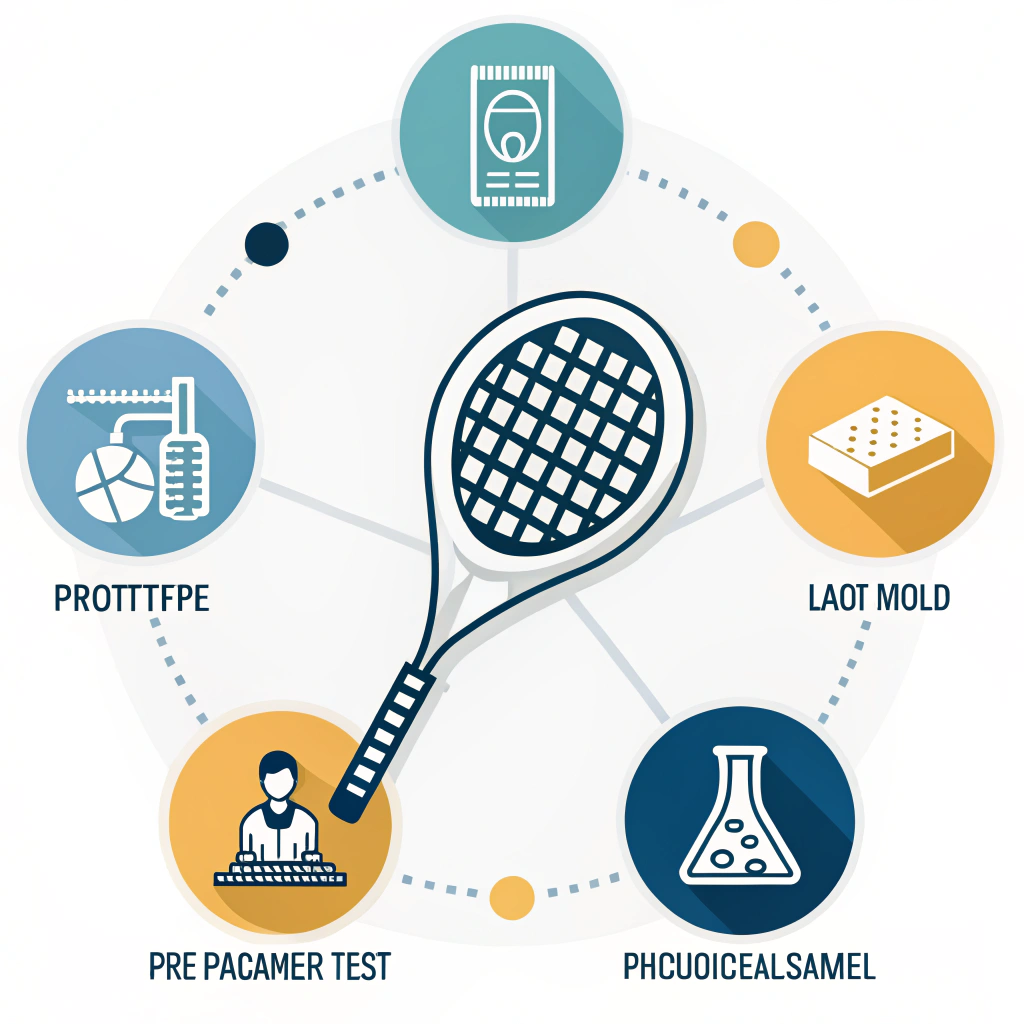
Quick answer (snippet): To confidently approve a padel racket OEM1, run a focused supplier audit and a staged sample-validation program: verify materials (fiberglass vs carbon fiber 3k/12k/18k2), tooling & process capability, on-line QC steps, and lab/field tests (tensile/flexural, peel/shear, playability, weight & balance). Define clear acceptance tolerances, require certifications (ISO/CE/REACH3), set lead-time/MOQ terms and contractual inspection rights before full production.
Why this matters now
- You are in late-stage supplier selection. One wrong OEM choice costs time, margins and brand reputation.
- Padel racket manufacturing mixes composite process risks (layup, curing, resin control) with cosmetic and playability variables (surface finish, printing, sweet spot, weight and balance).
- This guide gives a practical, test-driven checklist and sample-approval workflow you can use to verify an OEM like NEX Padel before signing.
- Problem diagnosis: common risks when vetting padel racket OEMs
- Material mismatch: supplier quotes “carbon” but uses 3K/12K/18K carbon interchangeably without documented layup plans.
- Inconsistent weight/balance across batches due to poor mold control or inaccurate resin dosing.
- Cosmetic and print failures: color mismatch, paint cracking, or poor transfer of custom logos.
- Weak bonding at handles, edge tape failures, or inconsistent grip assembly.
- Lack of lab testing evidence for durability, rebound and surface hardness.
- Unclear terms for tooling lead time, MOQ and penalties for delays.
- Root causes to probe during audits
- Poor process control (no SPC/Cpk monitoring4).
- Inadequate or aging tooling & molds.
- Insufficient QC checkpoints (missing IQC or FQC).
- No accredited third-party testing or incomplete certification claims.
- Single-point dependencies (one oven, one autoclave, one experienced operator).
- Actionable supplier audit checklist (on-site + document review)
Use this checklist during a factory visit or remote document review. Score each item and require evidence where noted.
Factory capability & documentation
- Company info, years in composites, references (brands like Reebok/Hirostar are good signs).
- ISO 90015 certificate and scope (ask for certificate and validity).
- Process flow chart for racket production (from mold to packing).
- Tooling & molds: number, age, spare molds, and maintenance logs.
- Production capacity and realistic lead times for tooling, samples and mass production.
- MOQ, price breaks and payment terms.
Material control
- Supplier lists for core foams, fiberglass, 3k/12k/18k carbon fiber.
- Raw material inspection records (batch numbers, COA).
- Resin type and MSDS; confirm compliance with REACH for coatings/resins.
Quality systems & lab
- IQC/IPQC/FQC definitions and inspection checklists.
- On-site lab equipment: tensile/flexural machine, peel/shear testers, hardness durometers, balance scales, microscopes.
- Third-party test relationships (SGS, Intertek) and recent reports.
- Traceability system (lot codes on pack and product).
Process controls
- Layup templates, mold temperature profiles, curing schedule.
- Resin mixing ratio control and pot-life management.
- Vacuum process and debulking procedures (if applicable).
- Surface finishing workflow (sanding grit sequence, primer, paint/print process).
Packaging & shipping
- Carton specs, inner protection, labeling and barcode traceability.
- Export experience and familiarity with Incoterms.
- Pre-shipment inspection policy and allowance for third-party inspection.
Human & safety
- Operator skill matrix and training records.
- Health & safety compliance, storage conditions for fibers/resins.
- Sample validation and test program (step-by-step)
Define a staged sample program: Prototype -> Lab Tests -> Play Tests -> Pre-production sample (PPS) -> Golden Sample.
Stage 0: Prototype
- Purpose: shape confirmation, tool verification.
- Deliverables: physical prototype, layup plan, BOM.
Stage 1: Lab & QC tests (mandatory)
- Weight (g): typical range 340–375 g; set tolerance ±5 g.
- Balance point (mm from butt): typical 250–280 mm; tolerance ±5 mm.
- Core thickness (mm): typical 36–38 mm (confirm design); tolerance ±0.5 mm.
- Face flatness & hole dimensions (if perforated): tolerance ±0.3 mm.
- Surface finish: gloss & paint adhesion test.
- Bond tests: handle bonding peel test.
- Mechanical tests: tensile/ flexural (ASTM D3039 / ASTM D790 or equivalent composite tests).
- Peel/shear for adhesive joints (ASTM D3167/ASTM D905 equivalents).
- Impact or drop tests: simulate racket hits.
- Playability: rebound test (ball rebound height at fixed drop force) and controlled play panels (players of defined skill levels).
- Cosmetic: color delta acceptable range (ΔE ≤ 2 recommended for brand-critical finishes).
Stage 2: Play tests (field validation)
- Panel of 6–12 players, mixed levels. Use blinded evaluation vs golden reference for:
- Power, control, comfort, vibration, sweet spot.
- Rate on 1–5 scale; require mean ≥4 and standard deviation low.
- Document video and player comments.
Stage 3: PPS (Pre-Production Sample)
- Built on mass-production molds, full packaging, labels and accessories.
- All lab and play tests re-run on 5–10 PPS units (statistical sample).
Stage 4: Golden Sample
- Signed-off unit stored by both parties for future comparison.
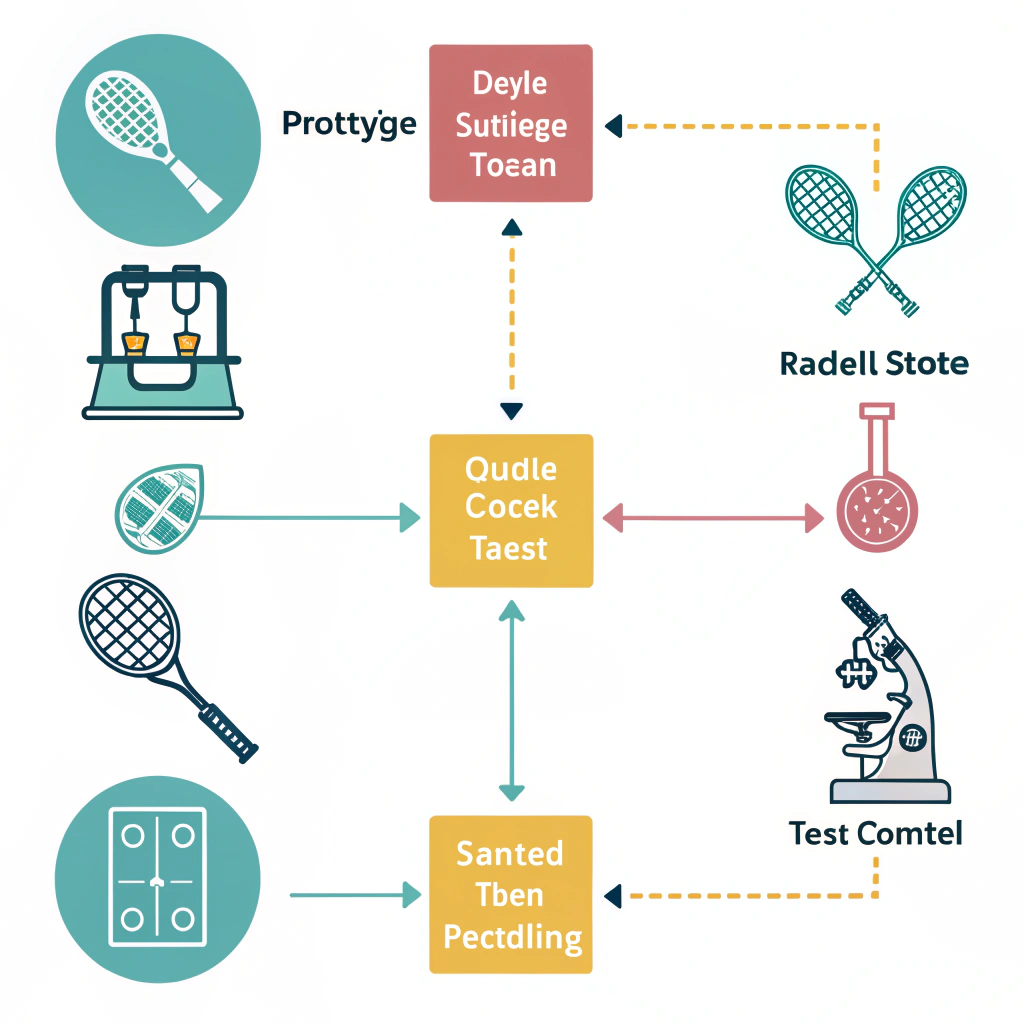
- Test matrix and acceptance criteria (example table)
| Test | Method / Tool | Acceptance criteria |
|---|---:|---|
| Weight | Precision scale (0.1 g) | 340–375 g, tolerance ±5 g |
| Balance point | Balance meter | 250–280 mm, tolerance ±5 mm |
| Core thickness | Caliper | 36–38 mm, tolerance ±0.5 mm |
| Tensile (face) | ASTM D3039 | Meet specified modulus & strength in supplier data |
| Flexural | ASTM D790 | No cracks or delamination at specified load |
| Peel (handle) | Peel tester | ≥ specified N/cm per adhesive spec |
| Paint adhesion | Cross-cut & tape test | No flaking; adhesion grade ≤1 |
| Surface finish | Visual + gloss meter | ΔE ≤2 to color standard; no visible defects >0.5 mm |
| Playability rebound | Drop/rebound rig | ≤ X% variance vs golden sample (set exact %) |
| Packaging integrity | Compression & drop test | No damage after test |
Notes: Replace X% with your determined allowable variance. When in doubt, require supplier to run tests per recognized labs (SGS/Intertek) and provide certificates.
- Tolerances and statistical controls
- Demand SPC charts for critical dimensions (weight, balance, core thickness).
- Request Cpk values for key parameters; target Cpk ≥1.33 for production stability.
- Use AQL for cosmetic defects; recommend AQL 2.5 or tighter for premium brands.
- Supplier commercial terms & lead time safeguards
- Tooling & mold: clarify ownership (supplier vs buyer), cost, and lifespan (shots).
- Tooling lead time: 2–6 weeks typical for sample mold turnarounds; request Gantt timeline.
- Production lead time: mass production usually 25–45 days after PPS approval — confirm capacity.
- MOQ: typical OEM MOQs vary 300–1000 units per SKU; negotiate based on colorways and tooling amortization.
- Payment terms: staged — 30% tooling, 30% pre-production, balance against inspection or B/L.
- Delay clauses: liquidated damages per week/day after agreed delivery; specify maximum.
- Packaging & padel ball coordination
- If bundling racket + balls, confirm ball specs: pressurized tubes; wool content 45% or 57% (both available), tube pressure specs and shelf life.
- Ball packaging: pressure retention test, labeling and export carton strength.
- Quality control protocols to demand in contract
- Right to U.S./EU/third-party pre-shipment inspection.
- Requirement for batch COA for fibers/resins and adhesives.
- Batch sampling plan and retention policy (keep master sample/golden sample).
- Warranty terms and period for structural defects vs cosmetic issues.
- Common red flags and how to respond
- No lab equipment or reliance only on visual checks — require third-party testing.
- Vague certification claims — ask for original certificates and check with issuing body.
- Single operator dependency or no process documents — escalate to pilot run with strict oversight.
- Price too low vs market — investigate material substitution or hidden capacity issues.
- Case example (condensed)
- Brand X shortlisted two vendors. Vendor A had older molds but strong SPC; Vendor B had new molds but no lab. Sample tests showed Vendor B’s weight variance ±12 g vs Vendor A ±3 g; Vendor A got the order after PPS and negotiated tooling amortization. Lesson: don’t be seduced only by new molds — consistent process matters more.

- Contract clauses to include (practical language)
- Detailed tech spec annex: weight, balance point, materials (fiber tow, core foam density), printing colors (Pantone with ΔE limits), grip logos.
- Golden sample clause: production must match golden sample within agreed tolerances.
- Pre-shipment inspection clause and third-party lab testing frequency.
- Non-conforming goods procedure with remedies (repair, refund, replacement).
- Tooling ownership, maintenance schedule and shot-life guarantees.
- Intellectual property and design confidentiality provisions.
Summary & procurement next steps
- Use this guide as your blueprint: run the audit checklist, insist on lab evidence for mechanical properties, and verify carbon fiber 3k/12k/18k2 layup plans and resin MSDS for REACH compliance.
- Require staged approvals (prototype → PPS → golden sample) and contract clauses for inspections and tooling.
- Negotiate MOQ, lead-time commitments and clear remedies for non-conformance before issuing PO.
Action checklist (quick)
- Send RFI with request for ISO/CE/REACH docs and recent third-party test reports.
- Schedule factory audit and request live demo of SPC charts and lab tests.
- Define and sign sample approval plan with exact acceptance criteria.
- Agree tooling ownership, payment milestones and inspection rights.
People Also Ask
Q: What is the difference between cheap and expensive padel rackets?
A: Price often reflects materials, manufacturing control and design specialization. Cheaper rackets may use heavier or lower-grade composites, laxer QC and broader tolerances, which can make them easier to play but less consistent. Higher-priced rackets frequently use upgraded fibers, tighter weight/balance control, and advanced curing/finish processes; they may have smaller sweet spots and stiffer faces designed for players with refined technique. For procurement, correlate price to measurable specs (weight tolerance, material COAs, test reports) rather than relying on price alone.
Q: Is 18k carbon harder than 12K?
A: Generally yes—the higher the “K” count (tow count), the stiffer and less flexible the face becomes. 3K carbon is softer and more forgiving; 12K is intermediate; 18K tends to be the stiffest. Stiffer faces deliver more power and precision but need better player technique; softer faces give more comfort and forgiveness. For sourcing, specify the carbon tow and layup schedule you want, and validate with mechanical and play tests rather than just the K-number label.
-
padel racket OEM: Read to understand manufacturer role vs brand/ODM responsibilities, key contractual checkpoints (tooling, IP, inspection rights), and what to verify in audits so you don’t inherit hidden liabilities. ↩
-
carbon fiber 3k/12k/18k: Read to learn how tow count affects stiffness, weight, layup strategy and playability, why vendors substitute fiber types, and what to specify and test in procurement documents. ↩ ↩2
-
REACH: Read to understand EU chemical compliance for resins/coatings, what MSDS/CoA documentation to request, and the procurement implications for selling into EU markets. ↩
-
SPC/Cpk monitoring: Read to get a practical primer on Statistical Process Control, how to read control charts, what Cpk values mean for production stability (e.g., Cpk ≥1.33), and how to require SPC evidence in audits. ↩
-
ISO 9001: Read to confirm what ISO 9001 certification covers (QMS scope), how to verify certificates and applicability to composite/racket production, and what to expect from certified vendors. ↩