Skip to content

Quick answer (for Google Snippet)
The padel racket core is normally made from either EVA foam1 or PE/PU-type foams2 (sometimes blended as a hybrid). Core choice — defined by Shore hardness3, density, and thickness — is the primary driver of power vs control, feel, vibration damping and long-term durability. For procurement decisions, specify hardness (Shore A), target density, compression-set4 limits and required bonding tests up front to reduce prototyping cycles and cost.
Problem description
Procurement and product managers need to turn performance goals (power, control, feel, durability) into concrete material and QC specifications when shortlisting OEMs. The core is where most of these trade-offs live. Choosing the wrong foam type or grade forces repeated samples, missed season windows, and inflated costs. This guide explains the material science, measurable metrics, manufacturing consequences and practical specification templates you can use to make the right OEM choice quickly.
Why core material matters (short technical background)
- The core acts as the energy-storage and damping element between the face (fiberglass/carbon) and the ball.
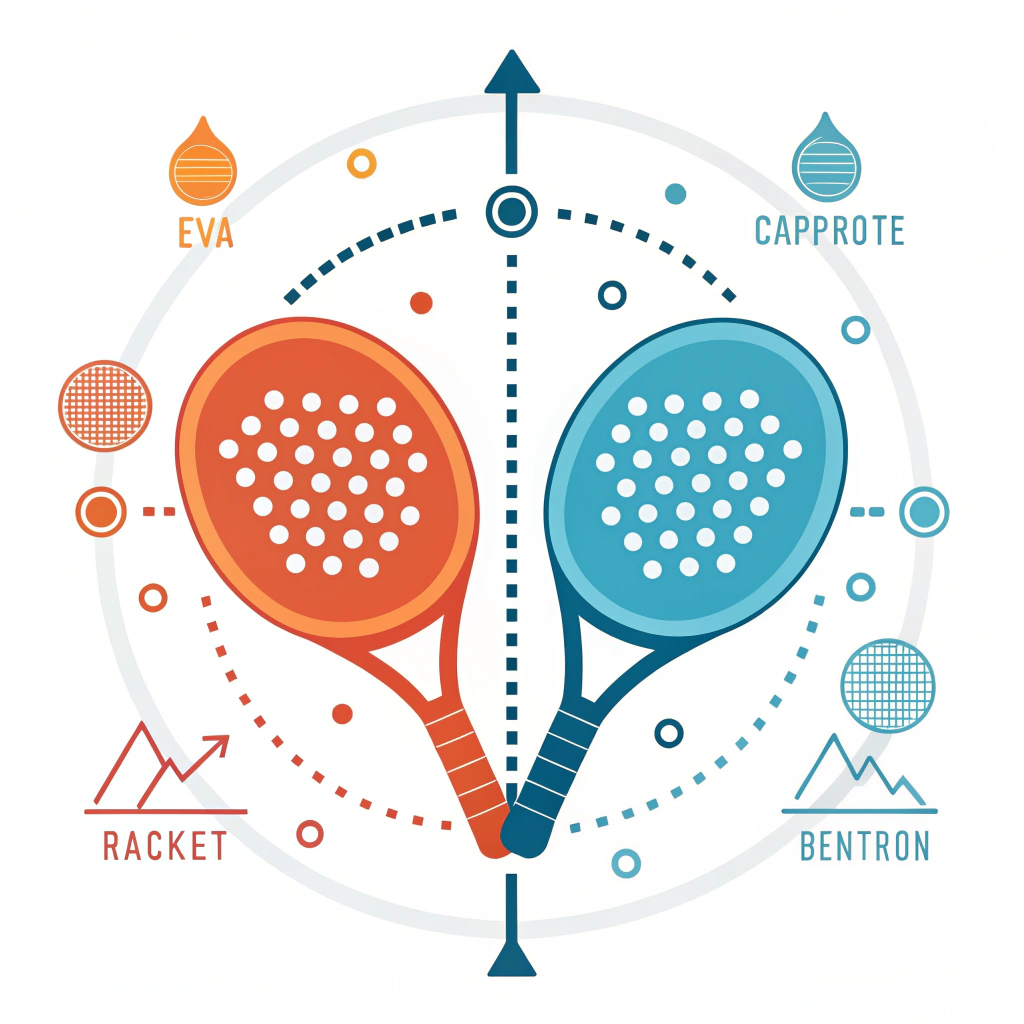
- EVA foam generally offers higher energy return and more power at given thickness/hardness; PE/PU foams (often described as “foam” in padel marketing) are typically softer, with better vibration damping and control.
- Key measurable attributes are Shore hardness, density, energy return, compression set, and dwell time5 (how long the ball contacts the surface and how the core returns energy). These can be tested and specified.
Common causes of specification failures
- Vague specs like “soft” or “hard” without a numeric Shore value.
- Not specifying density leading to weight/balance drift between samples.
- Omitting compression set or environmental aging tests; result: core sags over a season.
- No adhesion/pull-off tests between core and face — face delamination during play or baking.
- Assuming supplier’s “standard” grade matches your performance brief.
Material comparison: EVA vs PE/PU foam (practical attributes)
| Attribute | EVA foam | PE/PU foam (often marketed as FOAM) |
|---|---|---|
| Typical feel | Firmer, more “explosive” | Softer, more “comfortable” |
| Typical player leaning | Power / offensive | Control / touch |
| Typical Shore hardness range (common in padel) | 40–55 Shore A (can be 35–60 depending on compound) | 30–45 Shore A |
| Typical density (g/cm³) | 0.12–0.30 | 0.08–0.25 |
| Energy return | Higher | Lower (more damping) |
| Vibration damping | Moderate | High |
| Compression set (aging) | Better at higher grades | Can be worse unless stabilized |
| Cost | Mid → higher (depending on formulation) | Mid → lower |
| Manufacturability | Well-established molding | Slightly easier molding for complex cells |
| Best for | Power frames, spin, quick energy | Control frames, comfort, beginner/intermediate |
Notes: These are typical ranges; custom compounding and fillers (e.g., closed-cell additives) shift properties. Always ask for supplier-specific test data.
How to translate play goals into numeric specs (recommended ranges)
Use these as starting points for prototyping. Adjust ±5 Shore points and density ±0.02 g/cm³ based on sample feedback.
-
Beginner / comfort / control racket
- Core material: PE/PU foam or soft EVA blend
- Shore hardness: 30–36 Shore A
- Density: 0.10–0.18 g/cm³
- Core thickness: 32 ± 0.5 mm (standard)
- Compression set target: ≤ 15% after 24h @ 70°C
-
All-round / intermediate racket
- Core material: Medium EVA or hybrid (soft core + firmer outer layer)
- Shore hardness: 36–42 Shore A
- Density: 0.14–0.22 g/cm³
- Compression set target: ≤ 12%
-
Power / professional offensive racket
- Core material: High-rebound EVA (often closed-cell, higher density)
- Shore hardness: 42–52 Shore A
- Density: 0.18–0.28 g/cm³
- Compression set target: ≤ 10%
-
Control-oriented thin sweet spot / precision racket
- Consider dual-density sandwich: softer core interior (32–36 Shore A) + thin harder layer near face (45–50 Shore A).
Manufacturing variables that affect delivered performance
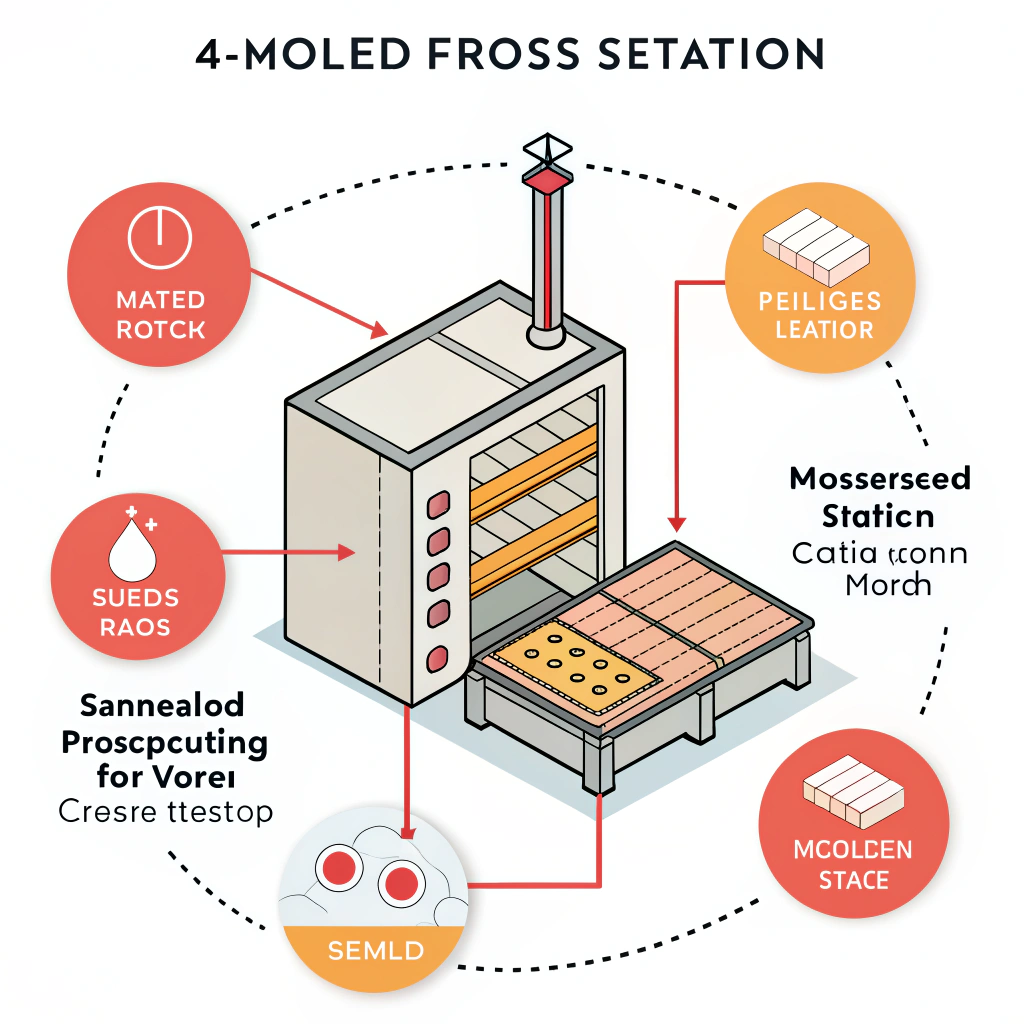
- Mold temperature and dwell/curing time: insufficient curing causes variable compression set and low rebound.
- Degassing / cell control: uncontrolled porosity leads to inconsistent sweet spots and weight variances.
- Bonding process to faces: primer selection, surface roughness and curing profile control delamination risk.
- Density tolerance: ±0.01–0.03 g/cm³ affects balance and feel — specify limits.
- Thickness tolerance: specify ±0.5 mm or tighter for prototypes.
- Storage and handling at supplier: temperature/humidity exposure influences pre-shipment compression characteristics.
Key QC tests to include in your RFQ and incoming inspection
Mandate numerical pass/fail criteria and test methods. Request supplier lab reports for each batch.
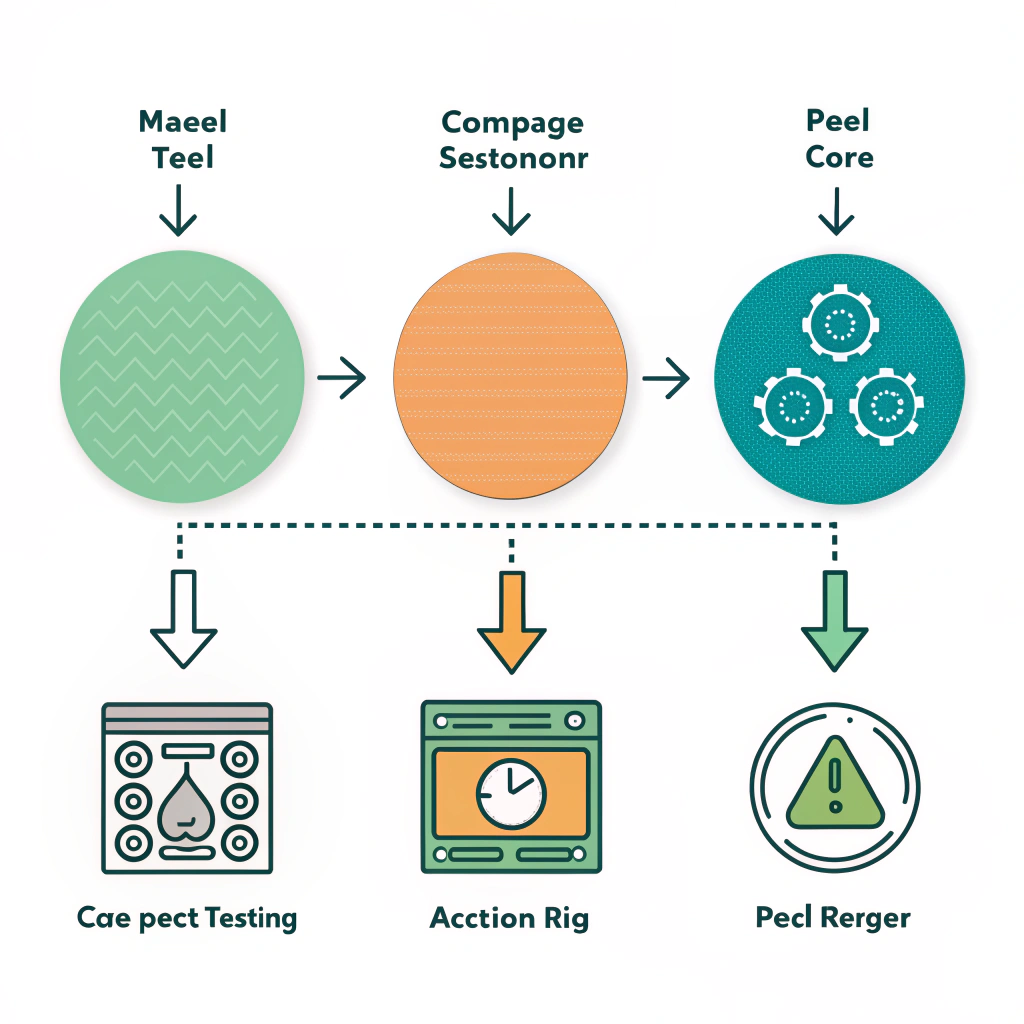
- Shore hardness (Shore A; ISO 868) — report mean ± SD and sample size.
- Density (g/cm³) — calculate via mass/volume; report tolerance.
- Compression set (ISO 1856 or equivalent) — specify test conditions (e.g., 70°C/24h) and max %.
- Rebound/energy return — ball rebound test or instrumented pendulum/strain gauge; specify baseline.
- Dwell time / contact profile — instrumented impact testing (high-end testing labs can supply curves).
- Adhesion / peel test between core and face laminate — specify N/cm min.
- Durability cycling — 5,000–10,000 hits endurance test, inspect for cracks, permanent deformation, delamination.
- Environmental aging — humidity & temperature cycles (e.g., 50°C/90% RH and freeze-thaw).
- Visual / density mapping — cut cross-sections to check porosity and core uniformity.
Typical acceptance criteria example (for procurement use)
| Test | Method | Acceptance |
|---|---|---|
| Shore hardness | ISO 868 | target ±3 Shore A |
| Density | mass/volume | target ±0.02 g/cm³ |
| Compression set | ISO 1856 @70°C/24h | ≤12% |
| Peel adhesion | peel test | ≥5 N/cm |
| Durability hits | mechanical rig | No structural failure at 5,000 hits |
Design patterns: single vs sandwich vs hybrid cores
- Single-density core: simpler, cheaper, faster to iterate. Best for clear-cut target (pure power or pure control).
- Dual-density sandwich: inner soft core + outer firmer layer to enhance response and sweet-spot size. Useful for all-round frames.
- Gradient/hybrid (graded compounding or layered injection): more complex, better play tuning, higher tooling and QA costs.
Cost & lead-time implications
- Standard off-the-shelf EVA grades: lower tooling cost, faster sampling (2–4 weeks).
- Custom compound or dual-density tooling: higher NRE and longer lead times (4–8+ weeks for first samples).
- Tight QC requirements (full lab validation) add time and cost but reduce downstream recalls. Factor this into your RFQ evaluation criteria.
Sample RFQ checklist for cores (copy-paste into your procurement email)
- Target model name / SKU
- Core type: EVA / PE / Hybrid (specify)
- Shore hardness: target and acceptable range (e.g., 36 ±3 Shore A)
- Density target (g/cm³) and tolerance
- Core thickness and tolerance (mm)
- Compression set condition and maximum (%)
- Adhesion/peel strength minimum (N/cm)
- Durability requirement (hits)
- Environmental aging cycles required
- Sample quantity and deadline for first prototype
- Batch testing / certificate requirements
- Packaging and storage requirements to prevent pre-shipment deformation
Case example: How NEX Padel helps reduce iterations
At NEX Padel we run rapid prototyping and lab testing in-house. For one OEM customer we:
- Defined three candidate cores with measured Shore A 34 / 40 / 48 and density sweeps.
- Performed compression-set and adhesion tests up front.
- Achieved a final spec (40 Shore A EVA, 0.16 g/cm³, compression set ≤11%) that met the brand’s target for intermediate power/control balance in two iterations instead of the industry average four.
Because we control compounding, molding and face lamination, we can optimize the bond and tune dwell time — reducing your time-to-market.
Decision flow & recommended next steps
- Convert your brand’s performance brief into numeric targets (Shore, density, compression set, thickness).
- Request three prototype cores covering the target range (softer, target, firmer).
- Include mandatory lab tests in RFQ and require supplier batch certificates.
- Evaluate weight, balance and play-feel against instrumented tests and player feedback.
- Lock materials and scale to pilot production only after adhesion and durability pass.
Final recommendation
For most mid-to-large brands aiming to cover the mainstream market, start with a medium EVA or hybrid core around 36–42 Shore A, density ~0.14–0.20 g/cm³, and require compression set ≤12%. Use dual-density sandwiches only when your player-testing shows a need for more targeted sweet-spot control. Choose an OEM like NEX Padel that offers rapid samples, in-house testing, and the ability to adjust compounding and bonding — that reduces prototyping cycles and procurement risk.
People Also Ask
Q: What is the core material of a padel racket?
A: The core is typically made from either EVA foam or foam (PE/PU type), and sometimes a hybrid of both. EVA tends to be firmer and more powerful; foam variants are softer, delivering more comfort and control. Manufacturers tune Shore hardness, density and cell structure to achieve the desired balance.
Q: What material is best for padel rackets?
A: There is no single “best” material—face material (fiberglass vs carbon) and core material must be chosen together. For beginners, softer-faced rackets (fiberglass) with a soft foam/EVA core improve comfort and control. More advanced players often prefer stiffer faces (carbon) paired with firmer high-rebound EVA cores for extra power.
Q: Do expensive padel rackets make a difference?
A: Price often reflects materials (higher-grade carbon, specialized cores), precision manufacturing and QC. A more expensive racket can improve performance if it matches your playing level and is properly specified. However, beyond a certain point, incremental price may buy marginal returns—specify the core properties you need (Shore, density, compression set) and evaluate value by measured performance and durability rather than price alone.
-
EVA foam: Read a supplier/technical brief to understand EVA compounding variables (cell structure, crosslinking, fillers) and how they affect energy return, density and manufacturability—essential for writing RFQs that avoid mis-specified “EVA” grades. ↩ ↩
-
PE/PU-type foams: An external primer helps you compare PE vs PU chemistries, damping behavior, stabilization additives and common failure modes (aging, compression creep), so you can decide when a softer foam is appropriate and what tests to mandate. ↩ ↩
-
Shore hardness: A concise guide explains Shore A measurement, test method (durometer use and sampling), and how ± tolerances translate to on-court feel—critical for converting “soft/hard” briefs into numeric specs. ↩ ↩
-
compression-set: The linked resource shows test standards (e.g., ISO 1856), typical conditioning (temperature/time), and pass/fail thresholds for sports foams—helpful for setting lifetime/aging targets in procurement specs. ↩ ↩
-
dwell time: Technical notes on contact-profile testing and instrumented impact methods explain how dwell time correlates with perceived control vs power and how to specify instrumented baselines for supplier validation. ↩ ↩