Skip to content

Quick answer (snippet)
The three most relevant padel grip categories for procurement are overgrip, replacement (base) grip, and cushioned PU (synthetic leather) grip — each trades off tackiness, absorbency, durability, thickness and cost. Choose overgrips for low-cost refresh/retail packs, replacement grips when you need a permanent feel/shape, and cushioned PU grips when comfort and premium branding matter. Below is a practical, buyer-focused comparison and an OEM1 checklist to finalize specs for private-label production.
Introduction — the buyer’s decision problem
As a product or procurement manager, you’re not picking grips for a single player — you’re specifying a product that must hit player feel targets, price points, manufacturing constraints and branding needs. The wrong choice increases returns, complaints, and warranty work; the right choice improves perceived quality and margins. This guide compares grip types across technical and commercial dimensions and gives ready-to-use spec templates for sourcing or ordering from an OEM1 like NEX Padel.
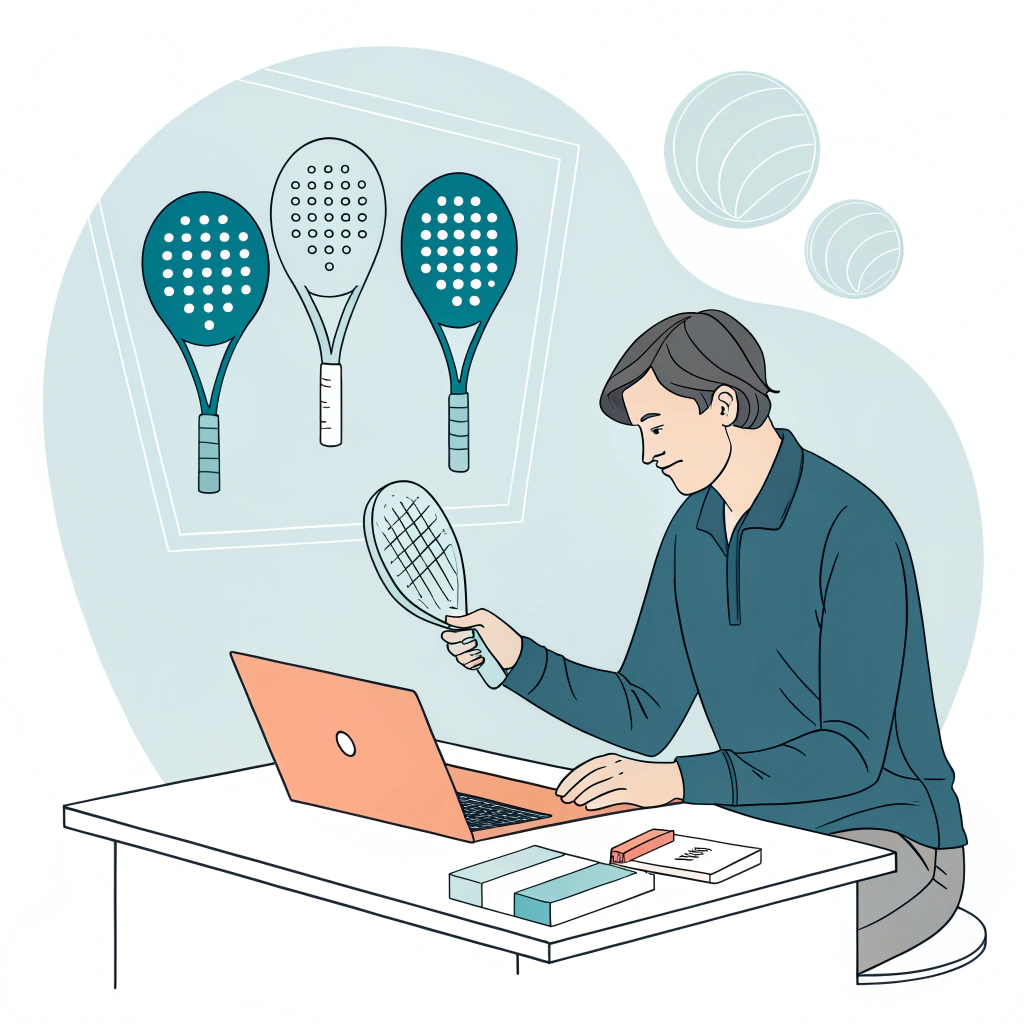
Core grip types explained (quick)
- Overgrip: Thin (typically 0.3–0.7 mm). Applied over an existing grip to change tackiness or absorbency. Low cost, high turnover in retail packs.
- Replacement (base) grip: Thicker (1.2–2.5 mm). Replaces the factory wrap and defines handle circumference and primary feel. Durable and often textured.
- Cushioned PU grip (synthetic leather / gel-backed): Thicker (2.0–3.5 mm) with built-in cushioning. Targets comfort and vibration dampening; premium option.
First appearance of these terms is bolded above because they will guide your specification language.
Quick decision matrix (one-line guidance)
- Need frequent retail re-sell / cheap refresh? → Overgrip.
- Need permanent feel and defined circumference? → Replacement grip.
- Need premium cushion, branding and comfort? → Cushioned PU grip.

Detailed multi-dimension comparison
| Criterion | Overgrip | Replacement Grip | Cushioned PU Grip |
|---|---|---|---|
| Typical thickness | 0.3–0.7 mm | 1.2–2.5 mm | 2.0–3.5 mm |
| Primary function | Surface tack/absorbency | Main handle shape & feel | Comfort, shock absorb, premium look |
| Tackiness | High (tacky variants) | Medium | Low–medium (smooth or micro-textured) |
| Sweat absorption | Low (tacky) / High (absorbent types) | Medium | Low (non-absorbent but perforated options) |
| Durability | Low (weeks-months) | Medium–High | High |
| Cost per piece | Low | Medium | High |
| Custom printing/logo | Limited (heat transfer or emboss) | Good (printing, perforation patterns, emboss) | Excellent (full-color print, emboss, custom colors) |
| MOQ2/Manufacturability | Very easy to scale | Moderate | Higher tooling/MOQ possible |
| Best for | Retail packs, demo refresh | Core product lines | Premium or ergonomic models |
Notes: thickness ranges and durability are industry norms. Use exact measurement specs in mm when ordering.
How these choices map to player segments and SKUs
- Starter / Club rental lines: Overgrip in absorbent variety to help sweaty players; low price, sold in 3–5 packs.
- Mid-range consumer models: Replacement grip with medium tack and one standard circumference for consistency.
- Advanced / Premium models: Cushioned PU grip with custom color, embossed logo and optional perforation for sweat management.
- Youth / small hand models: Specify slimmer circumference and thinner base grips.
Materials, feel metrics and test targets
When you specify grips, include measurable targets — this reduces ambiguity and QC disputes.
Recommended measurable targets:
- Thickness: state in mm to two decimal places (e.g., 1.80 ±0.10 mm).
- Shore hardness (for cushioned PU): typically Shore A3 35–60 depending on desired softness. Softer = more cushion, less durability.
- Tackiness: define subjective tack on a 1–5 scale or request lab tack test (peel adhesion testing) as acceptance criteria.
- Abrasion resistance: request cycles to failure (e.g., >10,000 cycles on Martindale/Abrasion tester4 for replacement grips).
- Sweat absorption / wicking: % weight gain after X minutes in artificial sweat solution.
- Colorfastness: >4–5 on ISO Rubbing test for printed grips.
Include these values in your technical pack (Tech Pack5) when requesting quotes.
Manufacturing & OEM considerations (what affects cost and lead time)
- Custom printing and embossing
- Heat transfer and UV printing are fast and cost-effective for small runs but may require minimums per color.
- Embossing or debossing requires tooling (higher upfront cost, lower unit cost at scale).
- Perforation and laminates
- Perforated faces increase breathability but add process steps and punch tooling.
- Multi-layer laminates (PU + foam + backing tape) give premium feel but increase complexity.
- Adhesive backing
- Replacement grips typically come with adhesive backing and a release liner; ensure adhesive compatibility with your handle wrap.
- End cap / butt cap customization
- Logos or full-color end caps are typical brand differentiators; they may add per-piece tooling.
- Packaging
- Retail-ready packs (blister, multi-packs) vs bulk for OEM assembly. Packaging choices affect lead time and MOQ.
- Assembly & pre-wrapping
- If you require grips pre-installed on demo rackets, include handling and labor costs.
Lead time guidance (industry typical)
- Samples / prototypes: 7–21 days depending on customization.
- Small production runs: 3–6 weeks after sample approval.
- Large production runs: 6–12 weeks depending on tooling and capacity.
MOQ2 guidance (industry ranges)
- Generic overgrips: MOQ2 can be low (e.g., 500–1,000 pieces).
- Custom printed/replacement grips: typically 1,000–5,000 pieces per design/color.
- Cushioned PU with custom tooling: often starts at 2,000–5,000 pieces.
Note: exact MOQs vary by supplier and complexity — always confirm with your OEM1.
Quality control checklist for incoming grips
- Dimensional check: thickness, length, width, rolled diameter tolerance.
- Adhesive strength: peel force measured (N/cm).
- Surface tack/texture: vendor sample comparison plus tactile checks.
- Abrasion and colorfastness lab reports.
- Packaging integrity (sealed, labeling, lot codes).
- Random pull test to check glue adhesion to handle cap.
Sample specification templates you can copy into an RFQ
- Replacement grip (mid-range)
- Material: polyurethane microfoam
- Thickness: 1.80 ±0.10 mm
- Width: 110 mm
- Color: matte black (Pantone 426 C)
- Surface: micro-embossed diamond pattern
- Backing: adhesive with silicone release liner
- Packaging: bulk 100 pcs/box
- MOQ2: quote
- Tests: 10,000 abrasion cycles, ISO colorfastness >4
- Cushioned PU (premium)
- Material: 2.8 mm PU top + EVA foam core
- Shore A3: 42 ±5
- Surface finish: full-color heat transfer print with logo
- Perforation: 0.8 mm holes every 3 mm
- Butt cap: custom silicone end cap with printed logo
- Packaging: retail blister with insert
- MOQ2: quote
- Tests: sweat absorption, peel adhesion >2.0 N/cm
Use these templates to get apples-to-apples quotes.
Cost drivers and margin implications
- Materials: PU leather and multi-layer laminates are the largest raw cost drivers.
- Tooling: embossing, punching and custom butt caps increase fixed costs.
- Printing colors: each additional color and gradient printing increases unit price.
- Packaging: retail packaging significantly increases per-unit cost compared to bulk.
- Assembly: pre-installation adds labor.
To protect margins:
- Consolidate colors/designs across SKUs where possible.
- Use one butt cap mold for multiple models.
- Consider a two-tier offering: a base model with standard replacement grip and a premium with custom cushioned PU.
Final recommendations & next steps
- Define player segments and map them to grip types (overgrip, replacement, cushioned PU).
- Create a Tech Pack5 with the measurable targets listed above (thickness, Shore A3, abrasion cycles, color codes).
- Ask OEM1s for sample kits showing each grip type under your brand print options.
- Request MOQ2 and sample lead times in writing; compare total landed cost (material + tooling amortized + packaging).
- Run a 100–200 unit pilot with club players to gather real-world feedback before full production.
NEX Padel capability note
NEX Padel manufactures padel rackets and supports custom grips and butt caps. We can produce grips across the spectrum from simple replacement grips to fully customized cushioned PU grips with logo, color and perforation options. Contact our sourcing team to review MOQ2, tooling needs and expedited sampling.
People Also Ask
Q: What are the different types of padel overgrips?
A: There are two primary functional categories of overgrips: tacky (high surface stickiness, low absorbency) and absorbent/dry (lower tack but wicks sweat). Tacky overgrips feel sticky to the touch and suit players who want immediate grip without extra thickness; they usually last shorter in heavy-sweat conditions. Absorbent overgrips are thinner and designed to soak up sweat, improving control for sweaty hands but they tend to wear faster. Overgrips are typically 0.3–0.7 mm thick and sold in retail multi-packs or as service replacements.
Q: Which grip is best for padel?
A: There is no single “best” grip — it depends on the player profile and product positioning. For most procurement decisions: beginners and rental programs benefit from absorbent overgrips (cost-effective and sweat-managing); regular club players prefer a resilient replacement grip that defines handle circumference and durability; advanced or premium consumers appreciate cushioned PU grips for comfort, branding and reduced vibration. Specify measurable properties (thickness, Shore A3 for cushioned grips, abrasion cycles) to ensure the selected grip meets performance expectations.
-
OEM: Read this to understand the role and responsibilities of an original equipment manufacturer — what they do vs. a trading partner, how tooling and IP are handled, typical contract and lead-time implications, and what to confirm in supplier agreements to avoid surprises. ↩ ↩2 ↩3 ↩4
-
MOQ: Read about minimum order quantities, how they affect unit cost and tooling amortization, common supplier MOQ structures, and negotiation strategies to lower effective MOQ or amortize tooling across SKUs. ↩ ↩2 ↩3 ↩4 ↩5 ↩6 ↩7
-
Shore A: Learn how the Shore A durometer scale works, how different ranges map to perceived softness vs. durability, and how to specify/measure durometer in incoming inspection. ↩ ↩2 ↩3 ↩4
-
Martindale/Abrasion tester: Learn what the Martindale abrasion test measures, how test specimens are prepared, and how to translate cycles-to-failure into meaningful acceptance criteria for grips. ↩
-
Tech Pack: Reading this explains how to build a clear tech pack (drawings, tolerances, material specs, test criteria and packaging instructions) so quotes are comparable and QC disputes are minimized. ↩ ↩2
For brands and clubs: choosing the grip for your own rackets
If you order rackets with your own logo, the grip is part of the brand experience: agree the grip material, colour and thickness with your factory and check them on the samples before bulk production. Custom rackets start from 50 pieces. See our custom padel racket options.