Skip to content

Quick answer (for the title): For the best trade-off between power and speed, choose a racket built with carbon fiber1 face (3K for more feel, 12K/18K for increased stiffness and snap) paired with a mid-density EVA core2 (or graded density foam) and a tailored layup (e.g., hybrid carbon + fiberglass layers). Use fiberglass faces only for entry-level, high-comfort models; reserve high-count carbon (12K/18K) for power-oriented Diamond/Teardrop heads where stiffness and energy return are priorities.
Why this matters (decision context)
- You’re comparing material options to brief designs or decide proto specs for Diamond, Teardrop, and Round rackets.
- Your priority is to match target player profile (power vs control vs comfort) while balancing cost, manufacturability, and durability.
- This guide gives clear material/layup recommendations, expected performance outcomes, and factory constraints (MOQ3, lead time, QC) to help you make an OEM decision with NEX Padel.
Core material differences — quick overview
- Carbon fiber (3K/12K/18K): Higher stiffness and better energy return with increasing tow count (K). More expensive. Preferred for mid-to-high performance rackets. Increased stiffness gives power and faster ball exit; may reduce feel.
- Fiberglass: More flexible and forgiving, cheaper, lighter to mold; used for beginner/intermediate models prioritizing comfort and control over raw power.
- EVA core: Dense, long-used padel core material. Different durometers4 (soft/medium/hard) control dwell time, control, and power.
- Foam core (EVA variants or polyurethane foams): Can be lighter and offer different compression curves — better for speed and touch if tuned correctly.
First-appearance emphasis: stiffness, power, speed, durability, manufacturability.
Material-by-performance: what each changes in play
- Power: increases with face stiffness (higher K carbon, thicker w/ more carbon layers) and harder core.
- Speed (ball exit velocity + maneuverability): improved by balanced weight distribution (higher sweet spot mass toward head for power, lower for control) and responsive face-core interface.
- Control & feel: improved with lower-stiffness faces (fiberglass or 3K carbon) and softer cores.
- Durability: carbon > fiberglass in layer fatigue and cracking resistance if manufactured and cured correctly.
- Cost & manufacturability: fiberglass cheaper, easier to lay; high-count carbon and complex hybrid layups cost more and require consistent QC in prepreg/resin management.
Comparison table — materials and practical trade-offs
| Component | Common options | Effect on Power | Effect on Speed/Handling | Cost & Manufacturability | Typical use |
|---|---|---|---|---|---|
| Face (outer layers) | 3K carbon | Medium power — more flex | Better feel, slightly slower snap | Moderate cost; easy to handle | Control / intermediate models |
| 12K carbon | High power | Faster ball exit; stiffer | Higher cost; requires exact layup | Performance/power models | |
| 18K carbon | Very high power & stiffness | Very fast; less dwell/feel | High cost; heavier; strict QC | Tour-level power rackets | |
| Fiberglass (woven) | Lower power | Softer, more forgiveness | Low cost; easy lay | Entry / comfort models | |
| Core | Soft EVA (low durometer) | Lower top-end power | More control, more dwell | Standard; low complexity | Beginner / control |
| Medium EVA | Balanced | Balanced speed & control | Standard | All-round models | |
| Hard EVA / high density foam | Higher power | Faster response, less feel | May need special molds | Power-oriented models | |
| Hybrid layup | Carbon + Fiberglass | Tunable | Tunable balance | More complex QC | Versatile mid-to-high lines |
| Surface finish | Smooth vs rough texture | No direct power change | Rough = more spin control | Surface printing adds steps | Spin/advanced models |
Notes: "Power" refers to energy returned to ball; "Speed" includes maneuverability and ball exit velocity as dependent on weight and stiffness.
Recommended layups by racket shape and player target
Below are practical recommendations you can send to R&D or include in an OEM spec sheet. Each includes suggested face materials, core hardness, and expected weight/balance.
- Diamond — power-first, advanced players
- Face: 12K or 18K carbon outer + optional inner carbon layer.
- Intermediate layer: 1 layer fiberglass or lighter carbon (to fine-tune feel).
- Core: hard EVA (70–85 shore A depending on target).
- Weight: 360–375 g target; balance medium-high (head-heavy for extra power).
- Expected feel: very stiff, high energy return, shorter dwell time.
- Manufacturing note: higher curing precision and consistent resin content required to avoid delamination.
- Teardrop — balanced power/control, versatile
- Face: 12K carbon or hybrid (3K outer + 12K inner).
- Core: medium EVA (60–70 shore A) or graded foam (softer center).
- Weight: 345–360 g; balance medium.
- Expected feel: forgiving yet powerful; suitable for broad market.
- Round — control-first, intermediate/beginner
- Face: Fiberglass or 3K carbon for a premium feel.
- Core: soft-to-medium EVA (50–65 shore A).
- Weight: 330–350 g; balance head-light to neutral.
- Expected feel: high dwell/time on ball, easier for positioning and touch shots.
Practical hybrid examples to offer as SKUs
- "Power Pro": 2x18K carbon outer + 2x3K inner + hard EVA -> tour-level power.
- "All-Round Hybrid": 1x12K carbon outer + 1xfiberglass inner + medium EVA -> broad audience.
- "Comfort": full fiberglass faces + soft EVA -> entry-level, low cost.
Cost guidance (relative)
- Fiberglass face + soft EVA = lowest BOM cost.
- 3K carbon + medium EVA = mid-range.
- 12K/18K carbon + hybrid layups + special surface = premium (30–60% higher materials + labor).
Manufacturing and QC considerations (what you must specify in an OEM brief)
- Material sourcing: Specify carbon tow count (3K/12K/18K), fabric weave (plain, twill), and resin type (epoxy preferred for stiffness/durability).
- Prepreg5 vs dry layup: Prepreg with controlled resin content gives repeatability but increases material cost and requires ovens/autoclave-like curing; dry layup with controlled resin injection can be cost-effective but needs rigorous process control.
- Tolerances to define:
- Weight tolerance: typically ±5 g per racket; stricter for premium lines (±3 g).
- Balance tolerance: ±5 mm.
- Thickness tolerance across face/core: ±0.3 mm.
- Surface roughness/texture: Specify roughness if spin-enhancing texture is needed; ink/printing steps must be compatible with texture.
- Adhesion & delamination tests: Use peel tests and cyclic fatigue for top-tier models.
- Core bonding: Ensure bondline checks and dimensional stability after cure.
- Edge finishing & handle/overgrip: Indicate logo/customization needs for hand grip and butt cap; these are low-cost add-ons but can add lead time.
Quality checkpoints and testing protocol
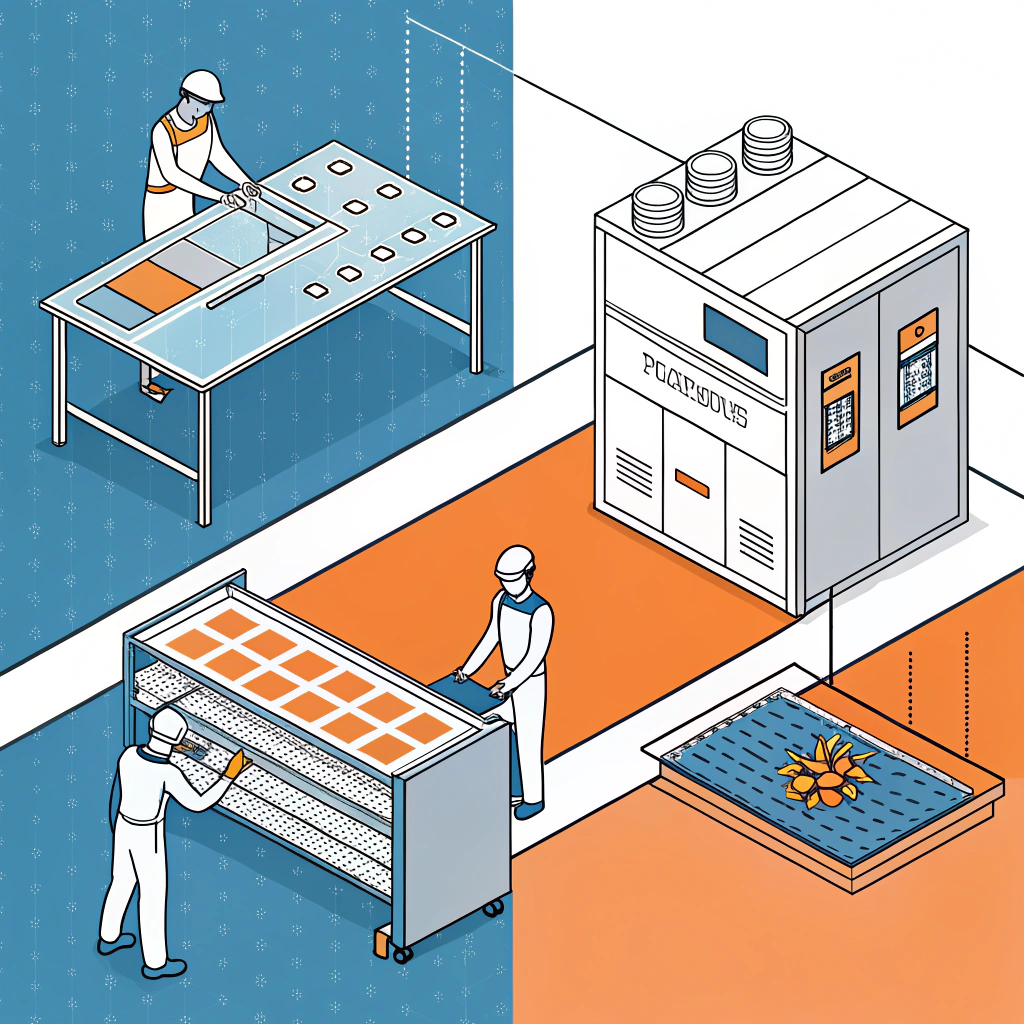
- Incoming material inspection: count and verify fabric layup, check EVA density, confirm resin batch.
- Layup inspection: check fiber orientation, layer order, and ply overlaps.
- Post-cure inspection: visual for voids, X-ray/random cross-section testing for internal defects (for premium runs).
- Mechanical testing: impact resistance (ball impact at speed), rebound (energy return), flexural stiffness, and accelerated aging (UV/humidity).
- Play-testing: send 10–20 units to test players across target segments and collect objective metrics (ball speed, measured sweet spot consistency) and subjective feedback.
- Batch release: only release if weight/balance/thickness within spec and no critical defects.
Prototyping, MOQ, lead time, and cost control
- Prototypes: NEX Padel supports fast sampling. Recommend 3-5 iterative samples for a new material/layup: proto A (baseline), proto B (stiffer), proto C (softer/comfy). Use one laboratory instrumented unit to measure stiffness and rebound.
- MOQ guidance: simple fiberglass models: MOQ as low as 200–500 units; carbon hybrid premium models typically 500–1000 units depending on finish/custom printing. Fully custom shapes or special molds may require higher MOQ due to tooling amortization.
- Typical lead time:
- Samples: 2–4 weeks (depending on tooling and finish).
- Production runs: 6–10 weeks after sample approval (varies with complexity and season).
- Cost levers:
- Reduce carbon content or use hybrid for mid-range savings.
- Standardize cores across multiple SKUs.
- Minimize custom printing colors or use standard decals to cut COGS.
Decision checklist for product managers and sourcing leads
Before placing an OEM order, confirm:
- Target player profile and key performance metrics (power, control, feel).
- Exact carbon tow count and number of carbon layers required.
- Core durometer (shore A) and any density gradient needs.
- Manufacturing method: prepreg or wet layup; curing profile.
- Visual finish and printing requirements.
- Acceptable weight and balance tolerances.
- Testing protocol and sample approval process.
- MOQ, lead time, and payment/inspection terms.
Summary — recommended starter specs by priority
- If your priority is raw power and tour-level performance: 12K/18K carbon outer, hard EVA, 360–375 g, head-heavy (Diamond/Teardrop).
- For balanced speed and usability: 12K carbon outer with 3K inner, medium EVA, 345–360 g (Teardrop).
- For comfort and broader markets: fiberglass or 3K carbon, soft EVA, 330–345 g, head-light to neutral (Round).
NEX Padel can prototype these layups, recommend precise curing recipes, and manage QC to ensure consistent batch performance. If you need a BOM estimate or sample schedule, prepare your priority list (shape, target weight/balance, target price band), and we will provide clear options with MOQ and lead time.
People Also Ask
Q1: What is the best material for padel rackets?
A1: For performance models, carbon fiber faces are the best choice because they deliver higher stiffness, better energy return, and longer-term dimensional stability. For beginner and comfort-oriented models, fiberglass faces provide more flex and feel at lower cost. The optimal choice depends on target player level and desired balance of power versus control.
Q2: What padel racket is best for power?
A2: Power-oriented rackets typically combine a stiffer face (12K or 18K carbon) with a harder core and a head-biased balance. Models with larger sweet spots and head-heavy balance (often Diamond or certain Teardrop shapes) deliver higher ball exit velocity. Material and layup (carbon count and number of layers) are primary drivers of power.
Q3: Is 18K carbon harder than 12K?
A3: Yes — a higher tow count like 18K means more filaments per yarn and generally produces a stiffer, firmer fabric than 12K, which translates into increased racket rigidity and less flex. That increases power but can reduce feel and may add weight; layup design is crucial to balance these effects.
-
carbon fiber: Read to understand tow counts (3K/12K/18K), weave types, layer sequencing, and how those choices affect stiffness, energy return, weight, and cost — enabling precise face-spec decisions for OEM specs. ↩
-
EVA core: Read to learn EVA variants, density and durometer trade-offs, bonding and machining considerations, and how core selection maps to play traits and production constraints. ↩
-
MOQ: Read to learn what drives minimum order quantities (tooling, customization, finishing), tactics to lower effective MOQ, and typical MOQ ranges for fiberglass vs carbon hybrid SKUs. ↩
-
durometers: Read to get a clear definition of Shore A measurements, recommended test methods, how to specify core hardness in an OEM brief, and the practical impact on dwell, control, and power. ↩
-
Prepreg: Read to compare prepreg vs dry layup (resin control, cure equipment, repeatability, CAPEX needs) so you can decide which method fits your cost, quality, and volume targets. ↩