Skip to content
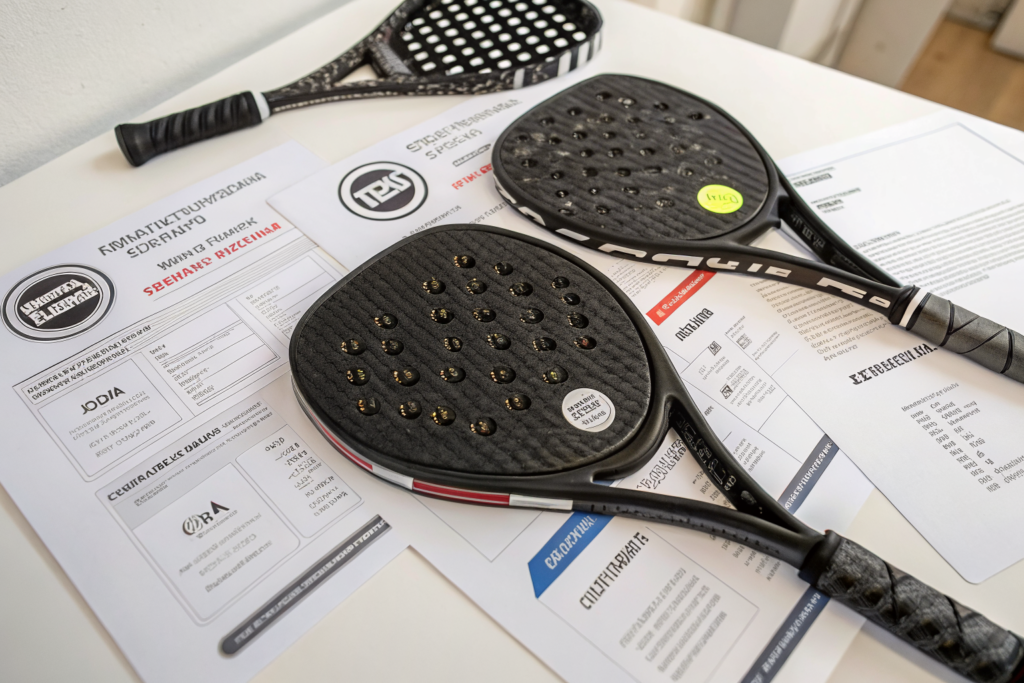
When choosing a custom padel racket manufacturer, look for a partner with verifiable production capabilities (minimum 3K carbon fiber technology), flexible MOQ starting at 50-100 units, documented quality certifications like FIP approval, and proven OEM/ODM experience serving international brands. The right manufacturer combines technical expertise in materials engineering with scalable production infrastructure and transparent communication throughout the development process.
Selecting the wrong manufacturing partner can derail your entire padel brand launch—resulting in quality issues, missed deadlines, and unsellable inventory. This guide provides the specific criteria, technical specifications, and cost benchmarks you need to evaluate potential manufacturers and build a profitable partnership.
Do Expensive Padel Rackets Make a Difference?
Expensive padel rackets typically offer measurable performance advantages through superior materials—specifically 12K or 18K carbon fiber faces (versus fiberglass or lower-grade composites), multi-density EVA cores, and precision-engineered weight distribution that reduces vibration by 30-40% compared to entry-level rackets. However, the manufacturing cost difference between a premium racket and mid-range option is often only $15-25 per unit, while retail prices can vary by $80-150.
The price-to-performance relationship depends heavily on construction quality rather than brand markup. Here's what actually drives cost differences in manufacturing:
| Component | Entry-Level | Mid-Range | Premium |
|---|---|---|---|
| Face Material | Fiberglass or 1K carbon | 3K carbon fiber | 12K/18K carbon fiber |
| Core Material | Single-density foam | EVA soft/medium | Multi-layer EVA or FOAM blend |
| Manufacturing Cost | $12-18 per unit | $22-35 per unit | $38-55 per unit |
| Typical Retail Price | $60-90 | $110-160 | $180-300 |
| Durability (hours of play) | 80-120 hours | 150-200 hours | 250-350 hours |
For B2B buyers, understanding these cost structures is critical. A manufacturer offering "premium" rackets at suspiciously low prices (under $20 per unit) likely uses inferior materials or inconsistent production methods. At NEX Padel, our 3K carbon fiber rackets start at $28 per unit with 50-unit MOQ, while our 12K carbon models range from $42-48 per unit—reflecting genuine material costs and quality control processes that ensure consistency across production runs.
The performance difference becomes significant for intermediate to advanced players who can detect variations in sweet spot size (typically 15-20% larger in premium rackets), vibration dampening, and power transfer efficiency. For club owners and distributors, this means you can justify premium pricing based on measurable technical specifications rather than brand perception alone.
What to Look for When Choosing a Padel Racket Manufacturer?
When selecting a manufacturing partner, prioritize verifiable production capacity (minimum 5,000-10,000 units monthly), documented material sourcing with mill certifications for carbon fiber grades, in-house mold development capabilities, and established quality control protocols including batch testing and FIP certification pathways. These factors directly impact product consistency, timeline reliability, and your ability to scale.
Production Capabilities and Certifications
Request detailed information about the manufacturer's technical infrastructure:
- Carbon fiber grades available: Verify they stock multiple options (3K, 12K, 18K) with traceable supply chain documentation. Lower-tier manufacturers often claim "carbon fiber" without specifying the weave density, resulting in inconsistent performance.
- Core material options: Quality manufacturers offer at least 3-4 EVA density options (soft 20-25 density, medium 28-32, hard 35-40) plus emerging alternatives like FOAM technology for different player profiles.
- Mold library: Established manufacturers maintain 15-30 base mold designs covering round, teardrop, and diamond shapes. Custom mold development typically costs $1,800-3,500 and requires 25-35 days.
- Quality certifications: FIP (International Padel Federation) certification demonstrates the manufacturer understands competition-grade specifications. ISO 9001 indicates systematic quality management.
NEX Padel operates a 12,000-square-meter facility with dedicated carbon fiber layup stations, autoclave curing systems for uniform density control, and FIP-certified testing equipment. Our material certifications are available for review, and we maintain relationships with Toray and Tairyfil for consistent carbon fiber supply.
Minimum Order Quantities and Flexibility
MOQ requirements reveal a manufacturer's business model and suitability for your brand stage:
- 500-1,000 units: Large-scale manufacturers focused on established brands; typically 60-75 day lead times but lower per-unit costs ($18-25 for mid-range specs).
- 200-500 units: Mid-sized facilities balancing efficiency and flexibility; 45-60 day timelines with moderate pricing ($25-35 per unit).
- 50-150 units: Specialized OEM/ODM partners ideal for brand launches and market testing; 35-50 day production with premium positioning ($30-50 per unit depending on specifications).
NEX Padel's 50-unit MOQ enables emerging brands to enter the market with $1,500-2,400 initial inventory investment (for mid-range specifications), compared to $10,000-18,000 required by high-MOQ manufacturers. This flexibility allows for testing multiple designs or regional market validation before committing to large production runs.
Customization Capabilities
True OEM/ODM manufacturers should offer comprehensive customization across multiple dimensions:
- Structural customization: Weight distribution adjustment (typical range 340-385g), balance point modification (265-285mm from handle base), grip size variations
- Aesthetic customization: Full-surface printing, carbon fiber patterns, UV coating options, custom protective tape designs
- Packaging options: Individual cases (add $2.50-4.00 per unit), retail packaging with custom inserts, display-ready boxes for club pro shops
- Component selection: Handle materials (polyurethane, EVA grip tape), safety cord attachment methods, frame protection tape thickness (0.5mm or 0.8mm)
Ask potential manufacturers for their customization lead time matrix. At NEX Padel, standard customization (logo placement, color selection from existing templates) adds 0-3 days, while full custom graphics require an additional 7-10 days for printing plate preparation.
Communication and Support Infrastructure
Manufacturing partnerships fail most often due to communication breakdowns, not technical issues. Evaluate:
- Response time benchmarks: Initial inquiry response within 12-24 hours, technical questions answered within 48 hours, design revision turnaround under 72 hours
- Language capabilities: Native or fluent English for technical specifications prevents costly misunderstandings about materials, tolerances, or design intent
- Sample policy: Transparent sample costs ($45-85 per racket typically) with clear timelines (10-15 days for existing designs, 25-30 days for custom specs)
- Documentation standards: Detailed specification sheets, production timeline confirmations in writing, quality inspection reports with measurements and photos
Which Company Makes the Best Padel Rackets?
The "best" padel racket manufacturer depends on your specific business requirements—high-volume distributors need production capacity exceeding 20,000 units monthly with established supply chains, while emerging brands require low-MOQ flexibility (50-200 units), rapid prototyping (2-3 week sample turnaround), and technical consultation to develop competitive product specifications. No single manufacturer optimally serves all buyer segments.
Rather than focusing on brand reputation, evaluate manufacturers against your specific business model:
For Established Brands and Large Distributors
If you're ordering 1,000+ units quarterly, prioritize manufacturers with:
- Proven capacity to handle surge orders (50-100% volume increases) without timeline delays
- Dedicated account management and priority production scheduling
- Volume pricing tiers that decrease costs by 12-18% at higher quantities
- Warehousing capabilities for scheduled releases rather than single large shipments
For Padel Clubs and Regional Distributors
Mid-volume buyers (200-800 units annually) benefit most from manufacturers offering:
- Mixed-SKU ordering (combining multiple designs/specs in single production run)
- Seasonal production windows that align with regional padel seasons
- Co-branding options that reduce design costs while maintaining brand identity
- Flexible payment terms (30-50% deposit, balance before shipping) rather than full prepayment
For New Brands and Market Entrants
Startup brands require manufacturers with specific capabilities that larger factories often cannot accommodate:
- Ultra-low MOQ: 50-150 units to test market demand without excessive capital requirements
- Rapid iteration: Ability to modify specifications between small production runs based on player feedback
- Technical consultation: Guidance on material selection, weight distribution, and pricing positioning based on target market
- White-label foundations: Pre-developed designs that can be customized with branding, reducing time-to-market to 35-45 days
NEX Padel specializes in this emerging brand segment, having partnered with over 180 padel brands across 34 countries during our 10+ years in carbon fiber racket manufacturing. Our technical team provides material recommendations based on your target player level and price point, and our design department offers consultation on graphic layouts that maximize visual impact within printing cost constraints.
Key Manufacturer Evaluation Criteria
Beyond volume matching, assess these critical factors:
- Material transparency: Manufacturers should provide carbon fiber specifications (weave pattern, resin type, weight per square meter) and EVA core density measurements, not vague "premium materials" claims
- Sample quality consistency: Order 2-3 samples from the same specification; weight variance should not exceed ±5g, and balance point should stay within ±3mm
- Reference customers: Request contact information for 2-3 current clients in similar order volume ranges (respect confidentiality, but legitimate manufacturers have referenceable customers)
- Factory verification: Video factory tours, third-party audit reports, or business verification services confirm actual production capabilities versus trading company intermediaries
- Intellectual property protection: Clear agreements preventing your designs from being sold to competitors or appearing as "stock designs" after your launch
The best manufacturer for your business combines technical capabilities matching your product requirements with business processes aligned to your order volumes and growth trajectory. A mismatch in either dimension creates friction that impacts product quality, delivery reliability, or cost efficiency.
Partner With NEX Padel for Your Custom Racket Manufacturing
NEX Padel combines 10+ years of carbon fiber racket engineering with business processes specifically designed for emerging and mid-sized padel brands. Our 50-unit minimum order quantity, 35-45 day standard production timeline, and comprehensive OEM/ODM services—from material selection through FIP certification support—provide the foundation for successful brand launches.
We manufacture using verified 3K, 12K, and 18K carbon fiber with multiple EVA core density options, offering complete transparency in material specifications and production processes. Our technical team provides consultation on racket design optimization for your target market, while our design department delivers custom graphics that differentiate your brand.
Ready to discuss your custom padel racket requirements? Contact NEX Padel today to request a detailed quote, review our material specifications, and receive sample timeline and pricing for your specific design needs. Our team responds to inquiries within 24 hours with comprehensive information to move your project forward.