Skip to content
Short answer: The single biggest factors that extend a padel racket’s lifespan are (1) a controlled carbon/fiberglass layup1 with correct fiber volume and weave (3K/12K/18K choices), (2) a low-void, well-cured polymer matrix (proper resin system2 and thermal curing cycle3), and (3) consistent, repeatable molding (resin infusion4 or high-pressure compression/hot pressing) plus factory-level QC tests (impact, fatigue, balance). Choosing the right combination reduces core breakdown, edge delamination and surface cracks — which in practice can double usable life compared with uncontrolled, high-void production.
Why this matters for procurement
As a procurement or product manager you’re buying more than a racket: you’re buying predictable performance, warranty risk limits, and total cost of ownership (TCO). Manufacturing choices (materials, layup method, molding and curing control) determine how fast the foam core crushes, how resistant the skin is to impacts, and how stable balance/weight remain after months of play. Below I compare the two common molding families and walk through material trade-offs, measurable QC metrics, lead-time and cost implications — so you can write specs and evaluate OEM bids with confidence.
Quick overview: the manufacturing options vendors will offer
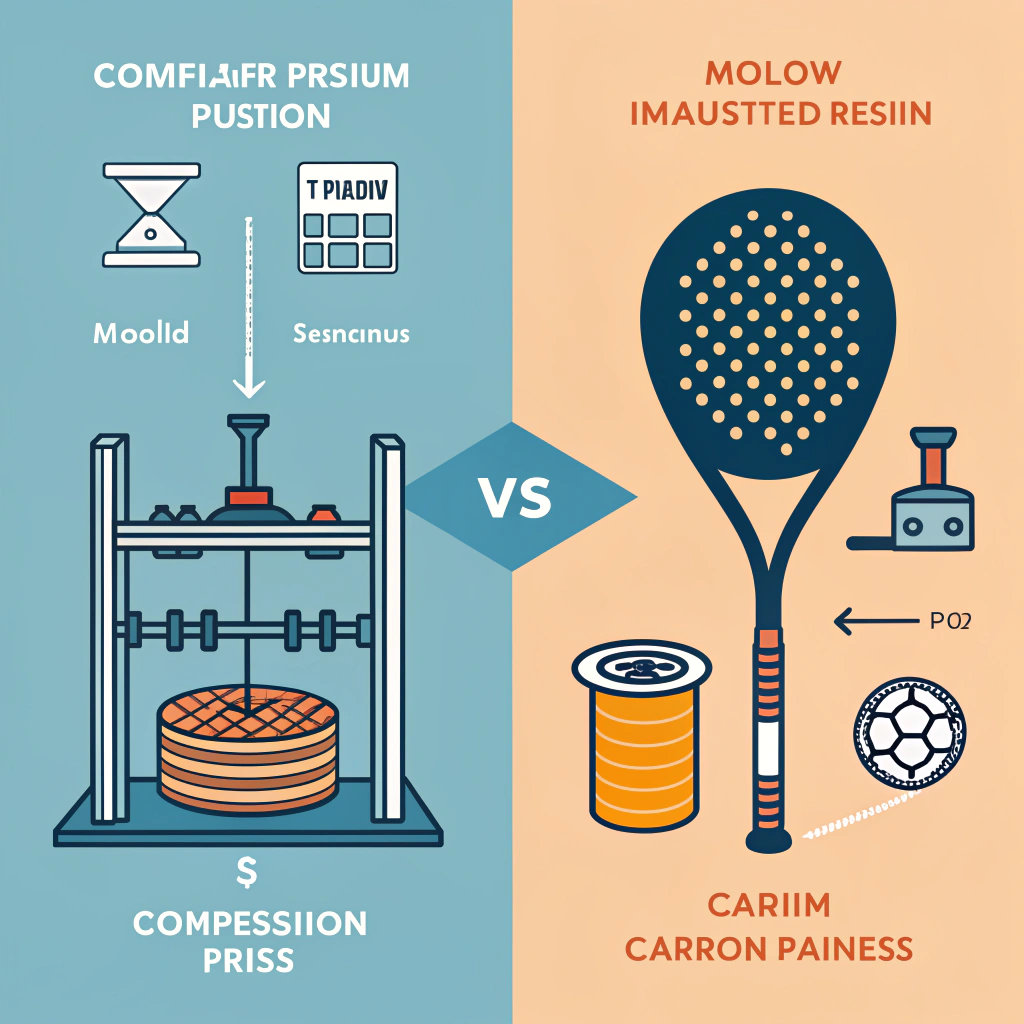
- Vacuum-assisted layup / resin infusion (vacuum bagging): fiber preforms are placed in a mold, resin is drawn in under vacuum. Good for lower-volume or highly customized layups; can deliver low void content when tightly controlled.
- Compression molding / hot pressing (press molding): pre-preg or hand-laid layups are placed between matched heated molds and pressed. Excellent surface finish, cycle speed, and high repeatability for volume production.
Both methods can produce high-quality rackets — the difference is in repeatability, surface finish, tooling cost and how they interact with specific materials (fiberglass vs 3K/12K/18K carbon).
Core differences at a glance
| Dimension | Vacuum-assisted (resin infusion / vacuum bag) | Compression / Hot Pressing |
|---|---|---|
| Tooling cost | Low–medium | High (matched steel molds) |
| Cycle time (per part) | Longer (1–3×) | Shorter (fast cycles once heated) |
| Surface finish | Needs secondary polishing | Excellent as-molded |
| Void content control | Good if process-controlled | Very good with pre-preg or controlled resin |
| Repeatability | More operator-sensitive | High repeatability |
| Best for | Prototypes, small batches, custom layups | High-volume, consistent OEM lines |
| Material compatibility | Wet layup fiberglass & carbon | Pre-preg carbon layers (3K/12K/18K) and hybrid layups |
| Impact / fatigue performance | Good if resin infused correctly | Superior when using pre-preg + controlled cure |
| Typical procurement implication | Lower tooling investment; longer sample cycle | Higher upfront cost; lower unit cost and predictable performance |
Material trade-offs: fiberglass vs carbon (3K/12K/18K)
- Fiberglass (E-glass): cheaper, more flexible, higher impact tolerance but lower stiffness and lower power. Good for beginner/entry-level rackets and for absorbing shocks to protect the core.
- 3K carbon: fine weave, responsive control, smooth surface finish. Good balance of stiffness and touch.
- 12K / 18K carbon: wider tows with different surface feel and power profile. Higher counts often mean a stiffer face and crisper feel; may show different damage modes (more brittle than fiberglass).
- Hybrid layups (glass + carbon skins or mixed weaves) are commonly used to balance impact resistance and stiffness.
Procurement note: request fiber volume fraction5 range (e.g., 40–60% typical for skins, depending on resin) and weave orientation (0°/90°/±45°) on the spec sheet. These influence stiffness, torsional rigidity and fatigue life.
Resin systems and curing: why chemistry matters
- Common types: epoxy (high-performance), vinyl ester, polyester. For premium padel rackets, epoxy systems are preferred because they offer higher shear strength, better adhesion to carbon, and superior fatigue resistance.
- Curing control: a controlled thermal curing cycle (temperature ramp, dwell, and controlled cooling) lowers residual stresses and improves matrix crosslinking — this is critical for long-term impact and fatigue resistance.
- Void content: aim for <2–3% voids for high-performance carbon rackets. Voids reduce mechanical properties and accelerate moisture ingress and delamination.
Procurement specs: require resin type (e.g., "low-viscosity epoxy formulated for composite sporting goods"), target Tg (glass transition temp), and acceptance criteria for void content and laminate thickness.
Process controls that extend lifespan (what to require from an OEM)
- Consistent layup documentation: CAD-based layup drawings, ply schedule, orientation and fiber counts.
- Controlled resin content: define resin/fiber ratio or target fiber volume fraction.
- Temperature logs & cure records: supply batch-level cure profiles for each production run.
- Vacuum level and infusion records (for vacuum processes) or press force and mold temperature logs (for compression).
- Automated trimming and CNC shaping for head shape and balance consistency.
- Post-cure and tempering steps (if used) to stabilize mechanical properties.
- Protective surface coatings (UV-resistant lacquer, edge guards) and recommended adhesion procedures to minimize surface micro-cracks.
Quality assurance & testing: measurable metrics to demand
Set objective test criteria in specs and supplier agreements:
- Impact test (drop-weight): specify energy (e.g., 50–150 J depending on head size) and acceptance for no delamination/crack.
- Compression test of core: set max percent thickness loss after compressive cycles (e.g., <5% permanent deformation after X cycles).
- Fatigue test (repeated flex): cycles to failure or modulus retention after Y cycles; report stiffness loss % after 100k cycles.
- Balance & weight tolerance: +/- 2 g, balance point +/- 2 mm.
- Surface hardness and adhesion: coating adhesion test (cross-hatch).
- Void content: <= 3% (micrograph verification).
- Dimensional tolerances: head shape deviation <0.5 mm.
- Environmental accelerated aging: humidity & UV exposure for 500–1000 hours with performance retention criteria.
- Batch traceability: serial numbering or batch codes with material lot references.
Ask prospective OEMs for test reports, photos of coupons, thermocouple profiles, and certificates for carbon/fiberglass batches.
Prototype & production lead times — realistic expectations
- Prototype (first sample, hand layup or short-run vacuum infusion): 2–4 weeks depending on complexity.
- Tooling for compression molding (matched steel molds): 6–10 weeks (longer if complex carbon in-mold textures required).
- Small production runs (vacuum/lab): 4–8 weeks.
- Mass production (press lines): once tooling and qualification are complete, cycle times can be minutes per part; typical order-to-shipment for high-volume runs: 6–12 weeks depending on quantity and finishing.
Procurement tip: include a rapid prototyping clause — NEX Padel offers fast samples and short-run capabilities to validate layup before committing to full tooling.
Cost vs lifetime: estimating Total Cost of Ownership (TCO)
Higher upfront tooling and pre-preg materials increase unit economics initially but often reduce warranty claims and returns over product life. Example trade-offs:
- Low-cost fiberglass vacuum-infused racket: low unit cost, shorter average life (suitable for entry-level), higher replacement frequency.
- High-end pre-preg carbon, compression molded racket: higher unit cost and tooling, but longer usable life and lower failure rates — reduces warranty burden and improves brand reputation.
Quantify for your SKU: estimate expected average usable months for target player group (casual / frequent), multiply by expected replacements per year and warranty claim rate to compute TCO over a 2–3 year horizon.
Practical spec checklist to include in RFQ / contract
- Material: fiber weave (3K/12K/18K) and % fiberglass if hybrid.
- Resin: epoxy type, Tg, and VOC limits.
- Layup & ply schedule: attach CAD ply book.
- Production method: vacuum infusion or compression mold (specify).
- Void content acceptance and test method.
- Cure profile and process control logs requirement.
- Mechanical test acceptance (impact, fatigue, compression).
- Weight/balance tolerances and head geometry.
- Surface finish: in-mold texture or post-polish, protective lacquer spec.
- Traceability and batch testing.
- Warranty terms and allowable failure rates.
Real-world example: how NEX Padel approaches lifespan in production
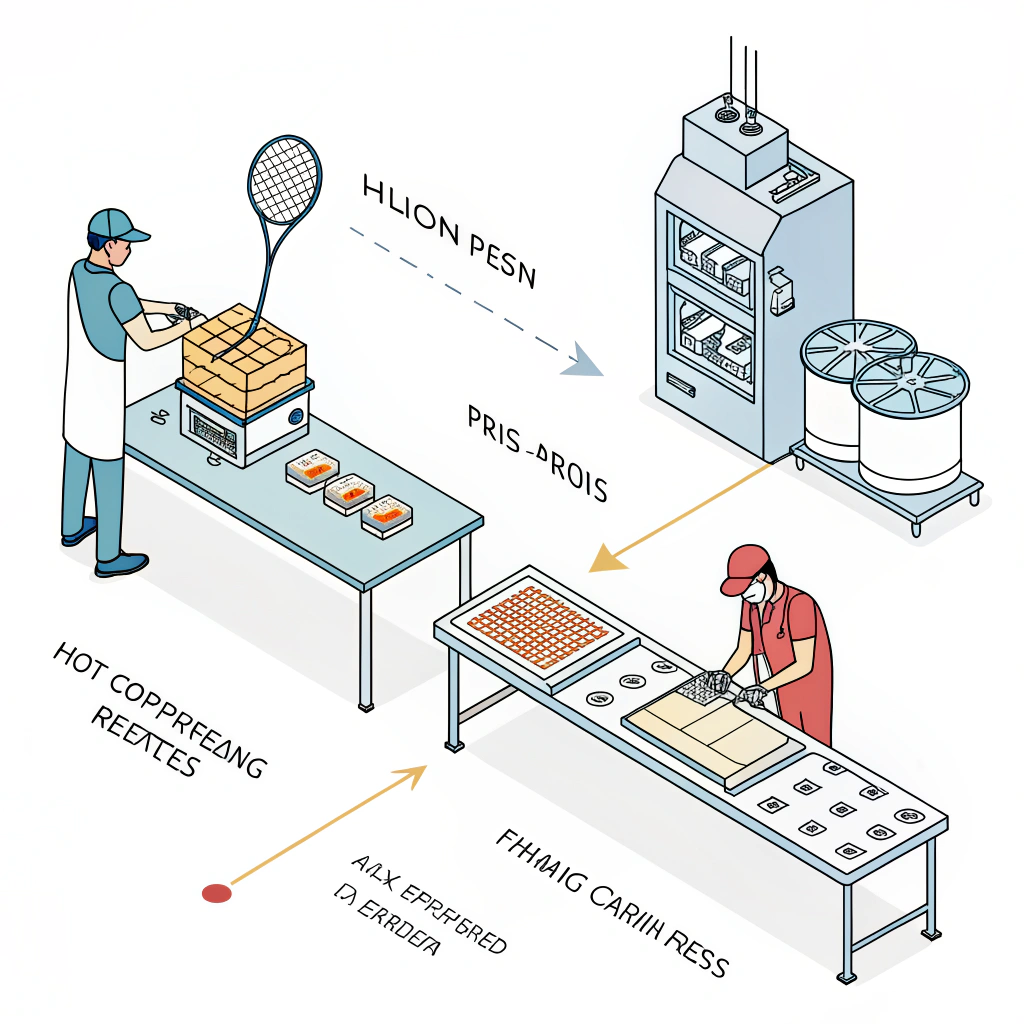
At NEX Padel we match layup method to product tier: entry-level runs use controlled vacuum infusion with glass or glass-carbon hybrids for impact resilience; mid-to-high tiers use pre-preg carbon layers and precision compression molding with controlled cure ovens to ensure repeatability. We log cure cycles, maintain void-content targets below industry best-practice, and perform batch impact and fatigue testing. This approach has allowed our OEM partners (Hirostar, Reebok, Starvie) to lower warranty claims and deliver consistent on-court feel.
Decision guide: which method should you specify?
- If you need low-volume custom shapes, frequent design changes, lower tooling cost: choose vacuum-assisted resin infusion; require stringent vacuum/control documentation and sample testing.
- If you need consistent high volumes, the best surface finish, and predictable mechanical properties: choose compression/hot pressing with pre-preg carbon; accept higher tooling cost for lower unit variability and longer lifespan.
- For balanced product lines: use hybrid approaches — invest in a single compression mold family but allow several layup recipes (glass-carbon hybrids) to tune price/performance.
Summary recommendations (actionable steps for procurement)
- Define target player profile and expected usage frequency — set lifespan targets (e.g., retain ≥90% stiffness after X hours/cycles).
- Require detailed layup book, material certificates, and cure logs in RFQ.
- Specify measurable QC tests and acceptance criteria (impact, fatigue, voids, balance).
- Insist on sample qualification run before tooling sign-off; use accelerated lab tests to predict field life.
- Consider TCO: weigh higher tooling and pre-preg costs against lower warranty claims and better brand positioning.
- Partner with an OEM able to provide quick prototypes, batch traceability and documented testing — like NEX Padel — to shorten validation cycles and reduce launch risk.
People Also Ask
Q: What is the technology of padel racquets?
A: Padel racket technology combines frame geometry, engineered perforations and material layups to optimize aerodynamics, weight distribution and feel. Modern rackets use layered composite skins (fiberglass and/or carbon), a polymer foam core, and precise molding to control the sweet spot, balance and maneuverability. Manufacturing details — such as fiber orientation, resin system and molding method — determine performance and durability.
Q: What makes a padel racket better?
A: A better padel racket is the result of matching shape, materials and layup to the player’s needs. Shape determines the sweet spot and balance; material choices (fiberglass vs 3K/12K/18K carbon) and resin systems determine stiffness and power; and manufacturing quality (low voids, correct cure, precise CNC shaping) ensures consistent performance and lifespan.
Q: How durable are padel rackets?
A: Durability depends on usage and manufacturing. Average recreational rackets may show performance decline after roughly 100–150 games, but premium rackets manufactured with controlled carbon layups, low-void resin systems and proper curing can last substantially longer. Durability metrics you should request from suppliers include impact resistance, compressive core recovery after cyclical load, and fatigue test results (cycles to failure or modulus retention).
-
carbon/fiberglass layup:Read to understand how different fiber types, weaves and ply orientation affect stiffness, impact tolerance and failure modes — critical for specifying performance tiers and balancing cost vs durability. ↩
-
resin system:Read to learn how resin chemistry (epoxy vs vinyl ester vs polyester) changes adhesion, fatigue life, and processing needs; helps set resin type, Tg and VOC limits in RFQs. ↩
-
curing cycle:Read to see why controlled thermal ramps, hold times and cooling matter for residual stress, Tg development and long-term impact resistance — useful for cure logs and acceptance criteria. ↩
-
resin infusion:Read to learn pros/cons of vacuum-assisted infusion (void control, tooling cost, cycle time) versus other methods — helps decide low-volume vs high-volume manufacturing routes. ↩
-
fiber volume fraction:Read to understand how fiber-to-resin ratio controls laminate stiffness, weight and fatigue life, and how to specify acceptable ranges and measurement methods for supplier compliance. ↩