Skip to content
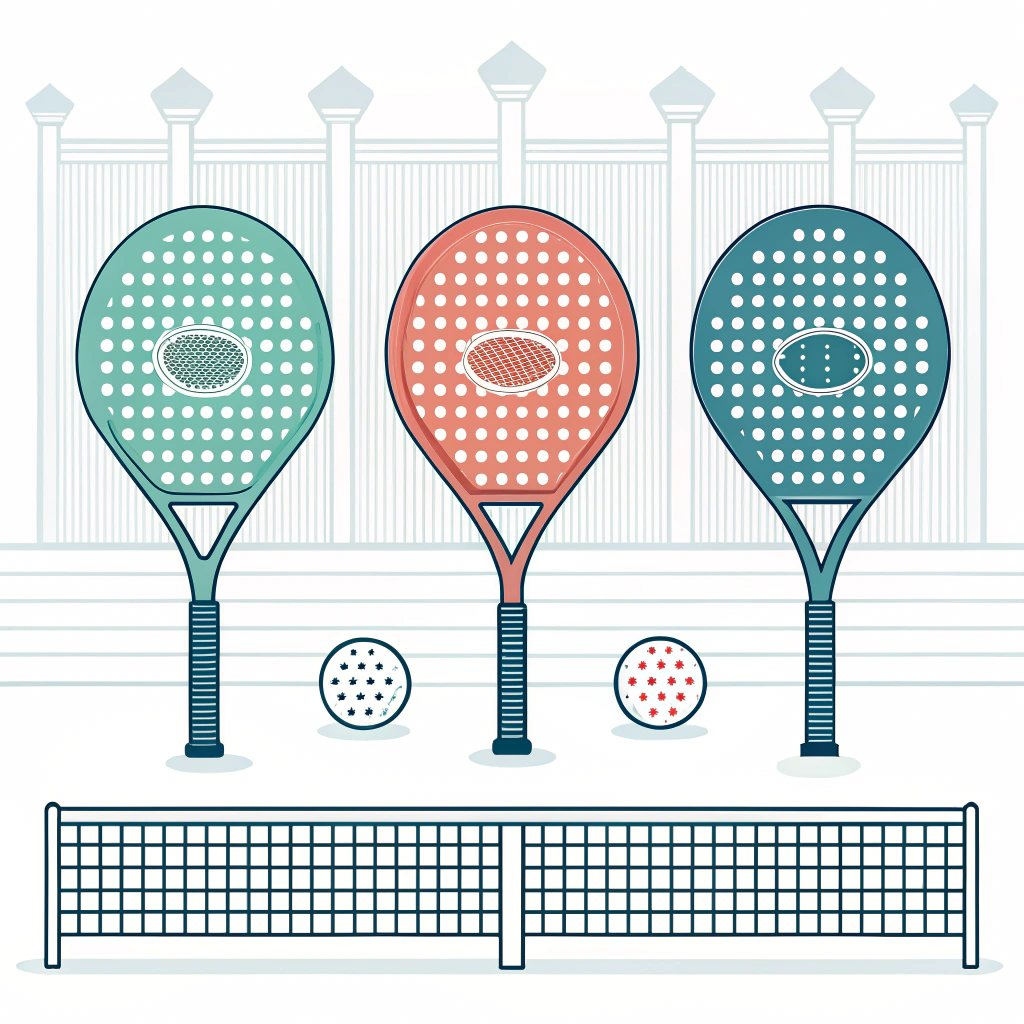
A quick answer: This guide explains how racket shape1, surface layup, core material, and choices between fiberglass2 and 3k/12k/18k carbon affect playability, durability, cost, and manufacturing timelines — giving product managers and OEM buyers the decision framework and spec checklist to brief R&D or approve an OEM line.
Intro — why design matters for the modern player
Modern padel players expect rackets that balance power, control, and durability without adding fatigue. Market trends show players moving from raw power frames toward rackets that offer refined control, better feel, and longer life. For brands and category buyers this means design choices (shape, face material, core density, surface finish) are both a technical and commercial lever: they directly affect return rates, warranty claims, price points, and differentiation in a crowded market.
Key commercial drivers your procurement team cares about:
- Time-to-market for seasonal drops and co-branded launches.
- Cost of goods vs perceived performance for target player tiers.
- Defect rates and QC burden during large runs.
- Ability to customize (shape, print, grips, butt caps) with manageable MOQ and color-matching.

Material evolution: fiberglass vs 3k/12k/18k carbon
How you choose face materials determines stiffness, feel, and cost. Summarized differences:
-
Fiberglass (glass fiber)2: Lower stiffness, more flex, softer feel. Good for entry-level and recreational rackets where comfort and forgiveness are priorities. Generally lower cost, easier to process, and more forgiving to layup errors. Trade-off: less snap (power) and lower long-term stiffness retention.
-
3k Carbon (twill 3k): Finer weave, better tactile feedback, and cleaner surface finish. Offers a premium "feel" that many players associate with control-oriented rackets. Slightly higher material and layup cost. Preferred for mid-to-high-end control or hybrid models.
-
12k and 18k Carbon: Coarser tow sizes, typically stiffer and power-oriented. Tend to be more cost-effective per area and create smoother-looking surfaces for printing. They deliver quicker response (higher rebound) but can reduce damping and feel. Good for power models and players who want a more explosive response.
Manufacturing implications:
- Carbon (especially 3k) demands cleaner layups and stricter QC because weave orientation and resin content affect playability.
- Fiberglass tolerates small inconsistencies better, reducing reject rates for volume production.
- Mixing layers (carbon + fiberglass) is common to tune cost/performance.
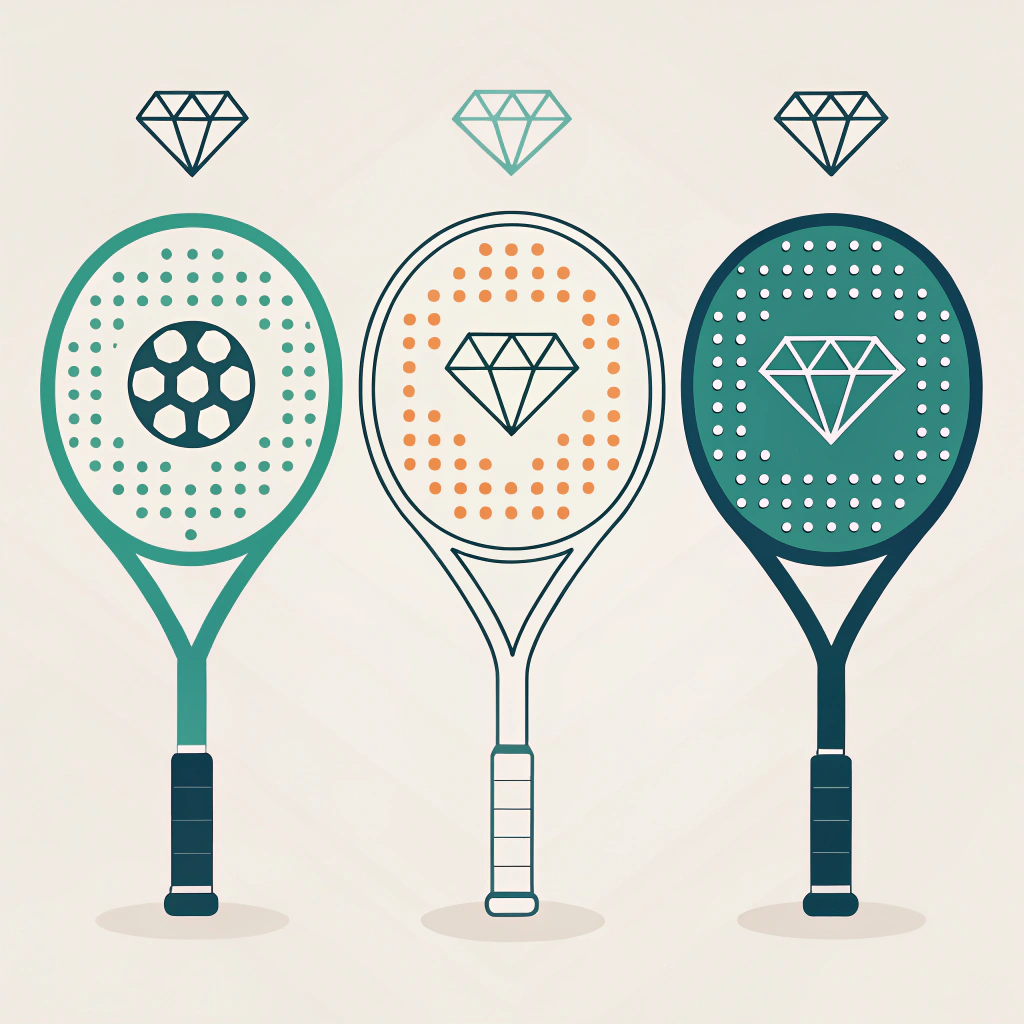
Shapes and playability: diamond, teardrop, round
Shape determines sweet spot location, balance, and player target.
-
Round: Largest sweet spot, lowest balance (head-light). Best for beginners and players prioritizing control and maneuverability. Forgiving on off-center hits.
-
Teardrop: Mid-positioned sweet spot. Balanced compromise between power and control. Ideal for intermediate to advanced players seeking an all-round racket.
-
Diamond: Sweet spot is higher and nearer the tip; rackets are generally head-heavier and deliver more power. Best for advanced players with strong technique. Less forgiving on mishits.
Quick comparison table
| Attribute | Round | Teardrop | Diamond |
|---|---|---|---|
| Sweet spot | Low, centered | Mid-height | High, near tip |
| Balance | Head-light | Neutral | Head-heavy |
| Target player | Beginner / control | Intermediate / all-round | Advanced / power |
| Forgiveness | High | Medium | Low |
Core technologies: EVA / foam densities, thickness, and feel
Core design is as important as face materials. Two main families: EVA rubber3 and polymer foams. Typical frame thickness is commonly 36–38 mm; this thickness range provides the structural behavior players expect.
EVA options by feel (Shore A4 approximation):
- Soft EVA (Shore A ~30–40): Excellent dwell time and comfort. Lower rebound and less power. Susceptible to faster compression over long-term heavy use (may reduce life).
- Medium EVA (Shore A ~45–55): Balance between control and power — common for all-round rackets.
- Hard EVA (Shore A ~60–70): Faster rebound, more power, reduced dwell time. Better retention of shape under aggressive play but can be harsher on arm vibration.
Foam cores (EPP/PU variants) can be lighter and produce different vibration damping. Advantages: lower overall racket weight, more consistent density across temperature ranges, and different return profiles. Disadvantages: higher material cost or complex curing processes.
Production considerations:
- Core bonding to face layers must be uniform to avoid delaminations.
- Compression-set testing (aging under load) should be part of QC to predict long-term playability.
- Core thickness tolerance affects weight and balance significantly — keep +/- 0.5 mm where possible.
Surface layup & finishing: textures, rough coatings, and printing
Surface treatments change spin, aesthetics, and branding possibilities.
Options:
- Smooth plain finish for clean branding and consistent rebound.
- Textured/rough coatings (sand finish or rough paint) to increase spin.
- Laser etching for micro-texture in specific zones.
- UV-cured inks and multi-layer printing for full-color brand graphics.
Production implications:
- Texturing adds process steps (masking, specific mold inserts, or post-mold coatings).
- Multi-color Pantone matching requires color samples and pre-approval; expect slight batch variation.
- Rough finishes may slightly increase wear on balls and can require special QC for uniformity.
Branding options:
- Custom logo on hand grip and butt cap (both support branding and can be produced at low MOQ5).
- Full-custom shapes and bespoke printing demand higher tooling or prototyping investment.
Manufacturing & QA considerations: tooling, lead times, tolerances
Tooling and process control are where spec decisions turn into manufacturing realities.
Typical timelines (indicative):
- Rapid prototype samples (CNC mold or soft mold): 2–4 weeks for functional samples.
- Steel tooling for mass production: 2–6 weeks lead time depending on complexity.
- Mass production lead time: 30–60 days after approval, seasonal peaks may extend to 8–12 weeks.
Tolerance and QC targets (recommended):
- Weight tolerance: +/- 3 g
- Balance tolerance: +/- 5 mm
- Core thickness tolerance: +/- 0.5 mm
- Face layup symmetry: visual and mechanical inspection
Batch testing checklist:
- Random weight and balance sampling (10% per batch or per pallet).
- Adhesion tests (face-to-core pull test).
- Compression set on core materials (accelerated aging).
- Visual checks for weave misalignment, bubbles, or surface defects.
- Play testing on a sample subset (3–5% depending on budget and model tier).
Expected defect rates:
- Fiberglass models: typically lower process rejects due to forgiving layup — target <1.5% rework/defect.
- Carbon-rich (3k/12k/18k) models: higher sensitivity — realistic target <2.5% with tightened QC and experienced laminators.
Customization & branding for B2B partners
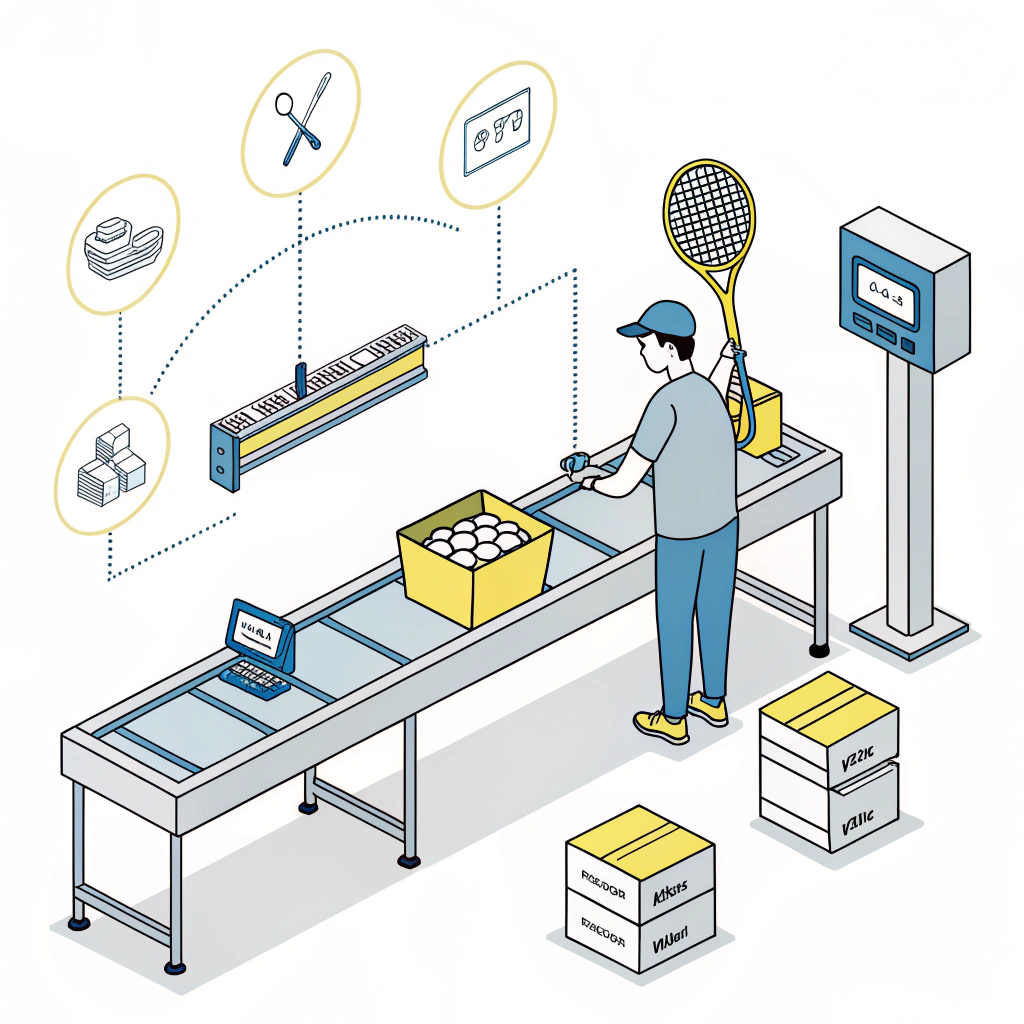
What buyers commonly ask for and how it affects production:
- Full-custom shapes: Requires new tooling (cost depends on complexity). Expect higher prototype charges but greater differentiation.
- Color matching & print: Pantone approval sample + pre-production approval mandatory.
- Grip & butt cap custom logos: Low MOQ5 and low per-unit cost; easy branding uplift.
- Packaging: Co-branded printed boxes, cartons, or header cards — specify materials and protection level.
- Ball pairing options: We offer balls in two felt mixes — 45% wool and 57% wool — both pressurized in tubes. The higher wool content tends to give longer felt life and more consistent play; tubes preserve pressure during shipping and shelf life.
MOQ and flexibility:
- Typical MOQ for branded rackets: 200–500 units per SKU depending on finish and tooling.
- Higher customization (new mold + multi-color printing + special coatings) usually pushes MOQ higher or requires lead-time offset (e.g., 500–1000 units).
Cost vs performance matrix: guiding procurement decisions
A simple decision matrix helps balance price and positioning.
| Priority | Material / Feature | Business impact |
|---|---|---|
| Low cost, high volume | Fiberglass face + soft/medium EVA | Lower price point, forgiving play, higher margin on entry models |
| Mid-range balance | 3k carbon + medium EVA | Premium feel, better control, suitable for mid-tier lines |
| High performance | 12k/18k carbon + hard EVA + textured surface | Power-oriented, higher R&D and QC, positioned at top-tier SKUs |
Sample MOQ examples:
- Fiberglass basic: MOQ 200
- 3k carbon mid-range: MOQ 300
- Full custom diamond carbon with textured surface: MOQ 500–1,000
Case studies / examples (anonymized)
- Quick-turn seasonal launch — timeline 8 weeks
- Requirement: Teardrop, 3k carbon face, medium EVA, custom two-color print, branded grip.
- Output: Prototype (2 weeks), pre-production run (3 weeks), mass production (3 weeks).
- Result: Launched on schedule with 1.2% defect rate, positive retail sell-through due to balanced price/performance.
- Premium co-branded model — timeline 14 weeks
- Requirement: Diamond shape, 12k carbon, hard EVA, laser-textured zones for spin, custom packaging, supplied paired balls (57% wool).
- Output: Longer tooling and approval cycles; higher MOQ (800).
- Result: Strong brand positioning and lower return rate because of controlled QC and material selection.
Practical checklist for buyers (spec sheet template and QC questions)
Essentials to include in any RFQ/spec sheet:
- Target model name / SKU
- Shape: Round / Teardrop / Diamond (include CAD if custom)
- Face material: Fiberglass / 3k / 12k / 18k (number of plies, orientation)
- Core: EVA (specify Shore A or soft/medium/hard) or foam type
- Thickness (mm) and tolerance
- Target weight range (g) and tolerance
- Balance point (mm) from handle end and tolerance
- Surface finish: smooth / textured (specify roughness or method)
- Printing: color references (Pantone) and placement
- Branding: grip logo, butt cap logo, box graphics
- MOQ, packaging requirements, and paired ball type (45% or 57% wool)
- QC sample approval process and acceptance criteria
Minimum QC tests to request pre-shipment:
- Weight and balance sampling
- Adhesion/pull tests
- Compression-set test report on core
- Visual inspection report with photos
- Play test summary (optional for high-tier lines)
Conclusion & call-to-action
Design choices in padel rackets are interdependent: face material, core density, shape, and finish jointly define player experience and manufacturing complexity. For procurement and product managers, the right approach is a clear spec sheet, realistic lead-time expectations, and a QC plan that ties to your return and warranty KPIs.
NEX Padel supports OEM partners with rapid prototyping, samples across fiberglass and 3k/12k/18k carbon, custom mold capability, branded grip/butt cap options, and paired ball supply (45% or 57% wool in pressurized tubes). Contact us to get material samples, prototype timelines, and an OEM cost estimate tailored to your product tier and MOQ.
People Also Ask
Q: What is the evolution of padel rackets?
A: Padel rackets began as simple wooden paddles and have evolved into composite constructions using fiberglass and carbon fiber. Modern rackets combine layered fabrics, engineered cores, and specialized surface coatings to tune power, control, and longevity. This shift mirrors player demand for lighter, stiffer, and more consistent performance across playing levels.
Q: What is the future of racket technology?
A: The near-term future emphasizes advanced composites, refined layups, and localized surface texturing to improve strength, control, and spin without adding weight. Materials like higher-modulus carbon weaves, hybrid layups (carbon + fiberglass + aramid), and improved foam cores reduce fatigue and maintain performance. Manufacturers will also push faster prototyping, digital color matching, and smarter QC to shorten time-to-market.
Q: Why are padel rackets different shapes?
A: Shapes (round, teardrop, diamond) move the sweet spot and change balance. A teardrop usually places the sweet spot slightly higher than a round but lower than a diamond, making it an all-round compromise between power and control. Brands pick shapes to match player profiles: round for forgiveness and beginners, teardrop for balanced play, and diamond for maximum power aimed at advanced players.
-
racket shape: Read the linked article to understand how frame geometry (round, teardrop, diamond) shifts the sweet spot, balance, and intended player segment — essential when specifying shapes in RFQs and positioning SKUs. ↩
-
fiberglass: Read the linked resource to compare fiberglass vs carbon in stiffness, layup tolerance, cost, and lifecycle — useful for procurement to set COGS, QC expectations, and target retail tier. ↩ ↩2
-
EVA rubber: Read the linked piece to learn about EVA core formulations, bonding methods, and performance trade-offs (dwell time, compression-set), which helps define core specs and testing requirements. ↩
-
Shore A: Read the linked explanation to interpret Shore A hardness values, how they relate to feel and rebound, and how to request specific hardness tolerances in material specs. ↩
-
MOQ: Read the linked guide to understand how minimum order quantities impact tooling amortization, per-unit cost, inventory risk, and negotiation levers for custom finishes and batch sizing. ↩ ↩2