Skip to content

Quick Answer: For procurement managers seeking high-performance padel rackets, focus on comparing material quality (Fiberglass1 versus various Carbon Fiber2 grades), design (Diamond, Round, Teardrop), and Customization Capabilities3. Evaluating these factors ensures that your inventory meets industry standards and player needs while aligning with Supply Chain4 reliability and cost-effectiveness.
In the competitive landscape of padel sports equipment, choosing the right racket can transform player performance and directly impact business success. As a procurement manager or product specialist, your decision process involves evaluating material performance, design structure, manufacturing precision, and customization capabilities. This guide provides a detailed comparison of padel rackets based on key technical aspects, enhancing your knowledge to make well-informed purchasing decisions.
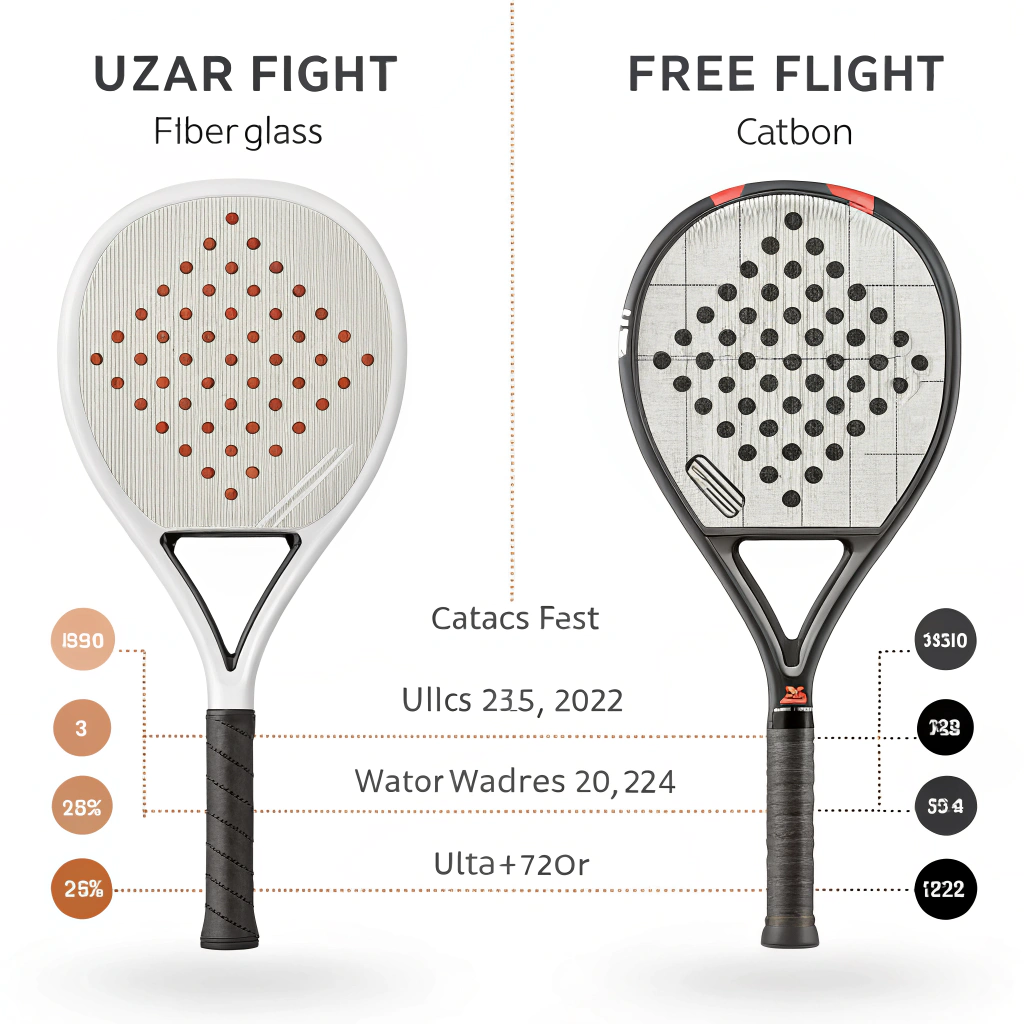
Materials play a critical role in dictating the overall performance and durability of a padel racket. Manufacturers like NEX Padel use materials ranging from fiberglass to various grades of carbon fiber – including 3K, 12K, and 18K carbon fiber – to meet diverse performance needs.
| Material | Weight | Durability | Responsiveness | Typical Use Cases |
|---|---|---|---|---|
| Fiberglass | Generally heavier | Moderate durability | Offers comfortable play but less power | Entry-level models; beginner tournaments |
| 3K Carbon | Lightweight | Enhanced durability | Balanced performance, suitable for both control and power | Intermediate players; multi-use scenarios |
| 12K Carbon | Ultra-lightweight | Superior strength | Provides added responsiveness and control | High-performance rackets for advanced play |
| 18K Carbon | Extremely light | Highest durability and rigidity | High power output with precise control | Professional-level equipment, premium models |
Understanding these material properties allows you to match product specifications with your target market. For distributors focusing on advanced players, emphasizing rackets built from 12K or 18K carbon fiber may offer enhanced market differentiation.
- Weight and Balance: Lighter materials contribute to better maneuverability, reducing player fatigue during intense matches.
- Vibration Dampening: Advanced carbon fibers, especially in premium options, often include anti-vibration technologies that protect the player's arm and improve shot precision.
- Durability: The transition from fiberglass to multi-grade carbon fibers increases the racket's longevity and resilience against impacts, translating to long-term cost savings.
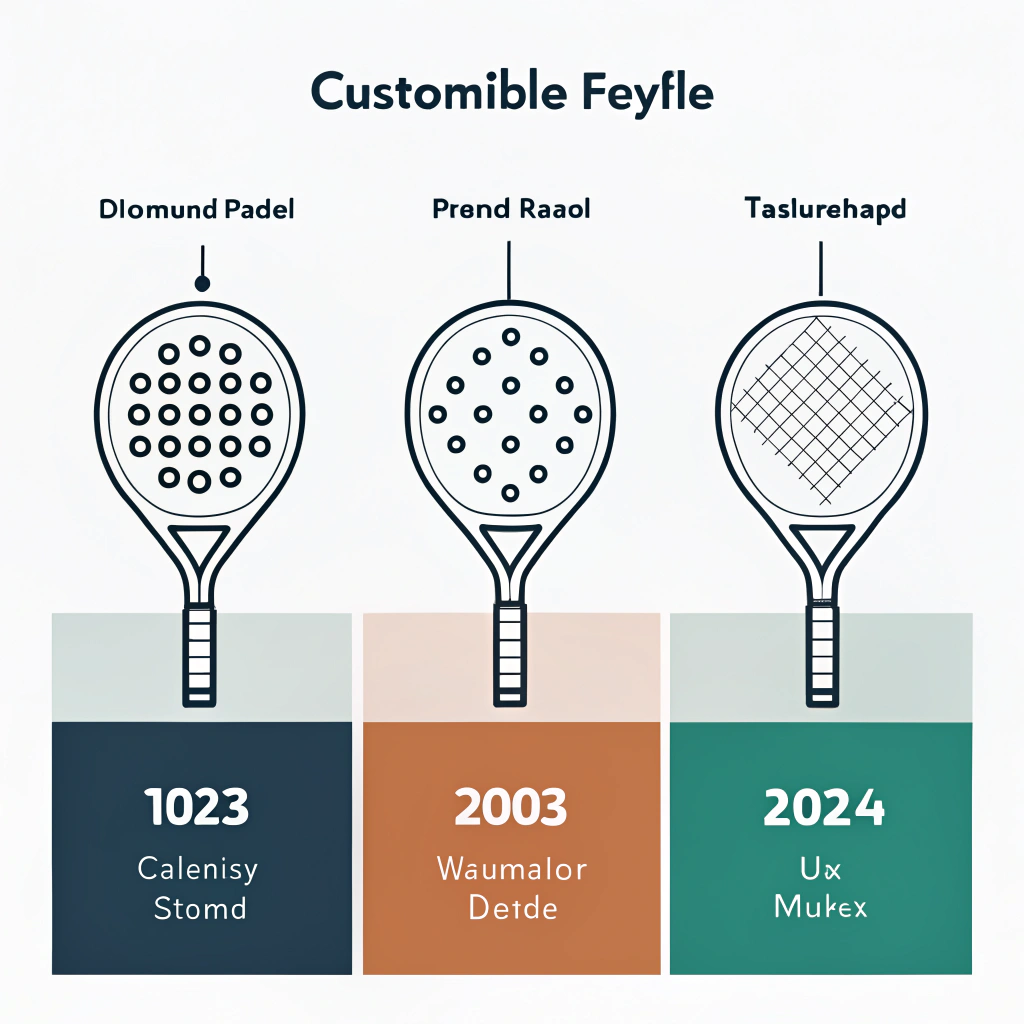
The structure of a padel racket affects control, power, and overall usability. At NEX Padel, designing with varied shapes such as Diamond, Round, and Teardrop caters to the different playing styles and skill levels prevalent among customers.
| Shape | Main Characteristics | Ideal For | Performance Emphasis | Customization Potential |
|---|---|---|---|---|
| Diamond | Pointed design with a heavier head | Aggressive players seeking power | Maximizes shot force; power zone | High ability for shape and logo customization |
| Round | Circular, evenly balanced structure | Control-oriented players | Enhanced control and maneuverability | Flexible options in weight distribution and grip customizations |
| Teardrop | Hybrid form blending power and control | All-round players | Balances control with adequate power | Customizable with unique design patterns |
- Customer Segmentation: Equip your inventory with a range of shapes to cover all player preferences. For instance, premium clubs may prefer Diamond rackets to empower aggressive play, while community centers may lean towards Round rackets that favor control.
- Market Trends: Current trends indicate an increasing demand for hybrid designs like Teardrop that offer a compromise between power and precision. This trend is crucial if your target market includes both competitive players and leisure enthusiasts.
- Customization Options: Customization extends beyond basic aesthetics. With options for custom printing on the frame and personalized handle designs, you can cater to partners who demand their logo or brand identity on the equipment.
When it comes to B2B decisions, customization and a reliable supply chain are as important as the technical features of the rackets. At NEX Padel, our production techniques allow for extensive customization that includes not only shape and material but also hand grip and handle cover branding.
- Custom Shapes: Beyond standard Diamond, Round, and Teardrop, fully custom shapes allow brands to stand out in a competitive market.
- Print and Color Options: Offering tailored printing and color schemes can help differentiate product lines according to brand identity.
- Additional Accessories: Options to customize hand grips and handle covers with logos add extra value and allow your products to serve as marketing tools.
- Quick Prototyping: Fast sampling processes ensure that design proposals quickly translate into production, giving you flexibility when market demands change.
- Timely Delivery: A robust logistic framework ensures on-time delivery even during peak seasons, crucial for maintaining stocked inventories.
- Quality Monitoring: Our strategic partnerships with factory facilities guarantee that every batch meets stringent quality standards, essential for sustaining customer trust.
Price is a significant factor, but it is essential to balance cost with performance and longevity. While some padel rackets use basic materials to lower production costs, investing in higher-end options can offer superior performance and durability.
- Entry-Level Options: Typically built from fiberglass, these rackets are less expensive but may compromise on durability and performance. Ideal for beginners or budget-conscious buyers.
- Mid-Range to Premium Options: Rackets featuring 3K, 12K, or 18K carbon fibers may have a higher upfront cost, but the enhanced performance features, longer lifespan, and reduced need for replacement justify the investment.
- Long-Term Value: Consider the life cycle of the product. Advanced materials not only reduce wear and tear but also maintain their performance characteristics over a longer period, making them cost-effective options in the long run.
Tip: When evaluating options, request detailed technical data from suppliers on metrics such as weight distribution, balance points, and vibration dampening performance.
Manufacturing process expertise significantly influences padel racket performance. At NEX Padel, our decades of factory and production experience inform every design decision. We invest in advanced machinery and rigorous testing methods to ensure each product meets high-performance standards.
- Precision Manufacturing5: Advanced production techniques, especially for carbon fiber models, ensure consistency across batches, essential for meeting the performance expectations of professional players.
- Quality Control: Our in-line inspections and final product testing significantly reduce defects and ensure that distribution centers receive only the best-quality equipment.
- Innovation Driven: Feedback from professional athletes and market trends continuously shapes our research and development, leading to constant product improvements.
These manufacturing strengths, combined with an efficient supply chain, form the backbone of our product reliability, pivotal for building trust with B2B partners.
Given the technical and market insights discussed above, here are actionable recommendations for procurement managers updating their padel equipment portfolios:
-
Match Your Product Mix to Player Profiles:
Analyze your customer base. If you cater to competitive athletes, prioritize high-quality carbon fiber rackets with advanced performance features. For broader recreational markets, a mix including entry-level fiberglass options might be appropriate. -
Emphasize Customization Options:
Select suppliers that offer customizable features, from print options to unique shape and weight configurations. This differentiation can elevate your product offerings. -
Focus on Long-Term Supplier Relationships:
Choose manufacturers with proven reliability in quality and delivery. This reduces the risk of stockouts and ensures that your inventory remains competitive season after season. -
Leverage Data-Driven Decisions:
Use technical specifications and performance data to compare different rackets. Request samples where possible to conduct product trials before making large bulk orders. -
Keep an Eye on Market Trends:
Stay updated with industry trends such as the growing demand for balanced (hybrid) rackets. Such trends can guide you to adjust your inventory mix to meet emerging customer preferences. -
Ensure Supply Chain Transparency:
Verify that your supplier has robust quality control and efficient logistic strategies. Knowing that your products will be delivered on time and maintained at the highest quality is critical for B2B success.
Choosing a padel racket is not just a product selection exercise, but a critical strategic decision that can define your business’s competitive edge. By comparing materials such as Fiberglass1 and various grades of Carbon Fiber2, examining design options like Diamond, Round, and Teardrop, and taking advantage of extensive Customization Capabilities3, you are empowered to offer products that are both high-performing and tailored to your customer base.
The ability to balance cost against long-term value, supported by a robust Supply Chain4 and proven manufacturing expertise—exemplified by Precision Manufacturing5—positions you to succeed in a competitive sports equipment market. Our insights, drawn from real factory experience and industry trends, provide a comprehensive decision-making framework designed to enhance your procurement strategy and deliver exceptional products to your clientele.
Take the next step: request detailed product specifications and samples from your chosen supplier, ensuring that every padel racket you add to your inventory aligns with your business’s quality and performance standards.
Q: How to know what padel racket to buy?
A: When deciding on a padel racket, identify the player’s style. A control racket suits players focusing on precision, a power racket benefits aggressive play, and a balanced option offers a mix of both. Consider technical details such as material, weight, and balance to match the gameplay needs.
Q: How much should I spend on a padel racket?
A: The investment in a padel racket varies by performance features. Advanced players might look at premium options starting around £170 or more, while the range depends on individual needs, with even high-performance rackets available across different price segments.
Q: What's the difference between cheap and expensive padel rackets?
A: Expensive padel rackets typically utilize high-quality materials like carbon fiber, which makes them lighter, stronger, and more responsive. In contrast, cheaper options often incorporate fiberglass, which may result in lower durability and performance. Additional features in high-end rackets may include anti-vibration systems and enhanced design technology.
-
Fiberglass: Click to read how fiberglass properties influence durability and comfort, helping you understand entry-level options and balancing performance with cost. ↩ ↩ ↩2
-
Carbon Fiber: Click to explore the various grades of carbon fiber and their impact on weight, strength, and overall racket performance, ensuring high-quality equipment choices. ↩ ↩ ↩2
-
Customization Capabilities: Click to learn about customization options that allow you to tailor product design to brand specifications, enhancing product differentiation in competitive markets. ↩ ↩ ↩2
-
Supply Chain: Click to discover how a robust supply chain can ensure timely delivery, quality control, and reliability, which are vital for maintaining inventory and meeting market demand. ↩ ↩ ↩2
-
Precision Manufacturing: Click to understand the advanced techniques behind precision manufacturing, ensuring consistency, durability, and performance in high-end sports equipment. ↩ ↩ ↩2