Skip to content
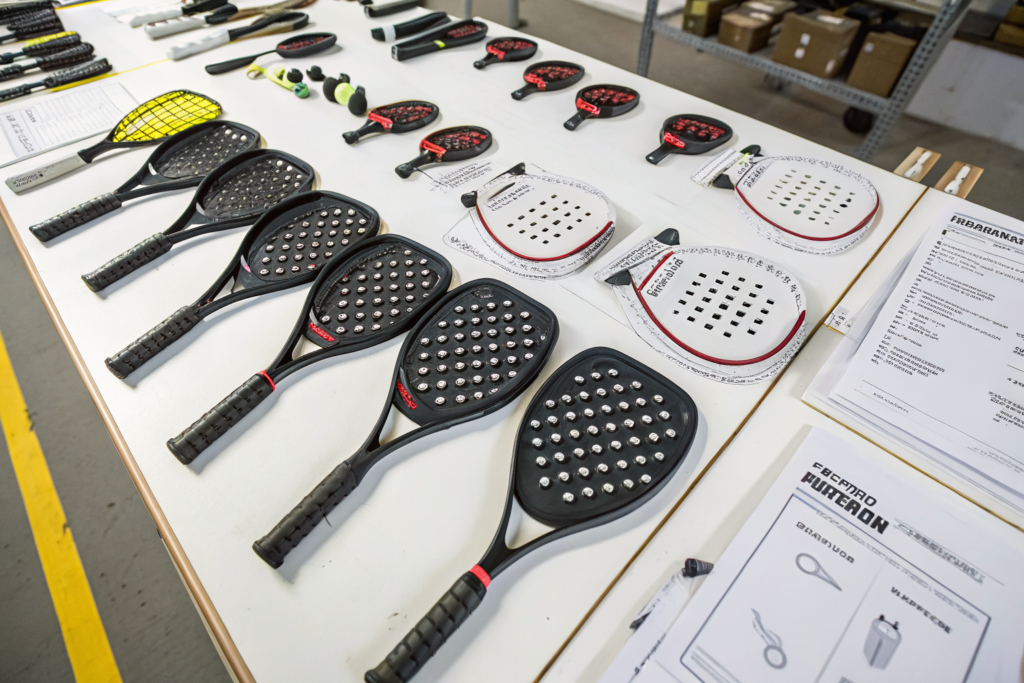
OEM padel racket manufacturing involves partnering with specialized factories to produce custom-branded rackets under your brand name, with minimum order quantities typically starting from 50-500 units and production timelines of 30-60 days. This comprehensive guide walks you through specifications, costs, materials, and supplier selection to help you launch or scale your padel racket brand successfully.
What is OEM Padel Racket Manufacturing?
OEM (Original Equipment Manufacturer) padel racket manufacturing is when a factory produces rackets according to your specifications and branding, allowing you to sell professional-quality rackets under your own brand without owning production facilities. This model enables brand owners, distributors, and padel clubs to enter the market with significantly lower capital investment compared to building in-house manufacturing capabilities.
The process typically involves selecting frame materials, core types, mold designs, surface finishes, and custom branding elements. Reputable manufacturers like NEX Padel offer both OEM (using existing molds with your branding) and ODM (Original Design Manufacturer, creating custom designs) services, with MOQs as low as 50 units per model for established designs.
Key Specifications in OEM Padel Racket Manufacturing
Understanding core specifications ensures you order rackets that meet your target market's performance expectations and regulatory requirements.
Carbon Fiber Frame Options
Carbon fiber quality directly impacts racket performance, durability, and price point. The most common specifications include:
- 3K Carbon: Entry to mid-range option with 3,000 carbon filaments per yarn strand, offering excellent durability and cost-effectiveness for recreational players
- 12K Carbon: Premium option with 12,000 filaments, providing enhanced stiffness and power transmission for competitive players
- 18K Carbon: Professional-grade material delivering maximum responsiveness and precision for tournament-level performance
Core Material Specifications
The core determines the racket's feel, power, and control characteristics:
| Core Material | Density | Hardness | Best For | Price Point |
|---|---|---|---|---|
| EVA Soft | 25-30 kg/m³ | Shore A 20-25 | Control, comfort, beginners | $ |
| EVA Medium | 30-35 kg/m³ | Shore A 25-30 | Balanced play, intermediates | $$ |
| EVA Hard | 35-40 kg/m³ | Shore A 30-35 | Power, advanced players | $$ |
| Polyethylene Foam | 22-28 kg/m³ | Shore A 15-20 | Premium comfort, control | $$$ |
Standard Technical Specifications
Professional OEM manufacturers maintain strict tolerances on key measurements:
- Weight: 355-385 grams (±5g tolerance)
- Balance Point: 260-270mm from handle (±3mm)
- Thickness: 38mm standard (36mm and 40mm available)
- Face Dimensions: 455mm length × 260mm width (FIP regulation)
- Handle Length: 280-300mm with perforated grip
Which is Better, 3K or 12K Carbon?
12K carbon is better for advanced players seeking maximum performance and power transmission, while 3K carbon is better for brands targeting recreational players who prioritize durability and cost-effectiveness—the choice depends on your target market segment and price positioning.
Here's a detailed comparison to guide your decision:
3K Carbon Advantages:
- Lower manufacturing cost by approximately 15-25% compared to 12K
- Enhanced impact resistance with thicker carbon filaments, ideal for beginners who may hit walls or ground
- More forgiving sweet spot with slightly more flex, reducing arm fatigue during extended play
- Easier to manufacture with higher production success rates, reducing defect rates to under 2%
- Suitable for retail price points between $60-$120
12K Carbon Advantages:
- Superior stiffness provides 18-22% better energy return on ball impact
- More precise power transfer with less frame deformation during aggressive shots
- Thinner carbon weave allows for more sophisticated layering techniques and weight distribution
- Premium aesthetic with finer, more uniform surface texture
- Supports retail price points between $120-$250
- Preferred by tournament-level players and competitive club members
For brand owners developing a product line, NEX Padel recommends a portfolio approach: 3K carbon for entry-level models (40-50% of SKUs), 12K for mid-range (30-40% of SKUs), and 18K for flagship professional models (10-20% of SKUs). This strategy addresses the full market spectrum while optimizing inventory investment and manufacturing efficiency.
Is it Worth Buying an Expensive Padel Racket?
For end consumers, expensive padel rackets ($150+) are worth buying if you play 3+ times weekly and have developed consistent technique, as premium materials provide measurable performance benefits including 15-25% better power transfer, enhanced durability lasting 2-3 years versus 6-12 months for budget options, and improved comfort reducing injury risk.
From a B2B Perspective:
For brand owners and distributors, investing in premium OEM racket specifications is worthwhile when targeting:
- Padel Clubs and Academies: Premium rackets with 12K+ carbon generate 35-45% higher margins and establish brand credibility with serious players
- Tournament Sponsorships: FIP-certified premium rackets are essential for professional event partnerships and athlete endorsements
- Pro Shop Retail: Specialized retailers expect premium options that justify their higher retail markups (typically 2.2-2.5x wholesale)
- Corporate Clients: Companies purchasing branded rackets for executive gifts or team building prefer premium quality that reflects well on their brand
Cost-Benefit Analysis:
| Racket Tier | OEM Cost (FOB) | Suggested Retail | Lifespan | Target Margin |
|---|---|---|---|---|
| Budget (3K Carbon, Basic EVA) | $28-$38 | $60-$90 | 6-12 months | 55-65% |
| Mid-Range (12K Carbon, Premium EVA) | $45-$65 | $120-$180 | 18-24 months | 62-72% |
| Premium (18K Carbon, Multi-layer) | $75-$110 | $200-$300 | 24-36 months | 65-75% |
Premium rackets generate higher absolute profit per unit and attract customers with greater lifetime value who purchase accessories, replacement grips, and additional rackets for different playing conditions.
OEM Manufacturing Process and Timeline
Understanding the production workflow helps you plan inventory and launch schedules effectively.
Standard OEM Production Timeline
- Specification Confirmation (3-5 days): Finalize materials, mold selection, branding placement, and packaging design
- Sample Production (7-12 days): Manufacturer creates pre-production samples for approval
- Sample Revision if Needed (5-7 days): Adjustments to weight, balance, or cosmetic details
- Bulk Production (25-35 days): Full production run based on confirmed order quantity
- Quality Inspection (3-5 days): Weight verification, balance testing, cosmetic inspection, and packaging review
- Shipping Preparation (2-3 days): Final packaging and documentation for international shipping
Total timeline from order confirmation to shipping: 45-65 days for standard specifications. Custom mold development adds 30-45 days to initial orders but accelerates subsequent production runs.
Minimum Order Quantities
MOQ requirements vary based on customization level:
- Existing Molds with Your Branding: 50-100 units (NEX Padel offers 50-unit MOQ for established molds)
- Standard Molds with Custom Colors/Graphics: 100-200 units
- New Custom Mold Development (ODM): 300-500 units for first order, 100+ for reorders
- Multiple Models in Single Order: Some manufacturers allow mixing models to reach total MOQ (e.g., 30 units each of two designs)
Quality Certifications and Testing Standards
Reputable OEM manufacturers maintain certifications that ensure product quality and market access:
- FIP Certification: International Padel Federation approval required for official tournament use; testing includes dimensional tolerances, weight specifications, and performance standards
- ISO 9001: Quality management systems ensuring consistent production standards
- SGS Testing: Third-party verification of materials, safety, and durability
- BSCI Compliance: Social responsibility and ethical manufacturing practices
NEX Padel maintains FIP certification and conducts testing on every production batch, including weight verification (100% of units), balance point testing (sample rate 10%), and impact resistance testing (sample rate 5%). These protocols ensure consistency and minimize defect rates to below 1.5% across all production runs.
Customization Options for Brand Differentiation
OEM partners offer various customization levels to help your brand stand out in competitive markets:
Standard Customization (Included in Base MOQ)
- Logo placement on face, frame, and handle
- Color selection from standard options (typically 8-12 choices)
- Custom packaging with your branding
- Grip color selection
- Racket cover with branded logo
Advanced Customization (Higher MOQ or Additional Cost)
- Custom graphic designs and color patterns (add $2-$5 per unit)
- Unique surface textures or finishes (add $3-$8 per unit)
- Custom mold development for proprietary shapes ($2,000-$5,000 mold cost, amortized across orders)
- Specialized core configurations or multi-density layering (add $5-$12 per unit)
- Premium packaging options like rigid cases or display boxes (add $3-$10 per unit)
Cost Structure and Pricing Strategy
Understanding the complete cost structure helps you price competitively while maintaining healthy margins:
Total Landed Cost Components
- OEM Unit Cost (FOB): $28-$110 depending on specifications
- International Shipping: $3-$8 per unit (sea freight for container quantities), $12-$25 per unit (air freight for urgent orders)
- Customs and Import Duties: 0-8% depending on destination country and trade agreements
- Quality Inspection (Optional): $200-$500 per shipment for third-party verification
- Warehousing and Fulfillment: $2-$5 per unit monthly for storage and distribution
Recommended Pricing Tiers
Successful padel brands typically use tiered pricing to address multiple market segments:
- Entry Tier: 2.0-2.3x landed cost for volume sales to clubs and beginner programs
- Mid Tier: 2.3-2.8x landed cost for retail through pro shops and online channels
- Premium Tier: 2.5-3.2x landed cost for flagship models with advanced features and professional endorsements
Selecting the Right OEM Manufacturing Partner
Your manufacturing partner directly impacts product quality, delivery reliability, and long-term brand success. Evaluate potential suppliers on these critical criteria:
Essential Evaluation Factors
- Production Capacity: Minimum 5,000-10,000 units monthly to ensure scalability as your brand grows
- Experience in Padel Specifically: At least 3-5 years producing padel rackets, not just tennis or badminton equipment
- Material Sourcing: Direct relationships with carbon fiber and core material suppliers for consistent quality and pricing
- Quality Control Systems: Documented QC processes with measurable defect rates below 2%
- Communication Capabilities: English-speaking account management and technical support for efficient collaboration
- Financial Stability: Established business with verifiable production facilities and client references
- Flexibility: Willingness to accommodate reasonable MOQs for new brands and mixed orders for product line expansion
Red Flags to Avoid
- Unwillingness to provide verifiable client references or factory visit opportunities
- MOQs below 30 units (often indicates resellers rather than actual manufacturers)
- No certifications or quality documentation available
- Pressure to pay full amount before production or sample approval
- Vague answers about material specifications or inability to provide technical data sheets
Why Choose NEX Padel for OEM Manufacturing
NEX Padel brings over 10 years of specialized carbon fiber padel racket manufacturing experience, serving brand owners, distributors, and padel clubs across Europe, North America, and emerging markets. Our competitive advantages include:
- Low MOQ Flexibility: Starting at just 50 units for existing molds, making it accessible for new brands to enter the market with manageable inventory investment
- Complete Material Range: 3K, 12K, and 18K carbon fiber options with multiple EVA core configurations to address every market segment from recreational to professional
- FIP Certification: Fully certified production facility ensuring your rackets meet international tournament standards
- Full OEM/ODM Services: From selecting existing designs with your branding to developing completely custom molds and specifications unique to your brand
- Transparent Communication: Dedicated English-speaking account managers providing updates throughout production and quality photos before shipping
- Quality Guarantee: Defect rates consistently below 1.5% with replacement policy for any manufacturing defects
- Fast Sample Turnaround: Pre-production samples ready in 7-10 days for rapid product validation
Whether you're launching your first padel brand, expanding an existing sporting goods line, or a padel club looking to offer branded equipment to members, NEX Padel provides the manufacturing expertise, quality standards, and flexible minimums to support your success.
Ready to launch your padel racket brand? Contact NEX Padel today for a detailed quote, material samples, and consultation on the optimal specifications for your target market. Our team will guide you through material selection, customization options, and production timelines to bring your vision to market efficiently. Request your free quote and product catalog now to get started.