Skip to content
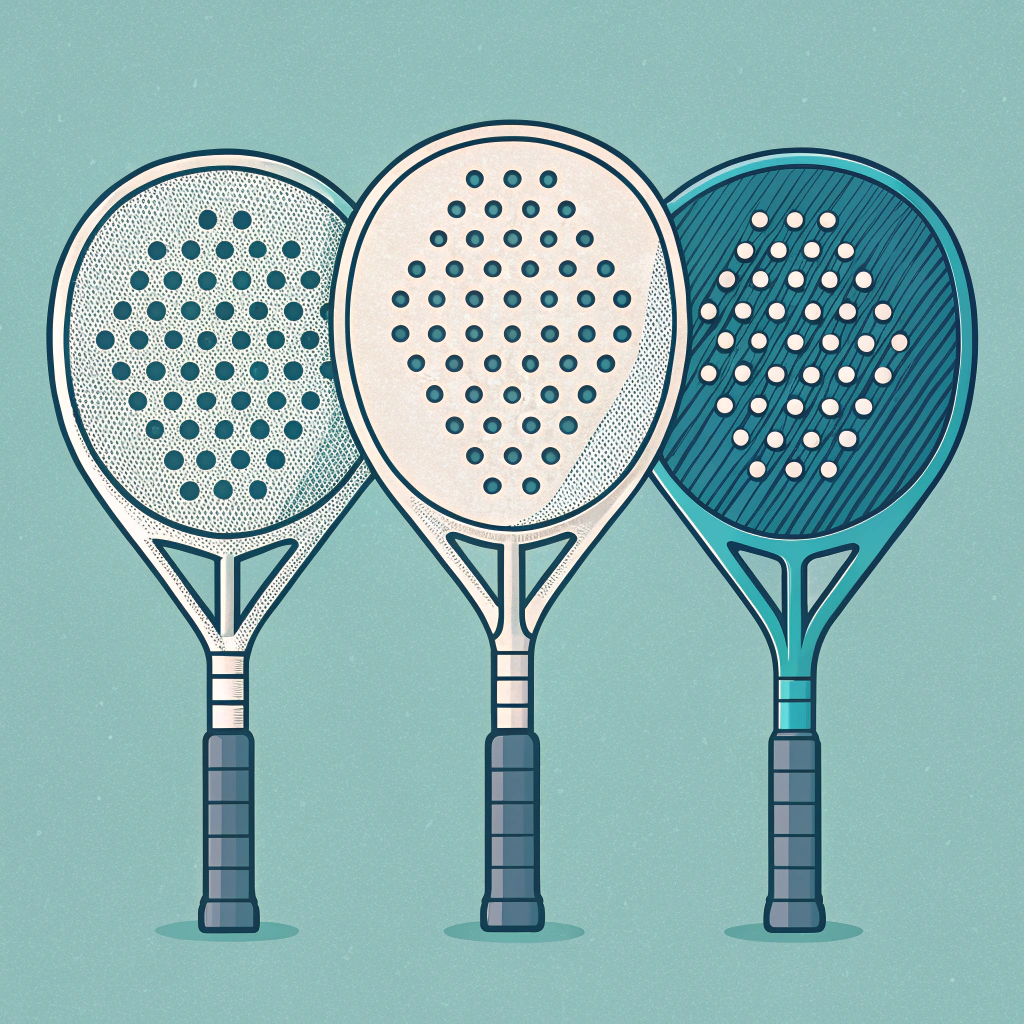
A lightweight padel racket (typically 340–360 g) improves maneuverability and reaction time by reducing swing weight1 and making it easier to accelerate the racket head. For your product line, this translates into quicker volleys, easier defending from the back of the court, and reduced arm fatigue—especially when combined with a suitable balance point, EVA foam hardness2, and face layup (fiberglass vs 3K/12K/18K carbon). The trade‑off: very light builds require smart engineering to maintain stability, a useful sweet spot, and durability.
For European brands and distributors, a dedicated lightweight line (340–360 g) is no longer a niche experiment. It is becoming a must‑have segment for:
- Recreational and intermediate players wanting faster swings and less fatigue
- Older players or those with a history of tennis elbow / shoulder pain
- Defenders and counter‑punchers who value control and fast reactions over raw power
- Women’s and juniors’ segments, where comfort and maneuverability dominate
From a category perspective, a clearly positioned lightweight series helps you:
- Fill a visible gap between “beginner comfort” and “advanced power” lines
- Create SKUs dedicated to arm‑friendly performance
- Justify premium pricing through material and layup choices instead of just graphics
At NEX Padel, we work in the 340–360 g range with controlled ±3–5 g QC tolerance, so you can build a consistent lightweight family across Diamond, Round, and Teardrop molds.
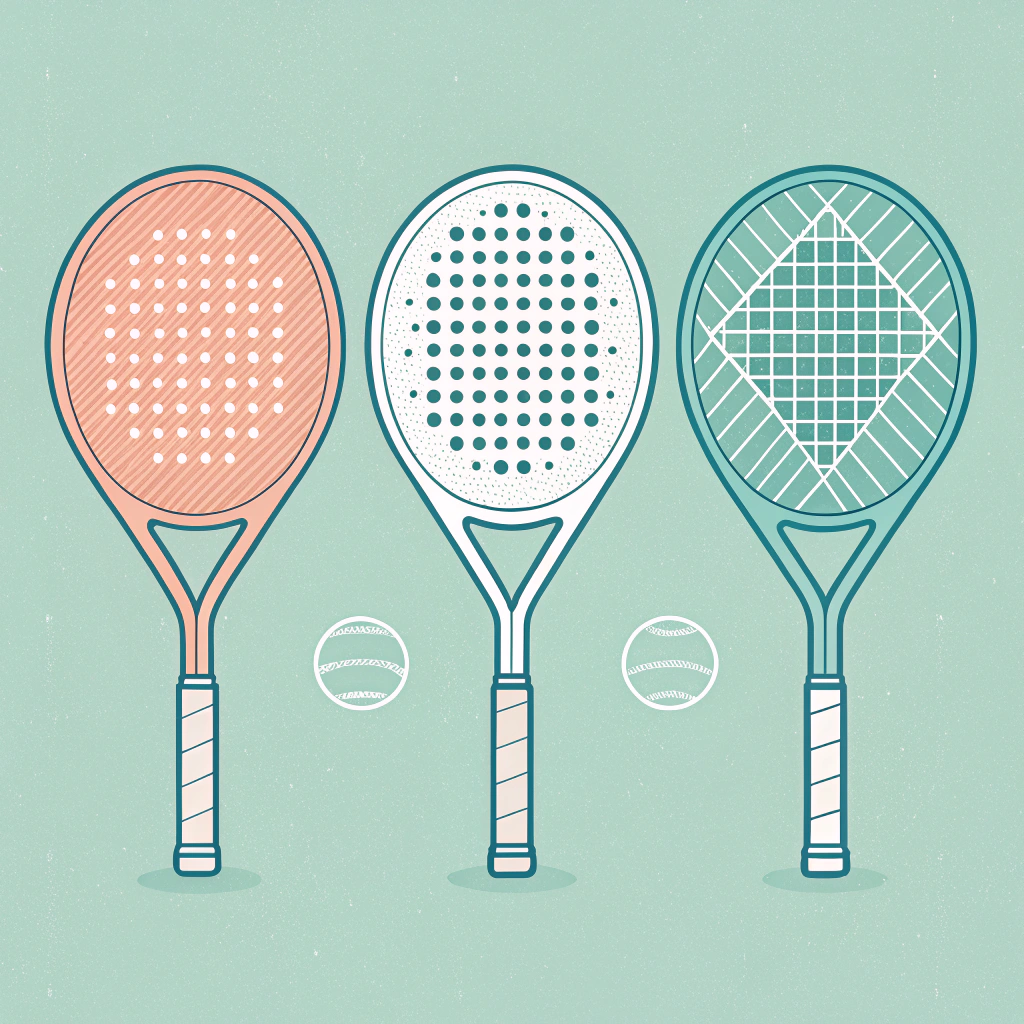
Simply stating “lighter is faster, heavier is more powerful” is not enough for product planning. You need to understand the mechanical impact.
Players feel swing weight (kg·cm²), not just static grams on a scale. Two rackets can both be 355 g but feel very different because of their balance point and distribution of mass.
- Lower swing weight → faster acceleration, easier changes of direction
- Higher swing weight → more plow‑through, more stability on off‑center hits
Approximate target ranges we see working well:
| Player type / use case | Static weight (g) | Typical balance | Target swing weight* |
|---|---|---|---|
| New to padel / elbow‑sensitive | 340–350 | Head‑light / even | Low to low‑medium |
| Defensive / counter‑attacking intermediate | 345–360 | Even | Medium |
| Aggressive intermediate / advanced | 360–375 | Even to head‑heavy | Medium‑high to high |
*Swing weight is measured in the factory (kg·cm²). We can share lab values during sampling.
For your buyers, the key performance gains of a lightweight padel racket line are:
- Faster reaction time at the net (volley exchanges, blocks, bandejas)
- Easier to accelerate for players with limited strength or shorter swings
- Less arm and shoulder fatigue over long sessions
- Better option for players with or at risk of tennis elbow
The main trade‑offs, especially at the very low end of the weight range:
- Less inherent power from mass → player must generate speed with technique
- Potentially less stability on heavy balls if the layup is not optimized
- Smaller “forgiving” area if the face and core are too stiff
A good lightweight line solves these through shape, foam hardness, and face material—not simply by removing grams.
We work with three main shapes and can fully customize molds. Each behaves differently when you push weight down to 340–360 g.
| Shape | Typical sweet spot | Usual balance | Lightweight best for… |
|---|---|---|---|
| Round | Central, large | More head‑light | Beginners, control players, elbow‑sensitive users |
| Teardrop | Slightly above center | Even | All‑round intermediate players, mix of defense and attack |
| Diamond | High (toward the tip) | More head‑heavy | Aggressive players wanting power in a “still manageable” frame |
In a lightweight series:
- Round 340–350 g: very arm‑friendly control rackets, large sweet spot, perfect as a comfort line.
- Teardrop 345–360 g: best seller candidates—balanced for most club and intermediate players.
- Diamond 350–360 g: an “accessible power” model that stays maneuverable compared to heavy diamonds.
We can also adjust drilling patterns3 and beam profile to support your positioning (for instance, a slightly thicker frame on an ultra‑light Round to keep torsional stability).
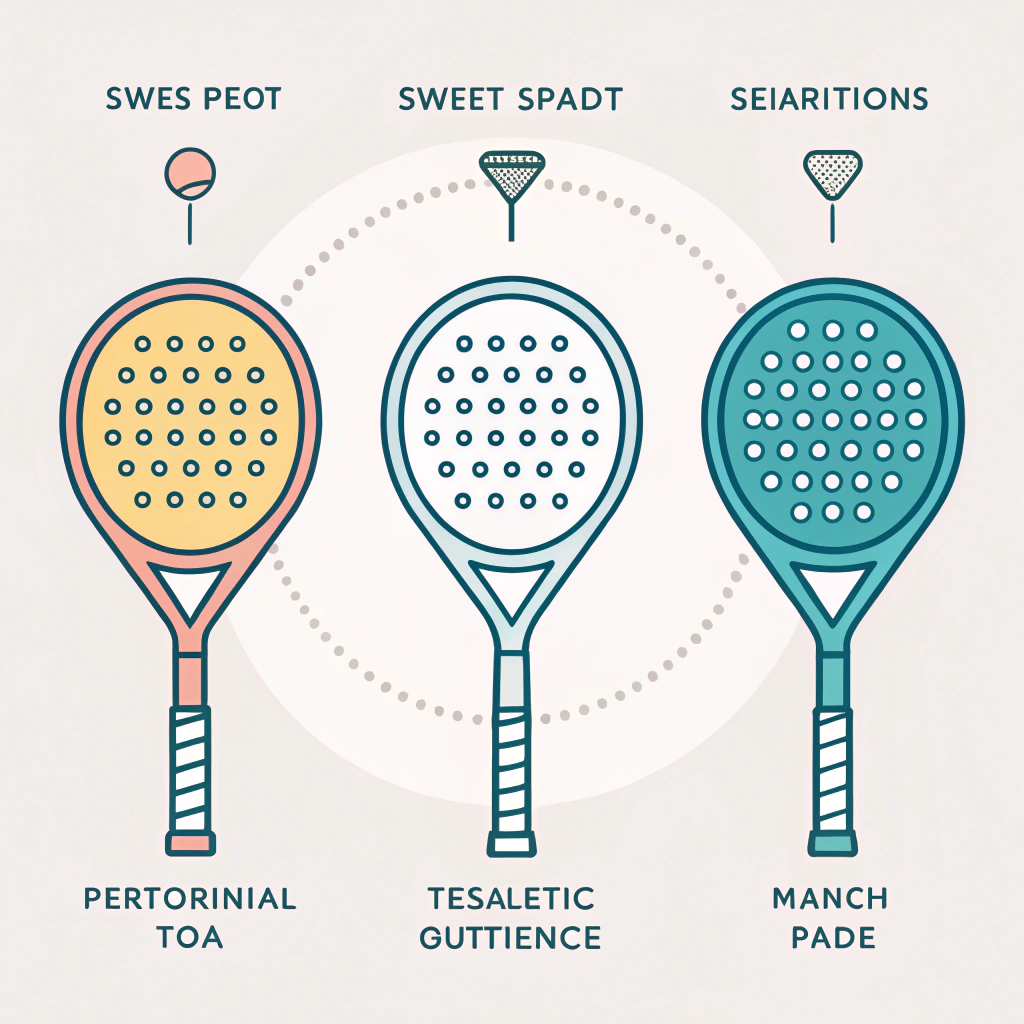
Getting a light racket to feel solid (not hollow or unstable) is mostly a materials and layup challenge.
-
Fiberglass face
- More flexible, higher dwell time
- Naturally arm‑friendly, softer impact feel
- Slightly lower rebound vs high‑grade carbon
- Great for beginner to intermediate and injury‑sensitive segments
-
3K / 12K / 18K carbon fiber face
- Higher rigidity, crisp response
- More efficient energy return at high swing speeds
- Better long‑term shape retention and durability
- Ideal for performance‑oriented SKUs
In a lightweight line, we often see the following successful combinations:
| Target player / concept | Face material | Layup notes |
|---|---|---|
| Comfort / elbow‑friendly Round | Full fiberglass or hybrid | Softer top ply, controlled core hardness |
| All‑round Teardrop 345–355 g | 3K carbon or carbon‑FG mix | Balance between speed and comfort |
| Performance Diamond 355–360 g | 12K or 18K carbon | Stiffer face, supporting power even at lower mass |
NEX Padel supports fiberglass, 3K, 12K, and 18K carbon and hybrids. This allows you to tune each SKU’s feel while keeping the line visually unified.
Core hardness is the second key lever for lightweight performance.
-
Soft EVA
- Higher ball dwell, more trampoline effect
- More comfort, better for cold climates
- Can feel “too bouncy” in very light frames if not carefully balanced
-
Medium EVA
- Versatile, works across levels
- Predictable response in most conditions
- Good match for 340–360 g all‑round rackets
We test different EVA hardness values in our factory to match your market’s climate and target group. For example, a soft‑core 345 g Round fiberglass for Northern Europe vs a medium‑core 355 g Teardrop 3K carbon for Southern Europe where courts are faster and temperatures higher.
A mistake we see in some OEM offerings: chasing the lowest possible weight and ignoring stability and sweet spot size. You can avoid that using a more holistic spec design.
When you reduce weight, there is less mass to absorb off‑center impacts. The risks:
- Smaller effective sweet spot
- More twist (torsion) on mishits
- Less confidence in defensive lobs and blocks
We compensate via:
- Slightly wider beam or strategic carbon reinforcement
- Hole pattern optimization to support the center and intended sweet spot area
- Matching EVA hardness to the target level so the racket doesn’t feel “dead” or “too lively”
For players with elbow or shoulder problems, you can build a clear “arm‑friendly” sub‑line by combining:
- Weight: 340–350 g
- Balance: head‑light or truly even, to keep swing weight low
- Face: fiberglass or hybrid with softer carbon
- Core: soft or medium EVA, tested for comfortable impact
- Grip: slightly thicker, high‑quality overgrip to reduce vibration perception
We can also adjust the handle length and handle cap design to suit your market preferences, while adding your logo for clear branding.
Your ability to launch a successful lightweight line depends not only on design, but also on manufacturing reliability.
At lighter weights, 5 g difference is more noticeable than on a heavy racket. We therefore:
- Work to a ±3–5 g tolerance per SKU, defined with you
- Control balance point within tight limits, not just static grams
- Verify EVA hardness in batch testing to keep impact feel consistent
You can position this in your marketing as “tournament‑grade tolerances” even for club‑level models.
Because you may still be validating demand for lightweight SKUs, sampling speed is critical. In Jiaxing, Zhejiang, we:
- Offer existing Diamond, Round, and Teardrop molds to shorten development
- Provide quick sampling of different:
- Weights and balance points
- Face materials (fiberglass, 3K/12K/18K carbon)
- EVA hardness levels
- Supply lab data such as approximate swing weight, balance point, and hardness for each sample
This lets you test with coaches and key clubs before locking in final specs and volumes.
From a branding and merchandising angle, you can differentiate lightweight models clearly:
- Custom printing and colorways to signal comfort, speed, or power
- Hand grip and handle cap logo customization for strong brand visibility
- Optional differentiation by:
- Texture finish (matte, glossy, rough)
- Edge guard color and thickness
We already OEM/ODM for brands such as Hirostar, Reebok, and Starvie, so we can align with your existing visual language or create something new.
A lightweight racket line interacts strongly with ball behavior. We can supply pressurized padel balls5 through our controlled partner factory:
-
45% wool balls
- Slightly lower bounce, more control
- Good for average club conditions and many amateur markets
-
57% wool balls
- Higher quality feel, more consistent bounce
- Appreciated by advanced players and premium clubs
Both are packed in pressurized tubes to maintain internal pressure during shipping and storage. You can bundle racket + ball SKUs targeted at specific player segments (e.g., “Comfort Pack” with lightweight Round rackets and 45% wool balls).
To translate this into a concrete plan, many partners follow a simple 3–SKU structure:
| SKU code (example) | Shape | Weight (g) | Face material | EVA core | Target player description |
|---|---|---|---|---|---|
| LW‑C340 | Round | 340–350 | Fiberglass | Soft | New players, elbow‑sensitive, max comfort |
| LW‑A355 | Teardrop | 345–360 | 3K carbon hybrid | Medium | Main all‑round club players |
| LW‑P360 | Diamond | 350–360 | 12K / 18K carbon | Medium | Aggressive intermediates needing speed + pop |
From there, you can expand into women’s colorways, junior sizes, or pro‑spec collaborations, all within the same lightweight design philosophy.
Neither is “better” for everyone. Lighter rackets (about 340–360 g) are easier to swing, help with quick reactions at the net, and reduce arm fatigue, making them suitable for beginners, defensive players, and anyone with elbow or shoulder issues. Heavier rackets (around 360–390 g) offer more mass behind the ball, which can increase power and stability on off‑center hits, but they demand more strength and can be tiring over long matches. The right choice depends on the player’s physical condition, style of play, and level.
Power in padel comes mainly from swing speed and technique, not only from the racket. Players should focus on a smooth, full swing, using legs and core to rotate the body and accelerate the racket head through contact. Good timing and hitting in the sweet spot are essential. A suitable racket—correct weight, balance, and foam hardness—can support this by allowing the player to swing fast without losing control or comfort.
For most adult players, a good starting range is 340–360 g. On the lower end (below ~340 g), rackets suit beginners, juniors, or players with arm problems who need maximum maneuverability and comfort. In the 340–360 g range, more experienced players who like fast, defensive, or all‑round play get a balance of speed and stability. Above 360 g tends to be better for strong, advanced players who prioritize power and don’t struggle with arm fatigue. The “best” weight is the lightest one a player can handle comfortably while still feeling stable on impact.
-
swing weight: Read to learn how swing weight (kg·cm²) is measured, how it differs from static weight, and how it affects acceleration, stability, and injury risk—plus practical factory testing methods and target ranges for different player profiles. ↩
-
EVA foam hardness: Understand EVA hardness scales, temperature effects, and how core hardness influences dwell time, rebound, and arm comfort—includes selection guidelines by climate and segment. ↩
-
drilling patterns: See how hole size, density, and layout shape sweet spot size, torsional rigidity, and feel in lightweight frames—with example patterns and QC checks you can brief to the factory. ↩
-
OEM/ODM: Clarify the difference between OEM and ODM, typical development workflows, IP considerations, MOQs, lead times, and how to structure sampling/validation for a lightweight line. ↩
-
pressurized padel balls: Learn how wool content and pressure retention impact bounce, durability, and feel—and how to match ball specs to player levels, climates, and bundled SKUs. ↩