Skip to content

A padel racket’s sweet spot is the precise area on its face that delivers optimal power, control, and vibration absorption. In this article, we detail the technical insights behind the sweet spot location, how different shapes such as Diamond, Round, and Teardrop affect it, and the manufacturing considerations that underpin high-performance padel rackets.
The sweet spot is a critical performance element in any sporting equipment, especially in padel rackets. It is the area on the racket face where the ball’s impact produces the most efficient energy transfer. This optimal contact point minimizes vibration and maximizes both power and control. For B2B professionals, understanding the sweet spot means having a better grasp of product performance specifications and manufacturing precision.
Key aspects include:
- Enhanced power control when the ball contacts the sweet spot.
- Optimal vibration absorption, reducing fatigue for players.
- Better ball response, ensuring accuracy in shot-making.
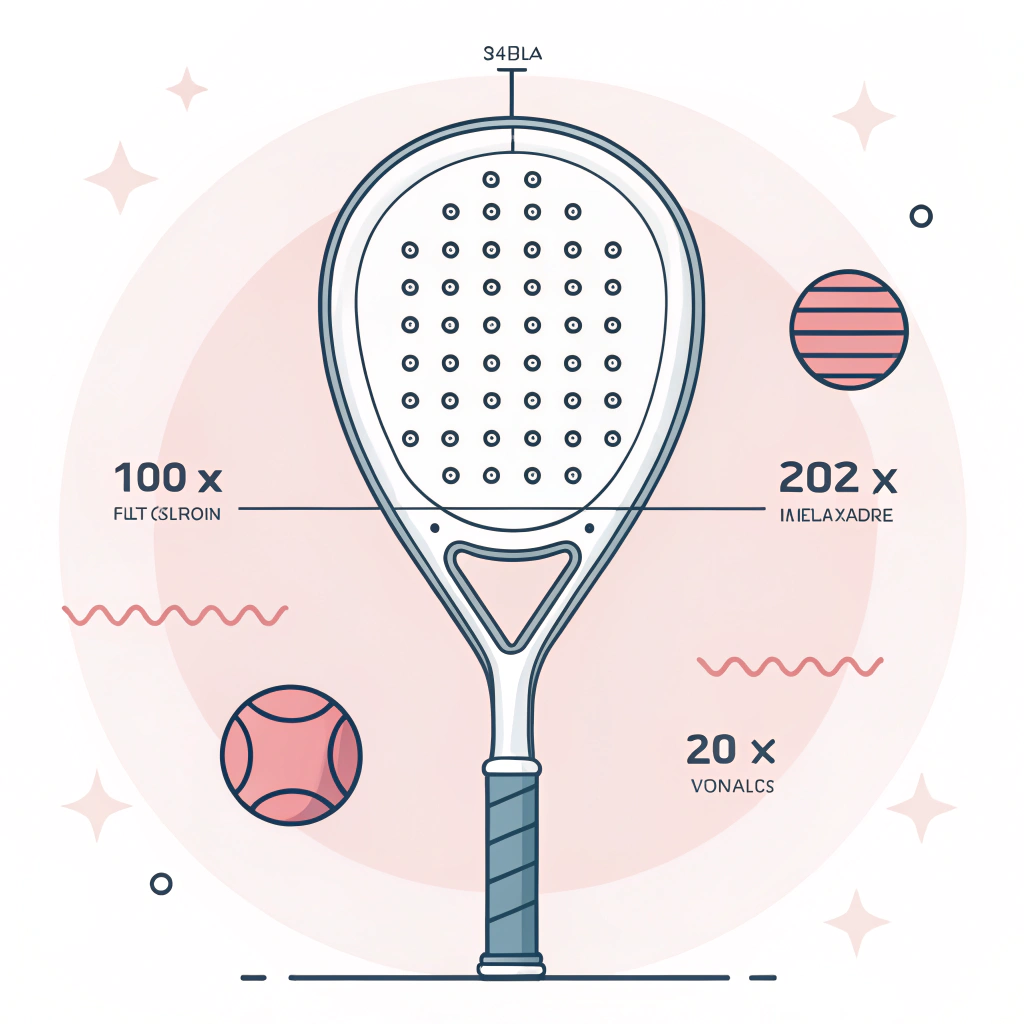
Different racket shapes available in the market—namely Diamond, Round, and Teardrop—contribute variably to the sweet spot location and performance. Each design caters to specific playing styles and performance requirements:
Diamond-shaped rackets tend to have a higher sweet spot positioned toward the tip of the racket. This design delivers greater power due to the extended sweet zone effect but requires precise technique. Players who favor power shots often choose this design despite the higher skill demand.
- Advantage: Maximized power on off-center hits.
- Consideration: Demands higher skill for error minimization.
Round-shaped rackets offer a larger surface area with a lower balance, translating into a broader sweet spot typically placed at the center. This design is ideal for players who value consistency and ease of play.
- Advantage: Increased forgiveness on off-center hits.
- Consideration: Slightly reduced peak power compared to diamond shapes.
Teardrop rackets present a middle ground between the diamond and round shapes. The sweet spot is well-distributed to provide both a measurable power boost and error forgiveness. This design caters to all-round performance and tends to balance power with control.
- Advantage: Well-rounded performance suitable for diverse playstyles.
- Consideration: Not specialized exclusively for either extreme power or extreme control.
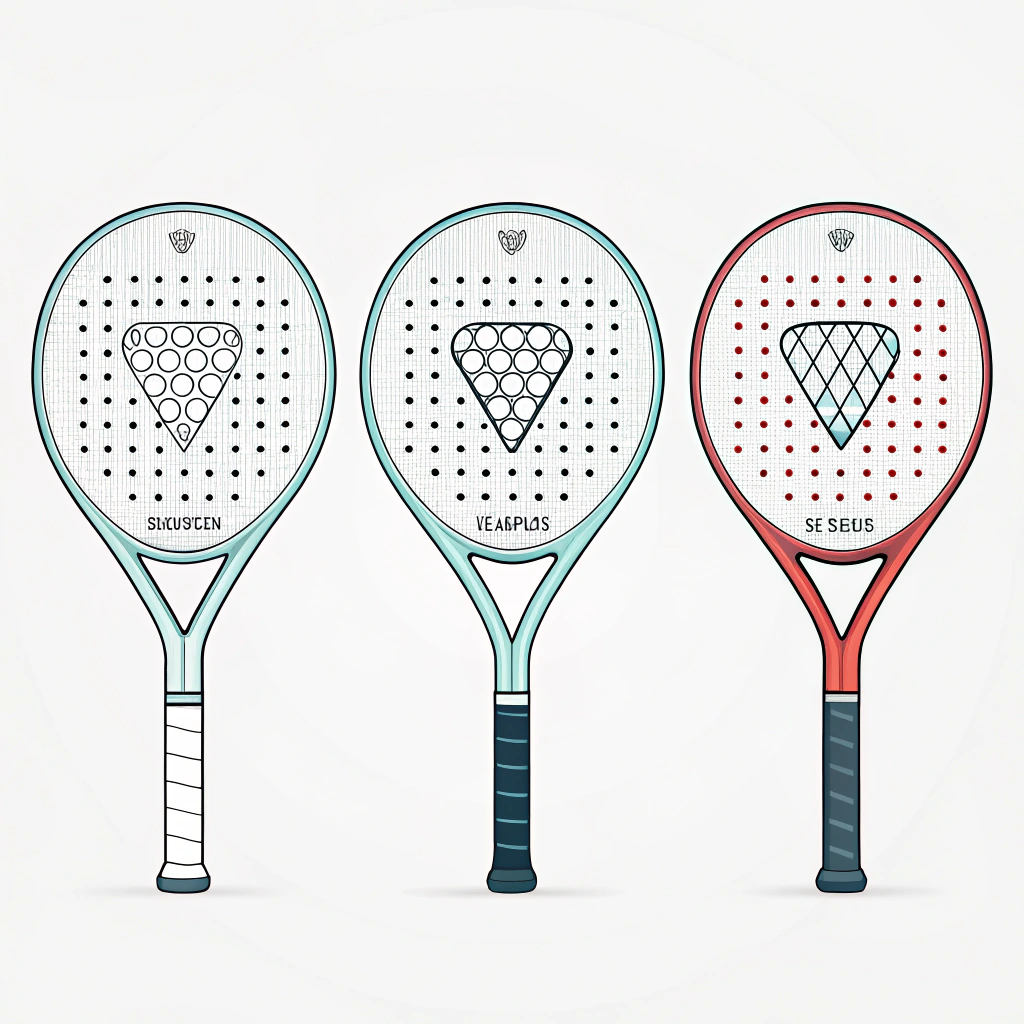
For manufacturers, ensuring that the sweet spot is optimal involves several critical factors in design and production. Our experiences at NEX Padel emphasize precision engineering in each step of the production process.
Materials such as fiberglass and carbon fiber1 (available in 3k, 12k, and 18k variants) fundamentally affect the racket’s performance.
- Fiberglass offers a balanced feel and enhanced vibration absorption, making it favorable for intermediate-level rackets.
- Carbon fiber1, especially in higher denier weaves like 12k and 18k, delivers higher stiffness and better energy transfer, ideal for advanced players.
These materials influence:
- The size and position of the sweet spot.
- Impact force distribution across the racket face.
- Vibration transmission upon hit.
Balance Point2 and Weight Distribution
Correct weight distribution is essential. A racket’s balance point2—where weight is optimally distributed—directly affects where the sweet spot will be most effective. A lower balance point may indicate a broader, forgiving sweet zone, while a higher balance point can concentrate power but demand higher precision from the user.
High-performance padel rackets require tight manufacturing tolerances3. This guarantees consistency across batches, ensuring that every racket’s sweet spot conforms to the predefined position and dimensions. At NEX Padel, our advanced production techniques ensure:
- Rapid prototyping and sample testing.
- Precision in the racket design from concept to mass production.
- Consistent performance metrics regardless of custom features, such as customized shapes, printing, and handle modifications.
Impact Zone4 and Vibration Absorption
The impact zone4 of a padel racket defines the sweet spot's practical area. Engineering this zone involves understanding vibration pathways through the racket frame, which are minimized by optimal material layering and structural design. This process directly affects how the racket delivers its power and controls directional accuracy.
A detailed table illustrates the key factors influencing the sweet spot design:
| Factor | Impact on Sweet Spot | Considerations |
|---|---|---|
| Material Type | Determines stiffness and vibration damping | Fiberglass vs. Carbon fiber variants |
| Weight Distribution | Affects balance and forgiveness | Lower balance for larger surface sweet spot |
| Racket Shape | Influences positioning of the sweet spot | Diamond shifts sweet spot forward, Round centers it |
| Manufacturing Tolerances | Ensures consistency across products | Advanced production techniques required |
| Handle and Grip Design | Contributes to overall control | Custom grips can enhance playstyle performance |
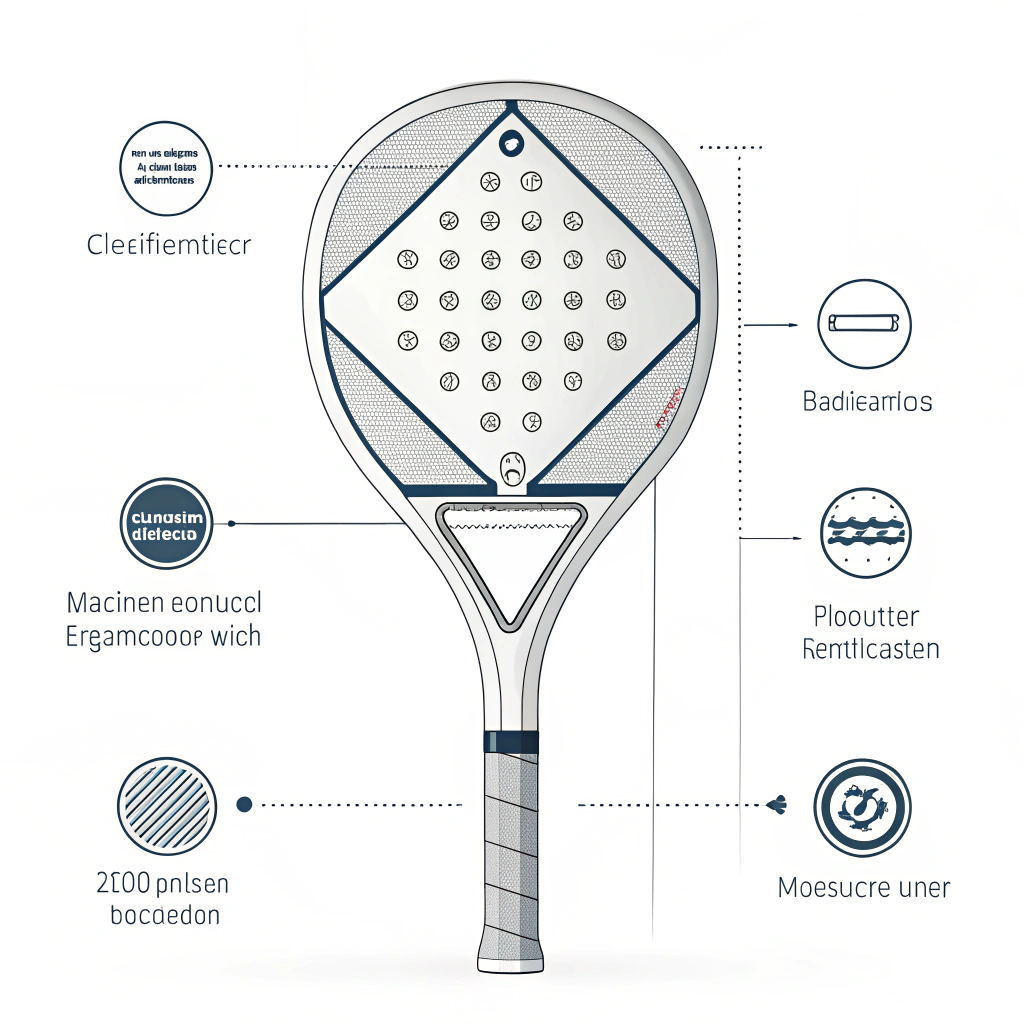
At NEX Padel, our commitment to quality and performance is embedded in every stage of production. We serve multiple renowned brands, including Hirostar, Reebok, and Starvie, by delivering high-performance, precision-engineered padel rackets.
We offer three primary racket shapes: Diamond, Round, and Teardrop—all engineered to maximize performance outcomes based on the designed sweet spot and balance point. Our manufacturing process allows for:
- Full custom designs: Shape, color, and branding adjustments that meet client specifications.
- Rapid prototyping5: Quick transition from design to sample with rigorous testing.
- Quality control: Detailed monitoring throughout production to ensure consistent products that meet high standards.
For procurement managers and technical advisors, understanding these production nuances is essential. The precision behind the manufacturing process means that every enhanced feature—whether it is vibration absorption, power control, or material composition—translates into better game performance and player satisfaction.
Investing in high-quality padel rackets not only reflects on performance parameters but also influences:
- Long-term durability and cost-effectiveness.
- Enhanced brand reputation due to superior product performance.
- Competitive advantage in markets where technical precision is paramount.
For B2B professionals evaluating padel rackets for procurement or development, here are some guidelines to consider:
-
Define Your Priorities
- Are you prioritizing power or control?
- Does your market prefer a forgiving racket (larger sweet spot) or one that delivers peak performance on skilled play?
-
Assess Material Composition
- Compare the benefits of fiberglass against various grades of carbon fiber.
- Consider how the material influences the sweet spot’s performance characteristics and durability.
-
Evaluate Shape Options
- Diamond: Ideal for power-centric play but requires advanced skills.
- Round: Best for consistency and ease-of-use, with a larger central sweet spot.
- Teardrop: Versatile performance suitable for multiple play styles.
-
Review Manufacturing Specifications
- Look for companies with advanced production techniques (like NEX Padel) that ensure tight tolerances and consistent product performance.
- Ensure that the production process supports custom features such as personalized logos and handgrip designs.
A simplified guideline table could assist in clarifying these points:
| Consideration | Impact on Performance | Recommended For |
|---|---|---|
| Material | Influences stiffness and vibration control | Advanced players, durability focus |
| Racket Shape | Alters sweet spot location | Power (Diamond), Control (Round) |
| Customization | Enhances brand identity and specific needs | B2B branding and OEM requirements |
| Weight Distribution | Affects balance and user comfort | Player comfort and error forgiveness |
Several case studies in the padel industry have demonstrated that optimizing the sweet spot not only boosts performance but also leads to higher market acceptance. By integrating rigorous testing protocols and feedback from professional players:
- Product feedback has shown that rackets with a well-optimized sweet spot lead to improved shot accuracy.
- Data analytics from game performance indicate that players switch to products offering a larger, more forgiving impact zone.
- Market adoption is significantly enhanced when the product consistently meets the technical expectations of advanced play.
Our commitment at NEX Padel to repeatedly improve through data-driven insights ensures that every model delivers performance consistent with professional standards. The integration of data in the design process helps in achieving a sweet spot that satisfies both recreational and professional markets.
Understanding the padel racket sweet spot and the factors that enhance its performance is critical for both product development and procurement strategies. As B2B professionals, your decisions should be driven by detailed technical insights combined with reliable manufacturing quality.
Key takeaways include:
- The sweet spot is central to racket performance, affecting power, control, and vibration dampening.
- Different racket shapes (Diamond, Round, Teardrop) provide distinct performance profiles; choose based on your target market's needs.
- Precise material selection and weight distribution play vital roles in defining the sweet spot's effectiveness.
- Manufacturing excellence, as practiced by NEX Padel, ensures consistent high performance through advanced techniques and rigorous quality control.
- Comprehensive evaluation using guidelines and comparison tables can streamline your decision-making process when selecting a padel racket.
Your next step should involve a close examination of product specifications provided by manufacturers and arranging for hands-on testing to align the technical parameters with your strategic objectives. For further insights and custom solutions, consider reaching out to industry experts who can translate these technical details into actionable business value.
People Also Ask
Q: How to find padel racket sweet spot?
A: The sweet spot on a padel racket is typically found by testing different impact points on the racket face. For round blades, it is usually located in the center, while diamond-shaped rackets shift the sweet spot towards the tip. Testing with impact sensors or performing swing analysis can help pinpoint this area accurately.
Q: What is the sweet spot in a paddle?
A: The sweet spot is the area on the paddle face that, when contacted by the ball, provides the most efficient energy transfer. This results in maximum power and accuracy with minimal vibration, ensuring that the paddle responds with optimal performance.
Q: How to tell a good padel racket?
A: A good padel racket is determined by its shape, weight, balance, handle design, materials used, and surface texture. High-quality rackets often provide a larger sweet spot that matches the intended play style. Consider equipment that delivers precision engineering, consistent performance metrics, and aligns with advanced production techniques, as exemplified by leading manufacturers like NEX Padel.
-
Carbon Fiber: Click to explore the properties of carbon fiber, its various grades (e.g., 12k, 18k), and how its stiffness and energy transfer characteristics play a vital role in high-performance sporting equipment. ↩ ↩ ↩2
-
Balance Point: Click to understand the concept of balance point, the science behind weight distribution, and its impact on ergonomics and overall product performance in sporting goods. ↩ ↩ ↩2
-
Manufacturing Tolerances: Click to learn how strict manufacturing tolerances ensure consistent product quality and performance, which is crucial for maintaining competitive standards and reliability in production processes. ↩ ↩ ↩2
-
Impact Zone: Click to delve into the engineering behind the impact zone, including how optimized energy transfer and vibration absorption are achieved through design and material selection. ↩ ↩ ↩2
-
Rapid Prototyping: Click to read about rapid prototyping techniques in manufacturing, including its benefits in reducing lead times and enabling quicker product iterations for market responsiveness. ↩ ↩