Skip to content

With padel rackets, both soft and hard variants offer distinct advantages—soft rackets typically provide enhanced control, vibration absorption, and spin benefits, while hard rackets deliver greater power and responsiveness. In this article, we break down key differences in materials, manufacturing processes, and performance characteristics to help procurement managers and sports equipment distributors make an informed decision.
In many competitive sports, equipment choice can significantly affect performance and player satisfaction. For padel, selecting between a soft and a hard racket is more than just a matter of feel; it’s about balancing control, power, durability, and manufacturing precision. OEM/ODM manufacturers1 and distributors must consider these factors when aligning product specifications with market demands.
Soft padel rackets are engineered to dampen vibrations on impact. They often have a construction that includes higher material flexibility, ensuring that the ball stays on the racket’s surface longer, which can be ideal for players who prioritize spin and control. In contrast, hard padel rackets are designed with stiffer materials that emphasize power transfer for strong hits, making them preferable for aggressive playing styles.
Key material differences include:
- Carbon Fiber Reinforcement2: Hard rackets frequently use higher density carbon fiber layers (e.g., 12k or 18k carbon) to obtain a firm, rigid structure.
- Material Composition: Soft rackets may incorporate a blend of fiberglass with lower density carbon fibers (e.g., 3k) to allow a slight flex that improves ball control and vibration absorption.
- Impact on Playability: The softer composition helps in reducing shock and increasing spin while a harder build boosts pure power and speed.
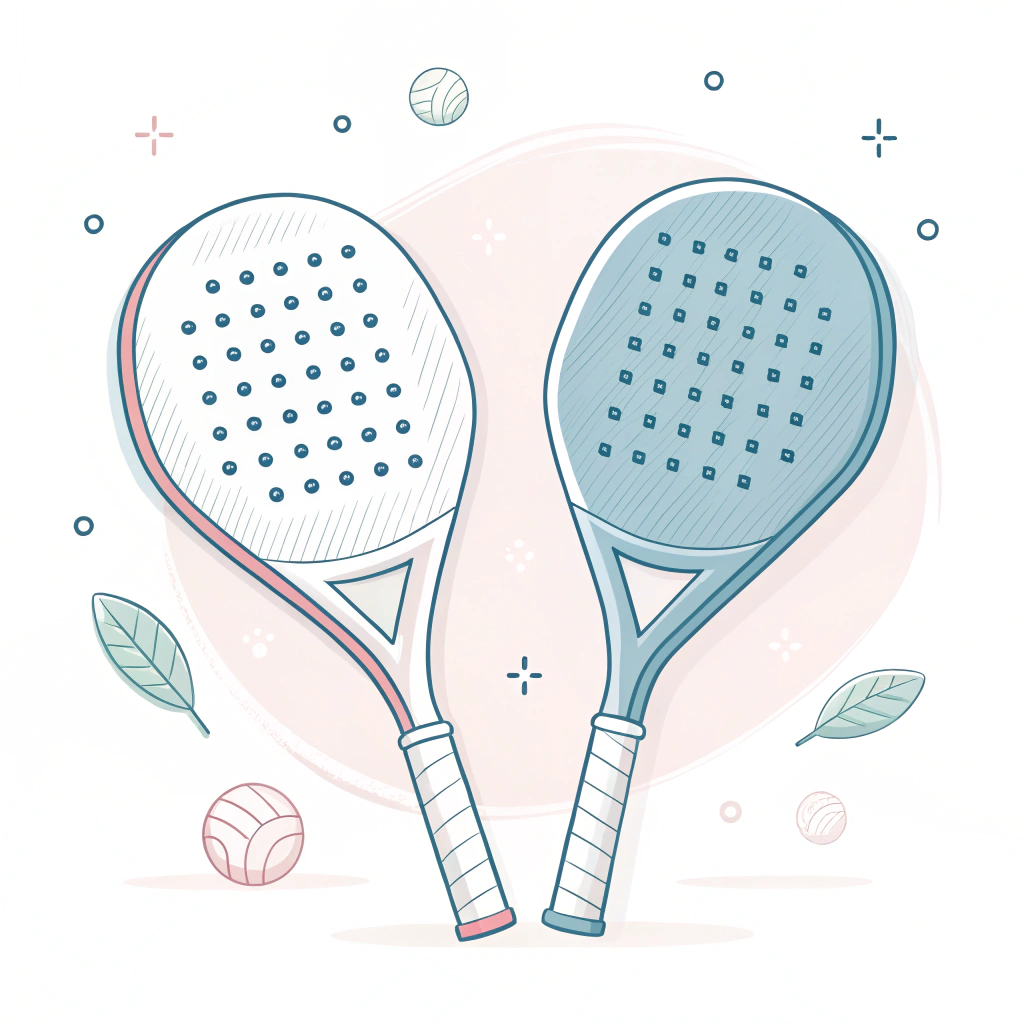
At NEX Padel, our expertise in OEM manufacturing ensures that every racket — whether soft or hard — meets rigorous performance standards. Our advanced production techniques allow us to precisely tailor the composition to achieve the desired characteristics.
Our manufacturing process involves several critical steps:
- Material Selection: We choose high-quality materials ranging from fiberglass to varying grades of carbon fiber. The choice of material directly correlates to the racket’s performance attributes.
- Layering Techniques: For hard rackets, multiple layers of high-density carbon are applied to build a more rigid structure. Soft rackets use a combination of materials to achieve a balanced mix of flexibility and durability.
- Customization capabilities3: NEX Padel supports fully custom racket shapes including Diamond, Round, and Teardrop, enabling our clients to meet specific design and performance needs. Custom print, color, logo on the hand grip, and handle cover are common requests from our global partners.
- Quality Control4: Every production run is rigorously tested to ensure consistency, from vibration absorption in soft rackets to shock resistance in hard rackets. We also provide padel balls that are monitored for quality, ensuring compliance with performance standards.
Procurement managers evaluating padel rackets for resale or club facilities must balance multiple considerations:
- Player Demographics: Consider the primary player types in your market. Recreational players may benefit from softer rackets that enhance playability, while competitive athletes might prefer the powerful response of a hard racket.
- Usage Environment: Club facility operators might choose a mix between soft and hard rackets to cater to various training styles and game intensities.
- Cost vs. Performance: Though higher-cost rackets may have more advanced materials and production processes, it is critical to assess whether features like a smaller sweet spot in harder rackets might pose challenges for beginners or intermediate players.

To aid in your purchasing decision, we can break down the differences in a detailed table that highlights the key performance and material aspects of soft and hard padel rackets:
| Feature | Soft Padel Racket | Hard Padel Racket |
|---|---|---|
| Material Composition | Combination of fiberglass with lower density carbon fibers | Multiple layers of high-density carbon fiber (12k, 18k) |
| Vibration Absorption | Excellent, leading to reduced shock and enhanced control | Minimal, maximizing power transfer but can be less forgiving |
| Playability | Better for spin generation and ball control | Superior power output ideal for aggressive hitters |
| Sweet Spot Size | Generally larger, aiding overall play precision | Often smaller, targeting players who can adapt to precision hits |
| Durability | Sufficient for recreational play; may show wear under high impact | Robust construction increases lifespan in high-intensity play |
| Target Player Profile | Beginners to intermediate players; those focusing on technique | Advanced players; individuals favoring strong, powerful shots |
| Customization Options | Full customization available including shapes, prints, and grips | Customizable design with emphasis on performance materials |
This table provides a snapshot view of how performance metrics compare across product variations. When advising B2B buyers, consider the typical user needs and clarify that the choice between soft and hard rackets ultimately depends on the balance between control and power.
Understanding the production process provides additional context for their decision-making:
At NEX Padel, our supply chain is optimized to source high-performance materials. The rigorous selection process ensures that:
- Carbon Fiber Grades5: We utilize different grades of carbon fiber. For instance, products demanding high responsiveness will incorporate 12k or 18k carbon configurations, producing a consistently firm touch.
- Fiberglass Integration: In softer variants, integrating fiberglass allows the frame to retain a degree of flexibility, which plays an essential role in controlling vibrations.
Utilizing cutting-edge technology enables us to tailor each feature of the racket:
- Precision Engineering: Automated machinery and skilled technicians work together to ensure accurate layering and optimal shape formation. Every batch is subject to comprehensive testing to verify that the racket meets performance benchmarks.
- Customization for Market Needs: Our customization capabilities are a key differentiator. Clients can specify unique parameters such as shape, weight distribution, and color. This flexibility ensures that both soft and hard rackets can be adapted to niche markets or brand-specific requirements.
- Rapid Turnaround: With a dedicated design-to-production workflow, NEX Padel maintains quick sample creation and delivery times, which is crucial for time-sensitive orders typically encountered in B2B transactions.
When partnering with NEX Padel, B2B buyers gain the following advantages:
- Product Consistency: Our quality control protocols guarantee that every production run matches the tailored specifications.
- Tech Expertise: Our engineering team provides detailed technical insights on the impact of material choices, assisting partners in selecting the best configuration for their target market.
- Cost-Effectiveness: Given the evolving demands in the padel market, cost-effective production techniques ensure competitive pricing without sacrificing quality. This balance is critical, especially when comparing features like sweet spot performance and durability across different racket types.
Let’s now look at how these differences translate into everyday benefits:
- Enhanced Customer Satisfaction: Offering a diversified product line with both soft and hard padel rackets ensures that you cater to a wide array of playing styles and preferences.
- Clear Technical Differentiation: By understanding and explaining the inherent differences in materials and manufacturing processes, sales teams can confidently guide customers on the optimal choice based on playing style and performance expectations.
- Inventory Balance: Retailers stock products that meet varied segments—from beginners seeking more forgiving, soft rackets to advanced players looking for hard, precise responses.
- Versatility in Training: By providing a balanced selection of rackets, club operators can accommodate both power hitters and control-focused players, ensuring that facility users experience both comfort and competitive performance.
- Durability Considerations: Clubs can lean toward hard rackets for frequent, high-intensity use, while still offering soft rackets for training sessions devoted to technique enhancement.
- Customization for Branding: Custom printing and color options allow clubs to reinforce their identity, ensuring their equipment stands out by aligning with branding guidelines.
Selecting between a soft and hard padel racket goes beyond simple material differences. It involves an understanding of how production techniques, material performance, and player suitability intersect. Our comprehensive comparative analysis provides the following takeaways:
- Soft Rackets: Ideal for players who value control, spin generation, and reduced vibration on impact. They suit beginners and intermediate users who require a forgiving yet competitive option.
- Hard Rackets: Best for advanced players who desire maximum power and a quick response. These rackets are designed for athletes who have refined their swing techniques and can exploit the advantages of a stiffer frame.
When making a purchase decision, consider the target user profile, desired performance outcomes, and the technical capabilities of your OEM partner. At NEX Padel, we empower our B2B partners with the insights and customization options needed to build a product offering that is both comprehensive and competitive in today’s global padel market.
Which is better hard or soft tennis rackets?
A soft feel generally enhances control and spin due to longer ball retention on the racket, while a hard feel provides a quick, firm response ideal for hitters and power play. The optimal choice depends on the play style and performance needs of the end user.
Do different padel rackets make a difference?
Yes, different padel racket designs, including variations in the sweet spot and material composition, significantly influence control, power, and play precision, ensuring that a tailored option exists for every playing style.
What's the difference between cheap and expensive padel rackets?
More expensive rackets tend to use advanced materials and have a firmer construction with a smaller sweet spot, which may not be ideal for beginners or intermediate players; in contrast, budget-friendly options often offer a larger sweet spot and a softer feel suitable for less aggressive play.
-
OEM/ODM manufacturers: Click to learn how Original Equipment Manufacturers and Original Design Manufacturers operate, streamlining product development and production through tailored business collaborations. ↩
-
Carbon Fiber Reinforcement: Click to explore how high-density carbon fiber layers enhance product rigidity and performance in sports equipment. ↩
-
Customization capabilities: Click to discover the benefits of tailored design options that allow products to meet specific market and branding requirements. ↩
-
Quality Control: Click to understand the critical testing and inspection processes that ensure product consistency and adherence to performance standards. ↩
-
Carbon Fiber Grades: Click to learn about the different grades of carbon fiber used in manufacturing and how choices like 12k or 18k affect the performance characteristics of the final product. ↩