Skip to content

Choosing a China-based OEM/ODM partner for padel rackets can deliver stronger margins, faster sampling, and deeper material options—if you vet capabilities, QC systems, IP protection, and logistics. NEX Padel in Jiaxing offers rapid prototyping, layered carbon options (from fiberglass1 to 3K, 12K, 18K carbon2), three standard shapes (Diamond, Round, Teardrop) and turnkey services including custom printing, grips, and padel balls—making it a practical choice for private-label lines when procurement follows a clear RFQ3, testing and shipping plan.
Problem: why procurement teams hesitate to source padel rackets from China
- Price alone is not enough. Procurement managers worry about inconsistent quality, long lead times, MOQ4 hurdles, IP leakage, and unclear communication.
- Seasonal launches (spring/summer) and distributor windows magnify risks: late shipments or failed samples can sink a launch.
- Technical differences (materials, layup, curing) mean two factories can deliver very different products even if specs look similar on paper.
Why these problems happen
- Some factories cut costs by substituting fiberglass1 for carbon or using lower-density EVA cores, altering feel and durability.
- Poor process control (inconsistent curing cycles, uneven layups) causes variance in weight, balance, or edge chipping.
- Insufficient documentation of tooling and IP protection creates disputes over molds and artwork.
- Shipping & capacity seasonality: many factories allocate capacity to large brand customers first during peak months.
What a good supplier must prove (quick checklist)
- Clear materials matrix (EVA foam density / face layers / frame layup)
- Repeatable manufacturing process with documented cure cycles and tolerance targets
- Sample lead times and a clear path from prototype → pilot run → mass production
- QC plan with in-line checks and final inspection metrics
- IP protection (NDA, tooling ownership clauses, serialized markings)
- Logistics options and backup production plans
How NEX Padel addresses procurement concerns (solution-oriented)
- Materials & layup capability: NEX works with fiberglass, 3K, 12K, 18K carbon2 face weaves and can control fiber orientation and ply counts to tune stiffness, power, and comfort for beginner-to-pro players.
- Shape and tooling: standard shapes (Diamond, Round, Teardrop) plus fully custom shapes. Tooling for a new mold can be produced in-house/partnered shops—NEX offers fast tooling and sample cycles.
- Rapid sampling: typical prototype/sample turnaround is 7–14 days for existing molds; new-mold first samples typically 2–4 weeks depending on complexity.
- MOQ and flexibility: typical MOQ4 ranges 300–500 units per model for private-label orders; negotiated MOQs for multi-model orders or long-term agreements.
- End-to-end: NEX can handle racket assembly, custom printing, grip and butt-cap branding, and supply padel balls (45% wool or 57% wool, pressurized tube packaging).
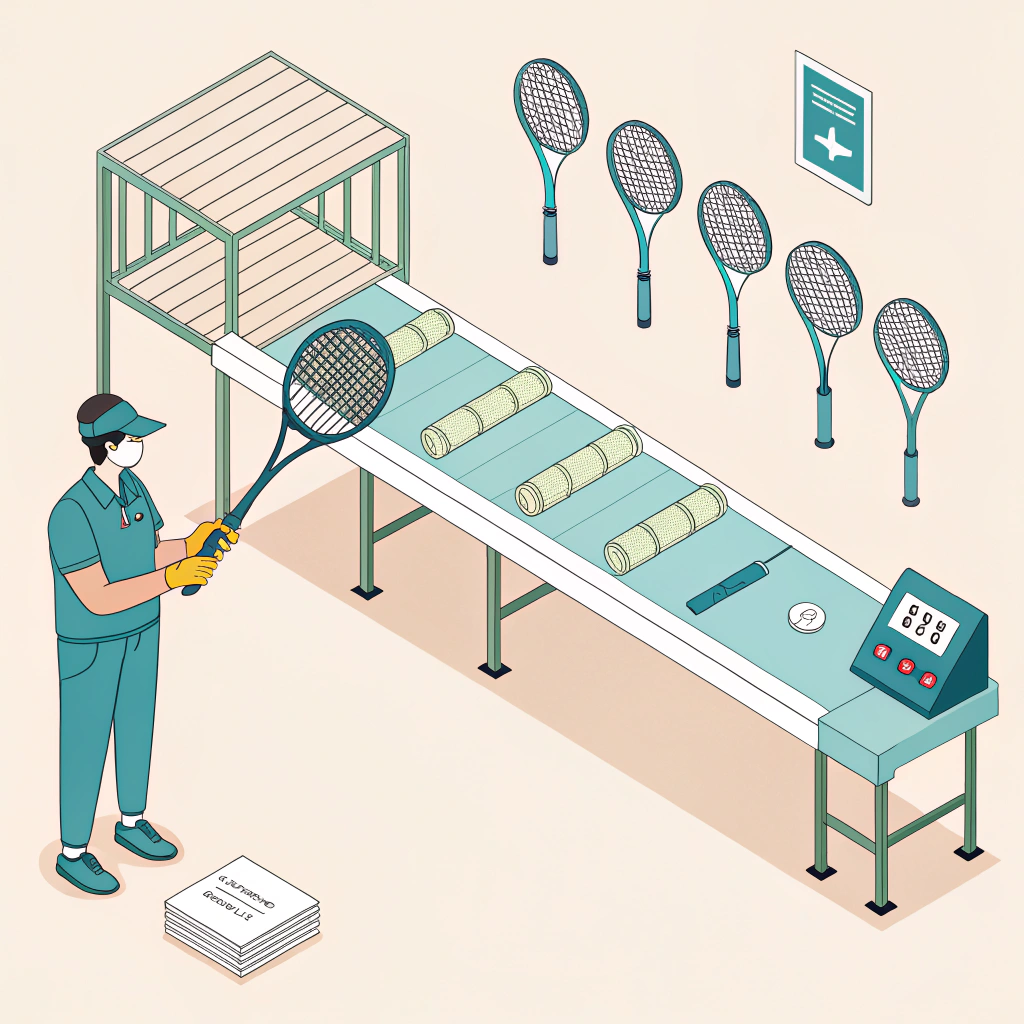
Manufacturing & QC: specific checkpoints procurement should require
- Incoming raw material checks: carbon/fiberglass certificates of conformity, foam density tests, adhesive lot numbers.
- Pre-layup inspection: verify fabric count (3K vs 12K vs 18K) and orientation; check mold condition.
- Post-molding checks: weight tolerance (+/- 3g typical), balance point, surface finish, edge integrity.
- Mechanical tests on pilot batch: impact resistance, bending/fatigue cycles, and stringing/attachment points (if applicable).
- Branding durability tests: logo adhesion, print abrasion, hand-grip adhesion.
- Final packing inspection: unit packing, carton strength, palletization, and pressurized ball packaging verification.
- Third-party inspections: SGS/Intertek pre-shipment checks available on request.
Suggested QC checklist table (sample)
| Checkpoint | Metric / Tolerance | Frequency |
|---|---|---|
| Weight | ±3 g | 100% check or sampling AQL 2.5 |
| Balance point | ±0.5 cm | Sampling |
| Surface finish | No cracks/chips | 100% visual |
| Foam density | Specified g/cm³ | Incoming batch |
| Glue bonds | No delamination | Pilot + random checks |
| Logo durability | No peel after rub test | Sampling |
| Packaging pressure (balls) | Pressurized tube intact | 100% before sealing |
Materials trade-offs: quick guide for procurement
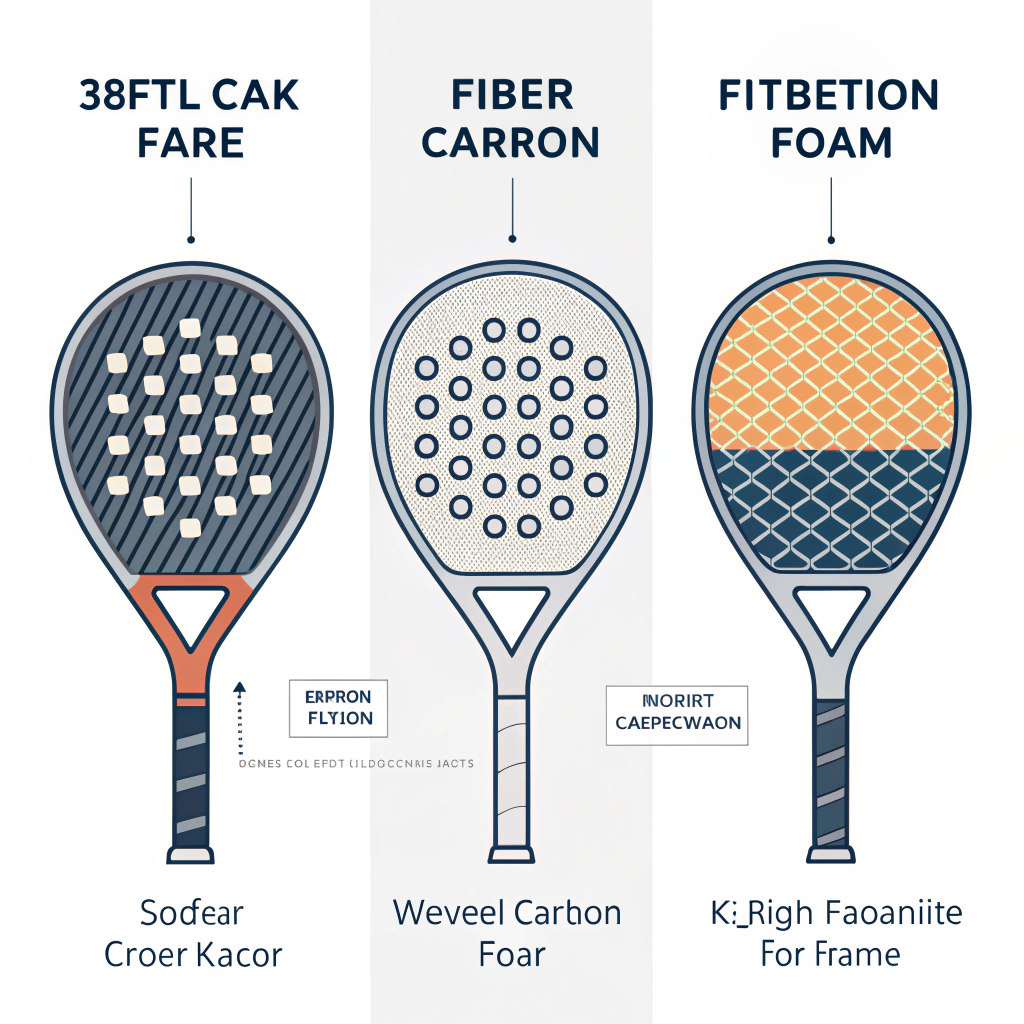
- Fiberglass (cheapest): Softer feel, forgiving, better for beginner market. Lower cost but less power and shorter lifespan if quality is low.
- 3K carbon (entry carbon): Good stiffness-to-weight, better power than fiberglass; suitable for mid-range consumer lines.
- 12K/18K carbon (premium): Denser weaves, higher stiffness and responsive feel—preferred for advanced players and premium price points.
- Core density (EVA): Softer foam = more control and comfort; harder foam = more power and faster ball rebound. Be explicit about foam density in RFQ.
Typical lead times & commercial terms (benchmarks to use in RFQ)
- Prototype (existing mold): 7–14 days
- New tooling + first sample: 2–4 weeks
- Pilot run (pre-mass): 7–14 days
- Mass production: 25–45 days after sample approval (season, material availability and production queue affect this)
- Shipping: air 3–7 days, sea 20–45 days depending port and route
- Payment: common terms 30% deposit, 70% before shipment; negotiated terms for repeat customers
- Incoterms: FOB Shanghai/Jiaxing commonly used; DDP available as a service for higher-cost, lower-hassle delivery
Commercial negotiation points to drive cost and reliability
- Volume discounts tied to annual commitment
- Roll-in production windows (staggered deliveries to reduce season peaks)
- Shared tooling cost with buyback option or amortized in per-unit pricing
- Third-party inspection clause and sample retention policy
- Intellectual property clause with NDA and explicit tooling ownership
Risk mitigation and IP protection in practice
- Sign an NDA5 before sharing core drawings or CAD files.
- Retain detailed artwork and require serialized markings on samples.
- Specify tooling ownership: who keeps the molds, and what happens on contract end.
- Require mock-ups and retention samples; consider escrow of CAD or master files.
- Use staggered shipments and buffer stock: hold a safety stock (e.g., 4–8 weeks) with the supplier or 3PL to avoid seasonal delays.
- Plan for dual-sourcing if introducing a high-volume SKU.
RFQ template (fields to include)
- Brand / Private label info
- Racket model name & intended player level
- Shape (Diamond / Round / Teardrop / Custom)
- Material spec: face weave (3K/12K/18K/fiberglass), ply schedule, core density (g/cm³)
- Weight & balance target (grams / cm)
- Edge protector, gasket strip spec
- Printing: type (pad/UV/heat transfer), color codes (Pantone)
- Grip type, logo on grip & butt cap
- MOQ, desired lead time, target price FOB/CIF
- Quality tests required and acceptable AQL
- Packaging: single polybag, retail box, pressurized tubes for balls
- IP & tooling ownership terms
Case/data support: what procurement teams see in practice
- Brands OEM’ed by NEX Padel: successful cooperation with established brand partners demonstrates ability to meet large brand standards and timelines.
- Ball supply: NEX’s padel balls from partner factories come in 45% wool and 57% wool variants, both shipped in pressurized tubes to preserve pressure—this reduces immediate returns due to flat balls.
- Typical improvements seen after switching to a vetted China supplier: 10–20% lower landed unit cost, 25% faster prototype cycles, fewer production rejections after implementing shared QC protocols.
Limitations & realistic expectations
- Tooling lead time and cost are real: custom mold creation adds time and upfront expense.
- Peak season capacity: placing orders early (3–4 months before season) secures slots.
- Shipping delays: port congestion and customs can add 1–3 weeks; plan buffer.
- Communication: require well-structured point-of-contact, weekly updates and clear acceptance criteria to avoid misunderstandings.
Action plan for procurement teams (5 steps)
- Prepare a detailed RFQ using the template above and share under NDA.
- Request material certificates and photos of similar past products; ask for a production roadmap.
- Order a pre-production sample; run your lab tests and user tests (weight/balance/impact).
- Agree on QC, inspection and penalty clauses; engage third-party inspection for initial runs.
- Start with a pilot order, maintain buffer stock, and scale once KPIs (quality, lead time, cost) are met.
Summary and final recommendation
Sourcing padel rackets from a reputable China padel racket manufacturer can provide strong cost advantages, rapid sampling and deep material options—if you structure the partnership around transparent specifications, documented QC, IP safeguards and realistic lead-time planning. NEX Padel’s mix of 3K, 12K, 18K carbon2 capability, fast prototyping, and turnkey services (rackets, grips, pressurized balls) is built to support private-label and branded lines. If you’re comparing suppliers, the immediate next step is a structured RFQ3 + NDA5 and a one-off prototype order to validate process and feel before committing to mass production.
People Also Ask
Which company makes the best padel rackets?
Top consumer choices (Adidas, NOX, Dunlop, Head, Babolat, Bullpadel) are product- and player-level specific: “best” depends on player preference (power vs control), shape and materials. For procurement, focus on matching materials and layup (carbon weave, foam density, shape) to your target segment—then validate by playing and lab testing samples rather than relying on brand lists.
Do expensive padel rackets make a difference?
Yes—higher-priced rackets typically use better carbon weaves, higher-quality foam cores and improved molding/finishing processes. These translate into more responsiveness, controlled power and longer lifespan. For entry-level or recreational lines, fiberglass1 and softer foam can be appropriate and cost-effective. For advanced player lines, 12K/18K carbon and precise layups can justify premium pricing.
How to spot a fake padel racket?
For procurement and retail authenticity checks:
- Examine branding: logos and serials should be crisp; request supplier-provided holograms or serial lists.
- Verify materials: ask for certificates proving carbon/fiberglass specs and foam density.
- Check workmanship: weight, balance, surface finish and print quality should match supplier samples.
- Confirm packaging and accessories: genuine products usually have consistent retail boxes, grips and pressurized ball tubes if included.
-
fiberglass: Read the linked article to understand fiberglass construction, cost-performance trade-offs, and how fiberglass layups affect feel and durability versus carbon—useful when specifying entry-level lines or mixed-material builds. ↩ ↩ ↩2 ↩3
-
3K, 12K, 18K carbon: The linked resource explains carbon weave counts, how fiber tow size impacts stiffness/weight, and layup strategies (ply count, orientation) so procurement can specify the right carbon type for player level and price point. ↩ ↩ ↩2 ↩3
-
RFQ: The linked content shows how to build a clear RFQ (material specs, tolerances, test requirements, packaging and Incoterms) so suppliers can return accurate quotes and reduce back-and-forth sampling cycles. ↩ ↩ ↩2
-
MOQ: The linked guide covers minimum order quantity strategies, negotiating reduced MOQs, amortizing tooling costs, and structuring multi-model orders to meet commercial constraints for private-label runs. ↩ ↩ ↩2
-
NDA: The linked page explains what to include in an NDA for manufacturing (design protection, confidentiality scope, duration, and remedies) and best practices for sharing CAD/artwork and retaining tooling rights. ↩ ↩ ↩2