Skip to content
A perfect padel racket for your business lies at the intersection of high-performance materials, precision engineering, and customizable design1—each factor directly impacting gameplay and resale value.
For procurement managers and product development specialists, choosing the right padel racket involves more than simply comparing prices. Today’s competitive sports goods market requires you to evaluate technical specifications, production techniques, and customization capabilities to ensure that each product meets both performance and quality standards.
In this guide, we will:
- Break down the key factors in selecting a padel racket.
- Compare materials such as glass fiber2 and various grades of carbon fiber3 (3k, 12k, and 18k carbon).
- Detail the differences among popular shapes including Diamond, Round, and Teardrop.
- Present insights on customization and quality assurance based on advanced production techniques.
- Provide a detailed comparison table to support your sourcing decisions.
When evaluating a padel racket, there are several crucial aspects to consider:
Modern padel rackets are crafted using a range of materials to suit different performance levels. The core materials include:
- Glass Fiber2: Offers a balanced mix of flexibility and strength for players seeking consistent performance.
- Carbon Fiber3 (3k, 12k, 18k): Increasingly popular in the industry, carbon fibers are celebrated for their high strength-to-weight ratio, which translates into improved racket durability and precision. The 3k, 12k, and 18k variants allow for a diverse range of performance characteristics.
- 3k Carbon: Typically used for entry-level rackets where flexibility is prioritized.
- 12k Carbon: Provides an optimal blend of reinforcement and cost efficiency.
- 18k Carbon: Offers maximum stiffness and precision for high-end, performance-driven products.
Using the right material not only affects the playability of the racket but also its longevity, which is essential from a procurement perspective where consistent quality and reliability are key.
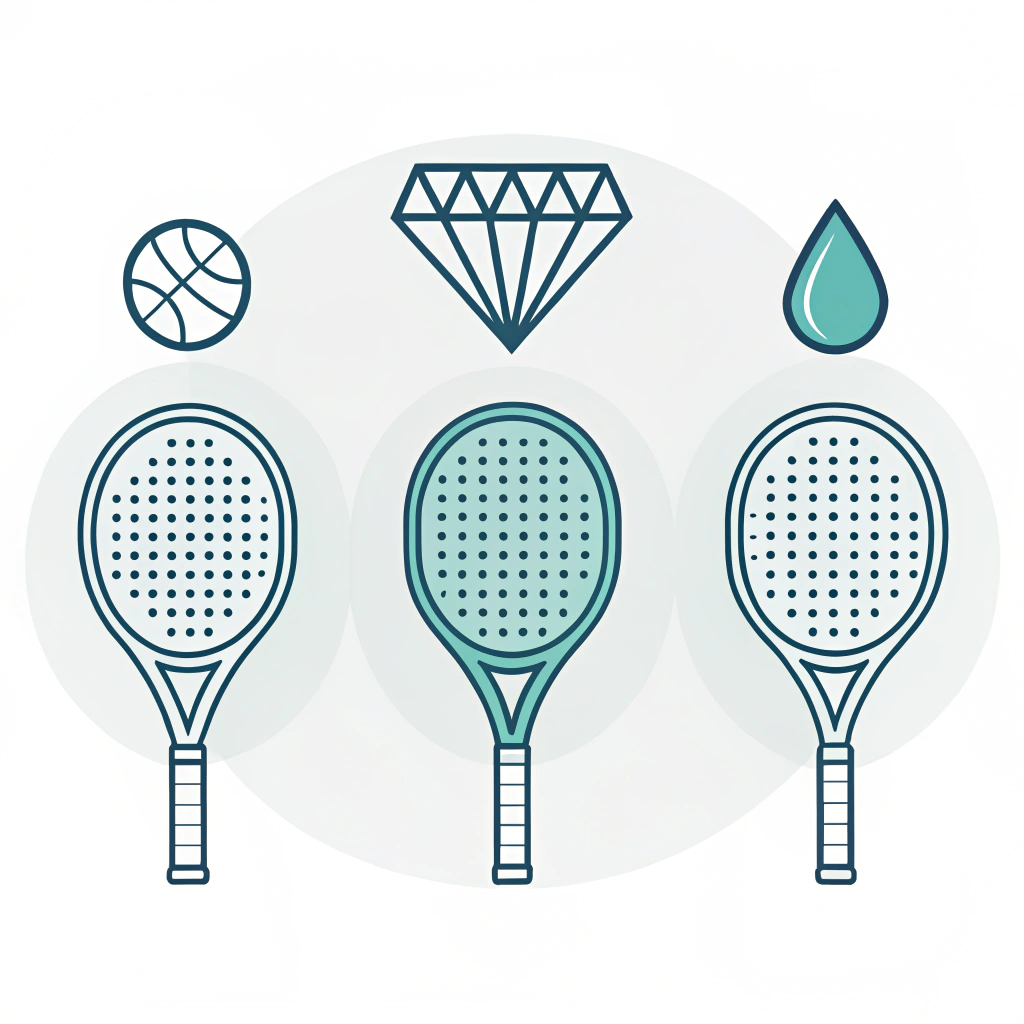
Padel rackets are available in several distinct shapes, and each shape serves a specific playing style and target market:
- Round: Generally offers a larger hitting surface with a higher sweet spot, which is beneficial for players who value precision and control. This shape is ideal for beginners and advanced players alike.
- Diamond: Known for its aggressive design, it typically positions the sweet spot toward the upper end of the racket, enhancing offensive play. However, this design may compromise stability slightly.
- Teardrop: A modern design that attempts to balance power and control by offering a sweet spot that overlaps between the round and diamond shapes.
Choosing the right shape depends largely on the end-user’s skill level and style of play. For B2B buyers, having an optimal mix of these shapes ensures that the product portfolio meets a broad range of client needs.
At NEX Padel, our commitment to advanced production techniques helps us deliver rackets that are both high-performance and customizable. Our state-of-the-art manufacturing process allows us to:
- Offer fully customizable racket shapes based on client specifications.
- Provide options for custom printing and color selections on both the racket and accessories such as hand grips and handle covers.
- Consistently meet produce deadlines with our efficient prototyping and sampling processes.
Customization is a significant selling point. From enhanced branding through custom logos on the hand grip to tailored shapes that improve performance, our production flexibility allows sports goods retailers to stand out in a competitive market.
4. Quality Assurance4 and Sourcing Strategy
From a procurement standpoint, quality assurance is paramount. The performance of a racket is directly linked to its manufacturing process. Key practices include:
- Rapid Prototyping5: Enables us to test various design configurations quickly, ensuring that the final product meets the rigorous standards expected by professional players.
- Strict Quality Control: Each component, from the carbon fiber layers to the grip material, is inspected to guarantee durability and performance.
- Supplier Partnerships: Our strategic collaboration with major brands like Hirostar, Reebok, and Starvie underscores our credibility and production expertise.
Investing in high-quality products reduces return rates and improves customer satisfaction—vital metrics in a B2B environment where recurring orders and long-term partnerships are the norm.
Below is a comprehensive comparison table that outlines the differences across the most critical parameters:
| Parameter | Round Racket | Diamond Racket | Teardrop Racket |
|---|---|---|---|
| Hitting Surface | Large; excellent for control | Smaller; optimized for power | Balanced; offers a middle ground |
| Sweet Spot Location | Centered | Near the top end | Centrally biased toward top-right |
| Material Compatibility | Excels with glass and lower grade carbon (3k) | Best with higher grade carbon (12k to 18k) | Compatible with a range of materials |
| Player Suitability | Beginners to intermediate; favors precision | Advanced players; supports aggressive play | Versatile performance for all levels |
| Customization Options | High customization potential | Extensive design and material choice | Flexible customization and design |
| Production Turnaround | Standard prototyping available | May require tailored production cycles | Balances customization and production speed |
This table allows procurement specialists to quickly discern which product might best suit their target market. Decisions can be driven by considerations such as the quality of materials used, the intended user profile, and the level of customization required.
At NEX Padel, our production expertise and flexibility set us apart in the competitive padel market. We support a diverse range of products from high-quality padel rackets to performance-driven padel balls. Our production capability includes:
- Full Customization: We can manufacture rackets in any of the three primary shapes—Diamond, Round, or Teardrop—and even support fully bespoke designs to meet unique market demands.
- Material Versatility: With the ability to work with materials ranging from glass fiber2 to high-grade carbon options (3k, 12k, and 18k), each racket is tailored to the precise needs of different playing levels.
- Expedited Sample and Production Phases: For companies that value speed to market, our rapid prototyping process and on-time delivery are vital. We achieve quick turnarounds without compromising on quality.
- Customization of Accessories: Beyond rackets, we offer custom options for hand grips, handle covers, and even padel balls, ensuring consistent branding and user experience across your product range.
Our technical expertise combined with stringent quality control measures not only helps in capturing market trends but also reduces potential risk in your procurement process. Being a B2B supplier to well-known brands has enabled us to refine our strategies—ensuring that each product integrates seamlessly with the evolving demands of both amateur and professional players.
When selecting your next batch of padel rackets, consider the following steps to ensure a data-driven decision:
- Assess Your Market Needs: Determine the skill level and playing style of your target customer base. Whether your customers lean towards precision or power will determine the ideal racket shape and material.
- Leverage Detailed Comparisons: Use multi-dimensional comparisons (like the table above) to evaluate differences in performance, material quality, and customization potential.
- Engage With Manufacturers: Schedule consultations with manufacturers if possible. Ask for samples and detailed technical sheets to better understand the production standards and quality control measures.
- Review Production Capabilities: Ensure that the supplier’s production timeline aligns with your inventory needs—especially when dealing with high-demand periods or custom orders.
- Consider Total Cost of Ownership: Beyond upfront costs, factor in long-term durability and brand perception. High-performance and custom options might justify a higher initial expenditure when considering customer satisfaction and reduced warranty claims.
- Plan Customization Strategically: If you plan to use custom branding elements or specialized grip designs, coordinate with the supplier early in the process to ensure design compatibility and production efficiency.
- Utilize Data-Driven Metrics: Rely on performance data and customer feedback from existing market deployments to guide your purchase decisions. Detailed performance assessments can help forecast potential market success.
These actionable steps not only streamline your purchasing process but also build a stronger foundation for long-term supplier relationships and enhanced product offerings.
In summary, finding the perfect padel racket for your business requires a well-informed balance of performance features, material quality, production agility, and customization capabilities. By carefully comparing material options, understanding the implications of racket shapes on play style, and maintaining rigorous quality assurance practices, you can confidently expand your product portfolio.
At NEX Padel, we stand ready to partner with you to supply high-performance padel rackets that meet your precise specifications. Our expertise in using advanced production techniques and our commitment to quality give you the assurance needed to make a confident, data-driven purchasing decision. We encourage you to explore these options further and reach out for personalized guidance tailored to your market needs.
Round blades typically offer a larger sweet spot because of their lower balance and larger hitting surface, which is centered on the blade. In contrast, diamond-shaped rackets tend to have their sweet spot located toward the top end, which benefits aggressive, offensive play.
Round padel rackets are generally recommended for beginners due to their ease of handling and balanced control. However, advanced players may also prefer the round shape for precise gameplay, while those seeking an offensive edge might lean towards diamond shapes for their power-focused design.
-
Customizable Design: Learn more about customizable design principles and how tailoring products to client specifications can lead to competitive advantages and improved market differentiation. ↩ ↩
-
Glass Fiber: Read this article to understand the properties of glass fiber, including its balanced flexibility and strength that supports consistent performance in sporting goods manufacturing. ↩ ↩ ↩2 ↩3
-
Carbon Fiber: Click here for insights into carbon fiber, its various grades like 3k, 12k, and 18k, and how it enhances product durability and precision in high-performance equipment. ↩ ↩ ↩2
-
Quality Assurance: Gain a deeper understanding of quality assurance processes in manufacturing, the importance of strict quality control, and strategies for ensuring consistent product performance and reliability. ↩ ↩
-
Rapid Prototyping: Discover the benefits of rapid prototyping in manufacturing processes, including how it accelerates design validation and decision-making in a fast-paced production environment. ↩ ↩