Skip to content

A concise answer: Professional padel rackets are made by laminating a fiberglass or carbon fiber (3k/12k/18k) face onto an EVA core1, shaping the layup in precision CNC molds, and hot‑press curing under controlled temperature and pressure. Choices in fiber type, core density, layup sequence and curing profile drive the racket’s power, control, durability and cost — and these are the questions every sourcing manager should confirm when evaluating an OEM.
Why this guide matters for a sourcing manager
- You need to translate performance requirements into manufacturable specs (materials, layup, mold type, finish).
- You must evaluate supplier capability (CNC mold accuracy, prepreg capacity, hot‑press ovens, QC protocols).
- You want realistic lead times, MOQ2 expectations and an RFQ checklist so you can compare bids objectively.
Below we walk through the end‑to‑end manufacturing process, the design choices that change performance and cost, QC you should expect, and practical tips to shorten sampling and reduce risk.
Core manufacturing steps (high level)
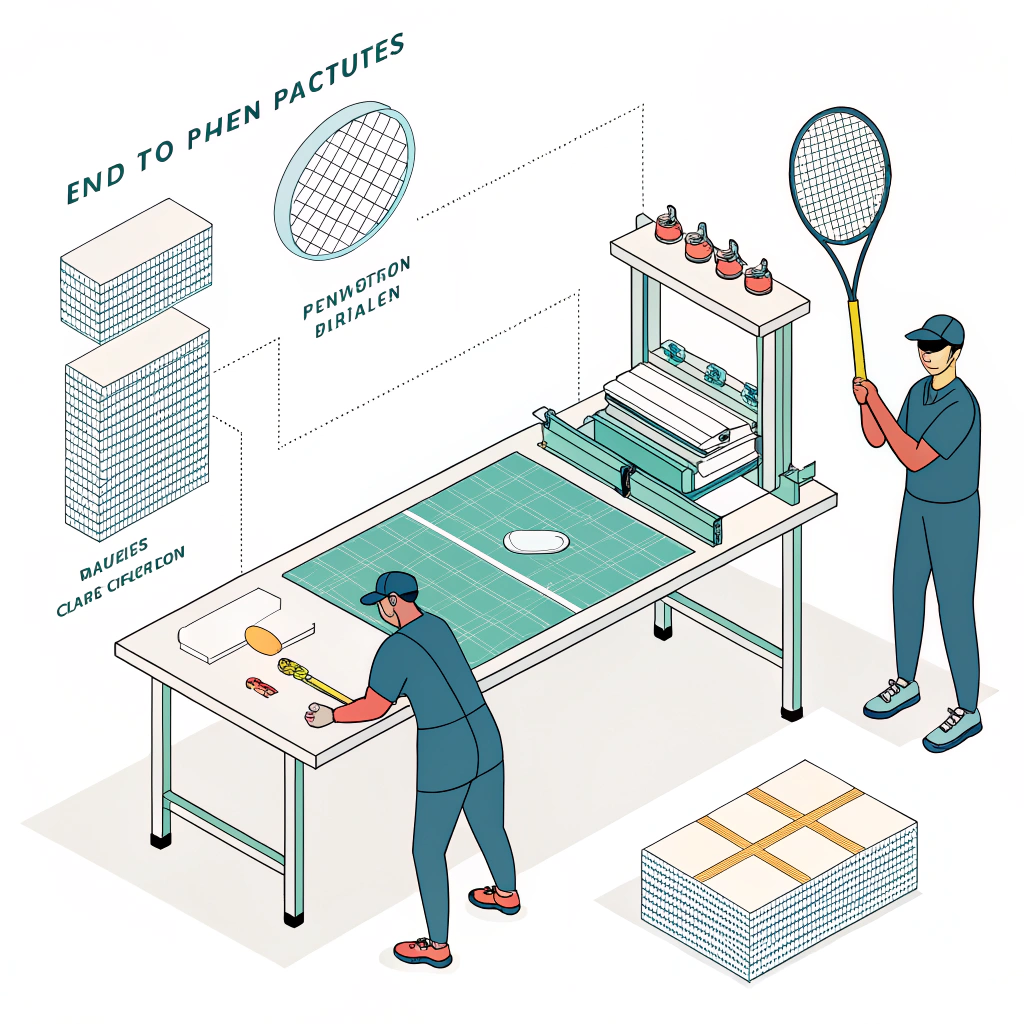
- Materials selection and incoming inspection
- Layup or prepreg preparation
- Molding / Hot‑press curing
- Demolding, trimming and drilling (holes & edge work)
- Surface finishing, painting and printing
- Assembly (handle, grip, butt cap) and final balance
- Testing & quality control
- Packaging (including padel balls, if ordered)
Materials and how they affect performance and cost
First‑time procurement keywords: fiberglass, 3k carbon, 12k carbon, 18k carbon, EVA core density, prepreg3 vs woven.
Material comparison (quick reference)
| Material | Typical Use | Stiffness | Weight | Cost | Player Level / Benefit |
|---|---|---|---|---|---|
| Fiberglass (woven) | Entry / mid | Low | Higher | Low | More feel, cheaper |
| 3k Carbon (twill) | High performance | High | Low | High | Crisp sweet spot, control |
| 12k Carbon | Balanced | Medium‑High | Medium | Medium | Good cost/perf balance |
| 18k Carbon | Stiffer, aesthetic | High | Low | Higher | Power & premium look |
Notes:
- 3k/12k/18k carbon refers to the tow count and weave — lower tow count (3k) gives a finer surface, more consistent mechanical properties and premium feel. Higher tow counts (12k, 18k) reduce cost per area but alter stiffness and surface look.
- Using hybrid layups (carbon + fiberglass) is common: carbon on the outer plies for stiffness, fiberglass inner plies for impact resistance and feel.
EVA core choices
- EVA core hardness strongly influences power vs control:
- Soft (Shore ~35–45): more dwell time, control, comfort.
- Medium (Shore ~45–55): balanced response.
- Hard (Shore ~55–65): more power/repulsion, less comfort.
- Core density must be consistent; check supplier variance (± tolerance).
Prepreg vs wet layup
- Prepreg (pre‑impregnated fiber) delivers higher reproducibility, consistent resin content and better lamination. Requires cold storage and ovens; higher cost but necessary for premium lines.
- Wet layup / resin infusion is cheaper and flexible for prototyping or entry models but has greater variability in resin content and mechanical properties.
Molding and curing: what to verify with an OEM
Key terms: CNC molds, hot‑press curing, temperature/time profile, pressure.
What happens in the press:
- Layup placed into a top/bottom CNC‑machined mold that defines shape and hole pattern.
- Mold closes and applies specific pressure while ovens heat the stack to a target cure temp (often 120–180°C depending on resin system) for a specified time.
- Cooling under pressure is critical to avoid warpage.
Supplier checklist:
- Do they use CNC‑machined molds with documented tolerances? (±0.1 mm is typical for high quality.)
- Can they control press temperature and ramp rates? Ask for historical cure recipes for similar resins.
- Do they maintain mold maintenance logs (polish schedule, release agent control)?
- Are perforations (hole patterns) integrated into the mold or post‑drilled? Integrated holes reduce labor and improve alignment.
Typical manufacturing constraints and tradeoffs
- Prepreg + hot‑press = higher unit cost, better consistency and strength → recommended for mid/high end OEMs.
- Wet layup is cheaper and faster for initial runs, but expect more rework and variability.
Shaping, balancing and the sweet spot
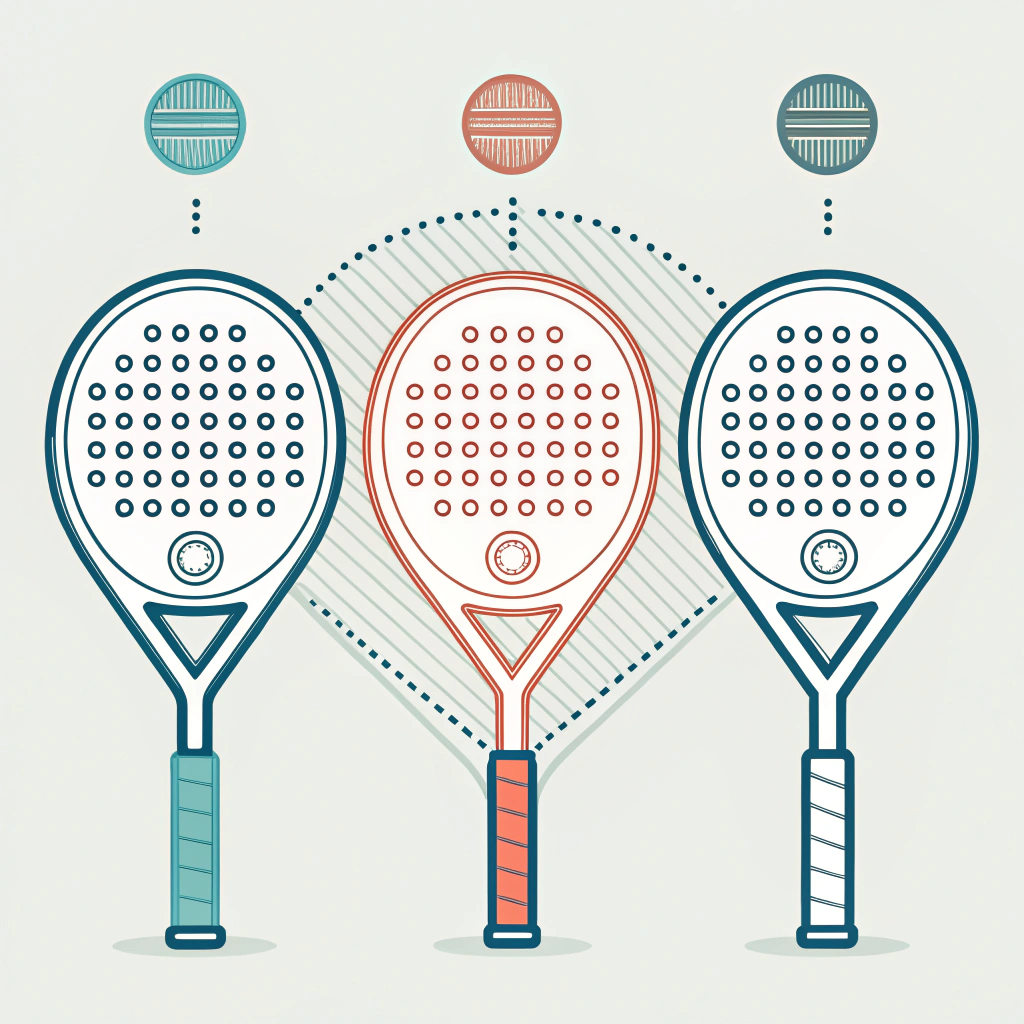
- The racket’s shape (Diamond/Round/Teardrop) is produced by the mold geometry.
- Diamond: head‑heavy, power oriented.
- Round: even balance, control oriented.
- Teardrop: compromise between power and control.
- Balance point is tuned during assembly by adjusting handle weight, bumper design, or resin addendum.
- Sweet spot size depends on face layup thickness, core density and overall stiffness.
Practical check: Ask for sample weight tolerance (±2–5 g) and balance tolerance (±3–5 mm). Suppliers who can consistently meet narrow tolerances are preferable.
Finishing, graphics and personalization
Surface finishing options:
- Primer + base coats + matte/gloss clear coats.
- Sanding/polishing sequences for premium look.
Printing methods:
- Pad printing: durable, cost‑effective for limited colors.
- UV digital printing: full‑color artworks, faster setup for complex designs.
- Hydrographic/lacquer transfers for metallic effects (less common).
Customizations available:
- Full custom shape (molded) or modified standard shapes.
- Custom grip materials and butt cap logos.
- Custom internal weights (tungsten inserts) to tune balance.
Packaging:
- Standard: single polybag + box.
- Branded bulk packaging and POS-ready carton options available.
- For balls: pressurized tube4 packaging is standard to preserve pressure.
Quality control framework (what to demand)
QC should include incoming, in‑process and final inspections. Ask suppliers for AQL5 levels and QC checkpoints.
Recommended QC tests and acceptance criteria:
- Dimensional check: length, width, thickness, hole pattern tolerance.
- Weight and balance: weight ± tolerance; balance point measurement.
- Impact / durability test: repeated ball impact (drop weight or machine‑simulated rallies).
- Bending stiffness: measure flex under fixed load (gives predictable feel).
- Adhesion & finish test: cross‑cut test, salt spray if applicable.
- Vibration / acoustic test: optional but useful for certifying NVH (feel).
- Visual inspection: glossy finish, paint defects, logo alignment.
Sample QC protocol flow
- Incoming material inspection (fiber rolls, EVA blocks, resin certificates).
- First article inspection (FAI) for the first 5–10 samples.
- In‑line checks each shift: weight, balance, visual.
- Pre‑shipment inspection (PSI): random sample batch tested; provide photo/video reports and test certificates.

Sampling, lead times and MOQ expectations
Typical timelines (guarantees depend on complexity)
- Prototype sample (using existing mold or modified mold): 7–14 days.
- New mold development: 2–6 weeks (CNC mold lead time depends on complexity).
- Preproduction sample (PPS) after mold approval: 7–14 days.
- Mass production: 30–60 days depending on order size and seasonal load.
MOQ guidance
- Simple stock SKU with standard molds: MOQ often 100–300 units per model.
- Custom mold + custom printing: MOQ typically 300–500 units to justify tooling and setup.
- Request suppliers to break out tooling costs separately and offer price breaks by volume.
Cost levers to discuss
- Material grade (3k vs 12k vs fiberglass).
- Prepreg vs wet layup.
- Hole pattern complexity and mold count.
- Printing method and number of color positions.
- Packaging and third‑party inspection.
RFQ checklist: what to include to get accurate quotes
Provide as much of the following as possible:
- Target shape (Diamond/Round/Teardrop or custom CAD).
- Target weight and balance point (e.g., 360 g, balance 260 mm from butt).
- Face material and layup (e.g., 2×3k carbon outer, 2×fiberglass inner).
- Core type and hardness (EVA Shore target).
- Surface finish and artwork files (AI/PDF).
- Hole pattern or CAD drawing for perforations.
- Expected annual volume and initial order quantity.
- Required certifications and testing (impact cycles, PSI/AQL).
- Lead time expectations and delivery port.
Sample submission flow to request from OEM
- NDA and CAD exchange
- Quotation with tooling and unit price
- Approve mold drawings and pay tooling deposit
- Prototype samples (review & iterate)
- PPS approval
- Bulk production with agreed QC plan
Risk mitigation and supplier evaluation tips
- Ask for references and sample photos of recent OEM projects (brands they supply).
- Request a factory tour (virtual or in‑person) focusing on molds, hot presses, and prepreg storage.
- Ask for certificates of materials and resin batch traceability.
- Negotiate a clear warranty and defect rate agreement (e.g., acceptable defect ≤2%, replacements for DOA units).
- For first orders, consider split shipments: smaller initial batch to validate market.
Why work with NEX Padel (short, capability‑oriented)
- We manufacture rackets with fiberglass and 3k/12k/18k carbon layups and support Diamond, Round and Teardrop shapes plus full custom molds.
- Fast prototyping and responsive tooling: typical sample turnarounds 7–21 days (depending on mold status) and production lead times aligned with brand launch schedules.
- Custom printing, grip and butt cap branding available; we also supply pressurized padel balls (45% wool and 57% wool options) and manage quality across production.
- OEM partners include recognized brands — we can share production photos and QC reports under NDA.
Conclusion and action steps
- Translate your player profile (power vs control) into concrete specs: face material, core hardness, target weight and balance.
- Use the RFQ checklist above to request comparable quotes from suppliers.
- Prioritize suppliers who demonstrate consistent mold tolerances, prepreg capability, controlled curing profiles and robust QC protocols.
- Request a First Article and Pre‑Production Sample and make acceptance conditional on specific measurable tolerances (weight, balance, finish, impact tests).
If you want, prepare a one‑page spec sheet using the RFQ checklist and send it to potential OEMs — we can provide a tailored quote and timeline once we have that.
People Also Ask
What makes a good padel racket?
A good padel racket balances material choice, core hardness, and manufacturing consistency. High‑quality frames commonly use carbon fiber (3k for fine feel, 12k/18k for cost/performance tradeoffs) or fiberglass for entry models. The EVA core1 density controls power vs control: softer cores give control and comfort, harder cores give more repulsion/power. Manufacturing reproducibility (prepreg vs wet layup, precise hot‑press curing, CNC mold tolerances) and consistent weight/balance tolerances are equally important for reliable on‑court performance.
How to design a padel racket?
Design starts with the target player and performance priorities:
- Choose the shape (Diamond = power, Round = control, Teardrop = balanced).
- Select face material and layup (carbon/fiberglass, number of plies, hybrid options).
- Define the EVA core hardness for the desired feel.
- Specify weight and balance target (e.g., 360 g, balance point).
- Create CAD drawings for mold geometry including hole pattern and structural thickness.
- Decide on finishing and printing methods (pad printing or UV digital), grips and butt cap design.
- Prototype with an OEM, run impact and bending tests, iterate layup or core hardness until performance matches the brief.
-
EVA core: Read this to learn how EVA formulations, shore hardness and density affect feel, energy return and durability — essential for turning player performance targets into concrete procurement specs. ↩ ↩2
-
MOQ: Read this to understand typical order minimums by tooling complexity, how MOQ impacts unit cost, and negotiation strategies (e.g., breaking out tooling costs, phased orders) to reduce upfront risk. ↩
-
Prepreg: Read this to see why prepreg delivers tighter resin control, higher reproducibility and different storage/oven requirements compared with wet layup — critical for premium product lines and supplier capability checks. ↩
-
pressurized tube: Read this to confirm packaging standards for padel balls (pressure retention, shelf life), and how packaging choice affects logistics, unit pricing and branding options. ↩
-
AQL: Read this to understand Acceptable Quality Level sampling plans, how to specify inspection levels and defect criteria in contracts, and how AQL ties into PSI/FAI protocols to reduce shipment disputes. ↩